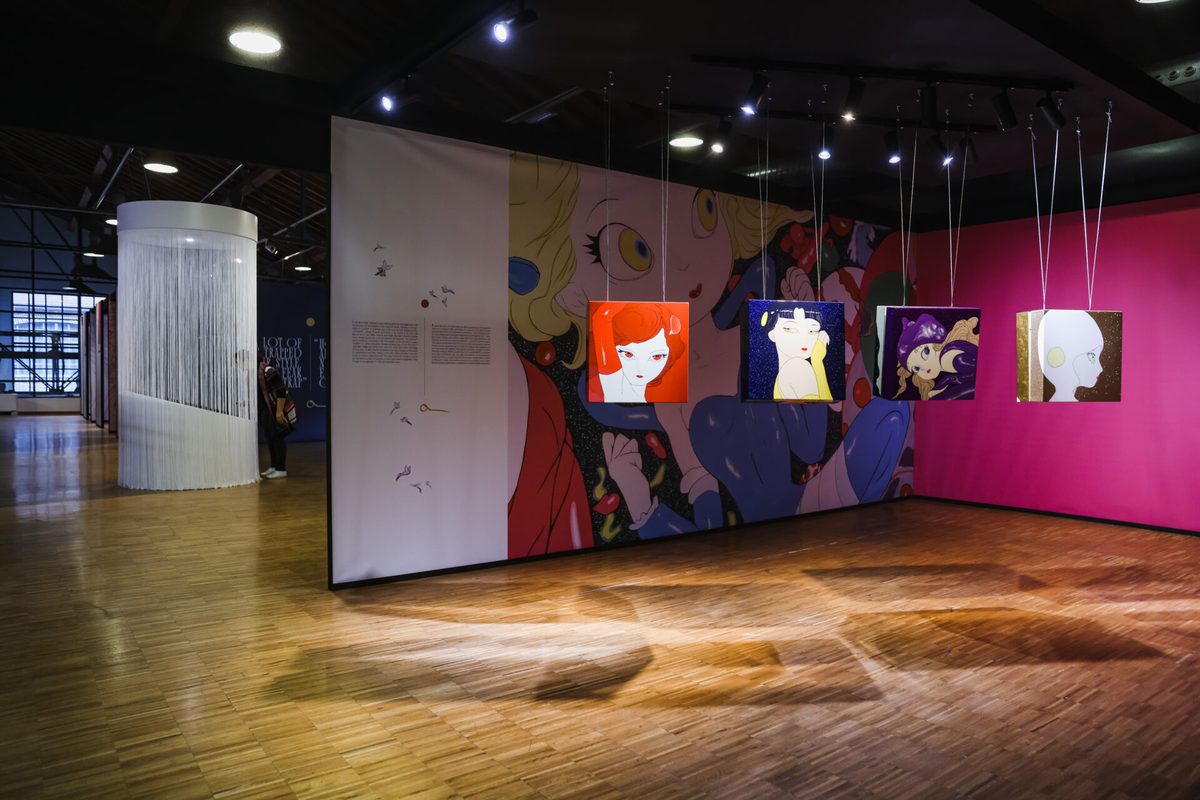
Yoshitaka Amano has worked across animation, illustration, fine art, fashion, comics, and game design for five decades without ever settling into one. That restlessness is the subject of Corpus Animae at the Museo di Roma — not a career retrospective organized by date, but a spatial argument that Amano's work across wildly different industries constitutes a single continuous practice.
Four Worlds, Not Four Chapters
Curator Fabio Viola organizes the exhibition not chronologically but as four simultaneous registers. The Tatsunoko Years covers Amano's foundational decade at the animation studio alongside a young Mamoru Oshii and animator Yoshinori Kanada — designing characters for Gatchaman, Hurricane Polymar, and Casshan before most audiences knew his name. Game Master traces the Final Fantasy collaboration from 1987 to the present — Amano designed characters for I through VI, then continued as logo and key-art artist after Tetsuya Nomura took over character design from VII onward. The original acrylic-on-paper drawings are displayed alongside the packaging they became. Icons maps his entry into Western pop culture through Neil Gaiman's Sandman: The Dream Hunters — for which Gaiman asked Amano to produce eighty illustrations for the price of twenty, wanting the book to be image-driven — and variant covers for DC Comics. Free Spirit gathers everything that doesn't fit — gallery painting, fashion, and three new commissions created specifically for Rome.
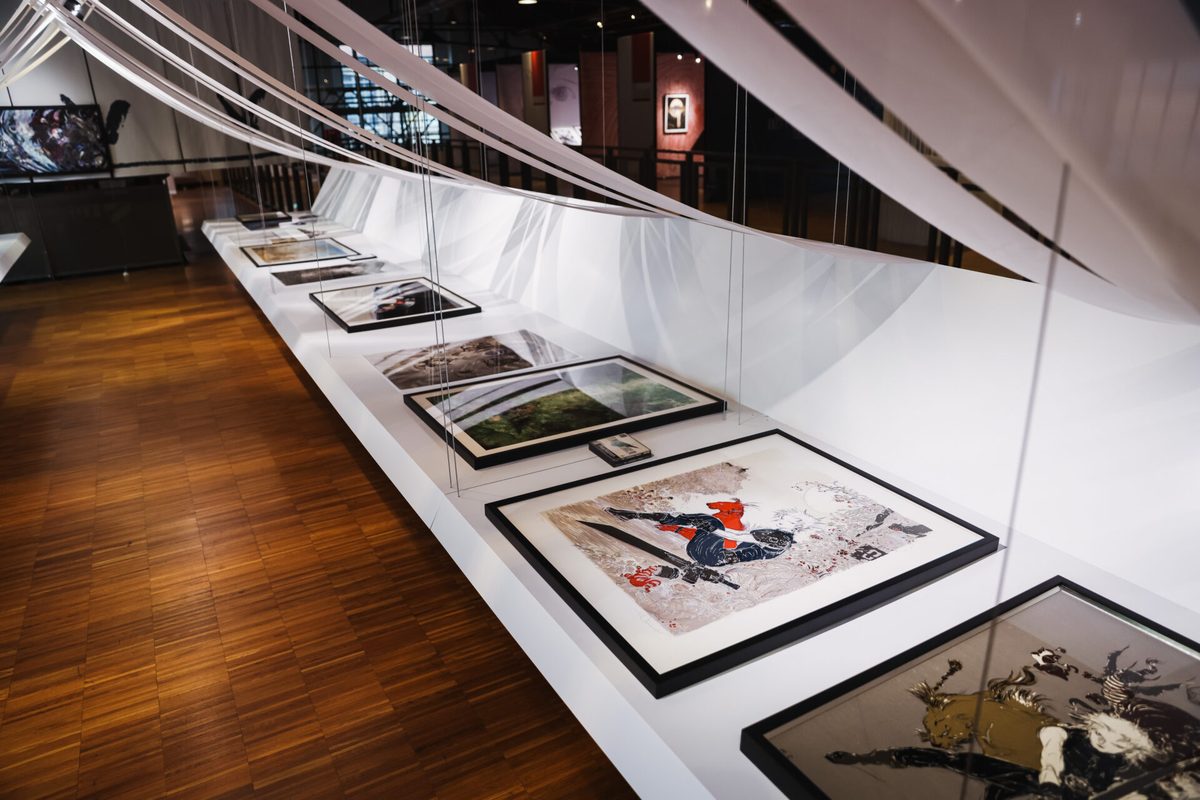 Framed original artworks suspended above display tables — the exhibition's POLI.design installation places works in dialogue across the gallery space
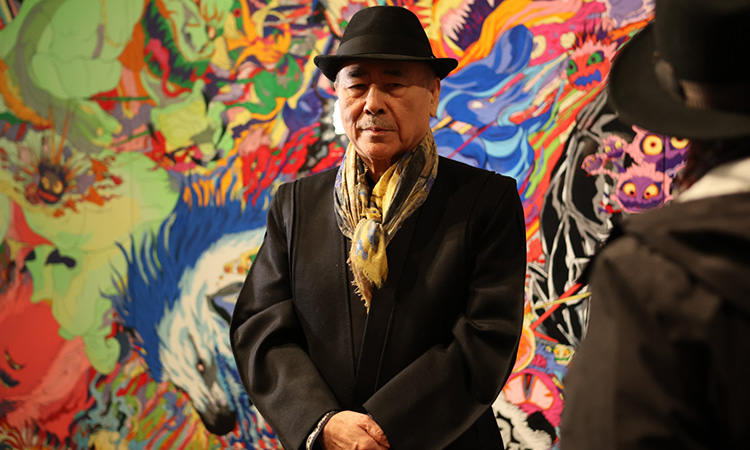 Yoshitaka Amano at the exhibition opening — the artist viewing original works spanning five decades of his career
The exhibition's quietest revelation sits in six plates from Amano's illustrations for Michael Moorcock's Elric of Melniboné. Beginning around 1984, Amano produced a series of paintings for the albino sorcerer-emperor that Moorcock himself considered the definitive visual interpretation — preferred over James Cawthorn, Michael Whelan, and Robert Gould. The Elric work predates Final Fantasy by three years, and the curators position it explicitly as genesis: the dark fantasy register Amano developed for Moorcock's doomed prince became the visual language he carried into Squaresoft's world-building. These are the paintings that made Final Fantasy look the way it does.
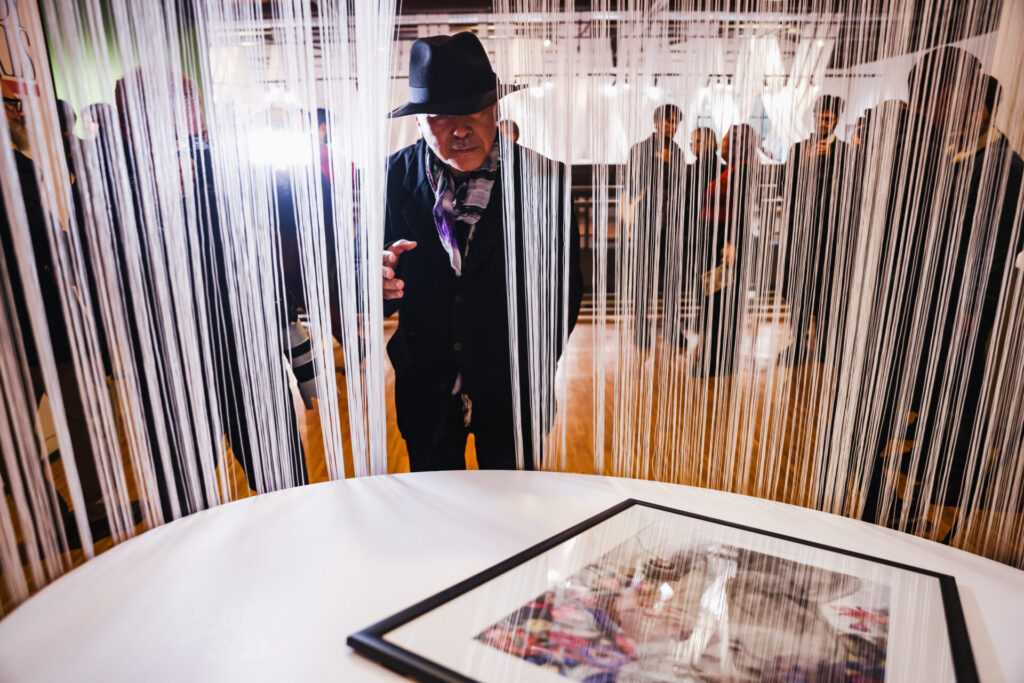 Amano viewing artwork through the exhibition's white string curtain installation — a design element by POLI.design connecting the gallery sections
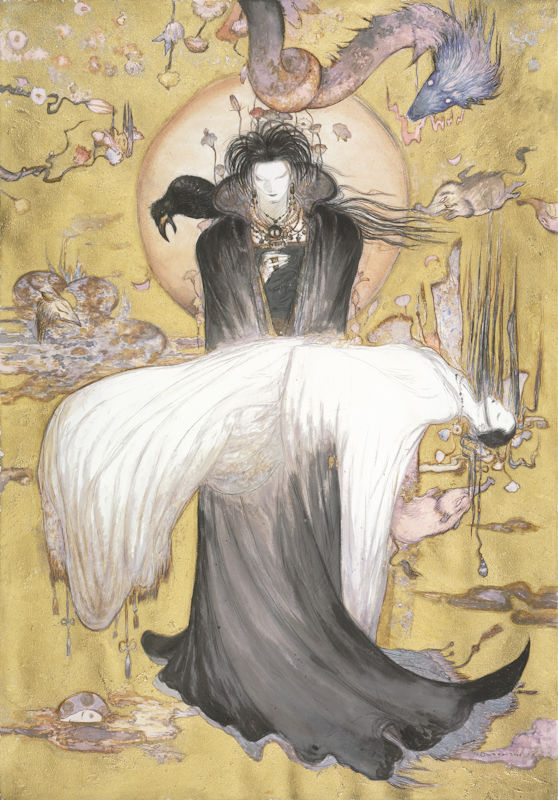 Dark fantasy illustration — Amano's characteristic pale figures and translucent layering, the visual register shared across Vampire Hunter D, Sandman, and Elric
“Everything is connected. It's not drawings and painting and costumes or make-up. It's all the same thing.”
— Yoshitaka Amano, Corpus Animae interview
Asked about seeing fifty years of work assembled in one space, Amano admitted he hadn't looked at much of it in decades. “When I look at old work and now, it's very similar. I surprised myself.” The exhibition's curatorial argument — that these are not different careers but one continuous practice — turns out to be something even the artist didn't fully register until the palazzo made it visible.
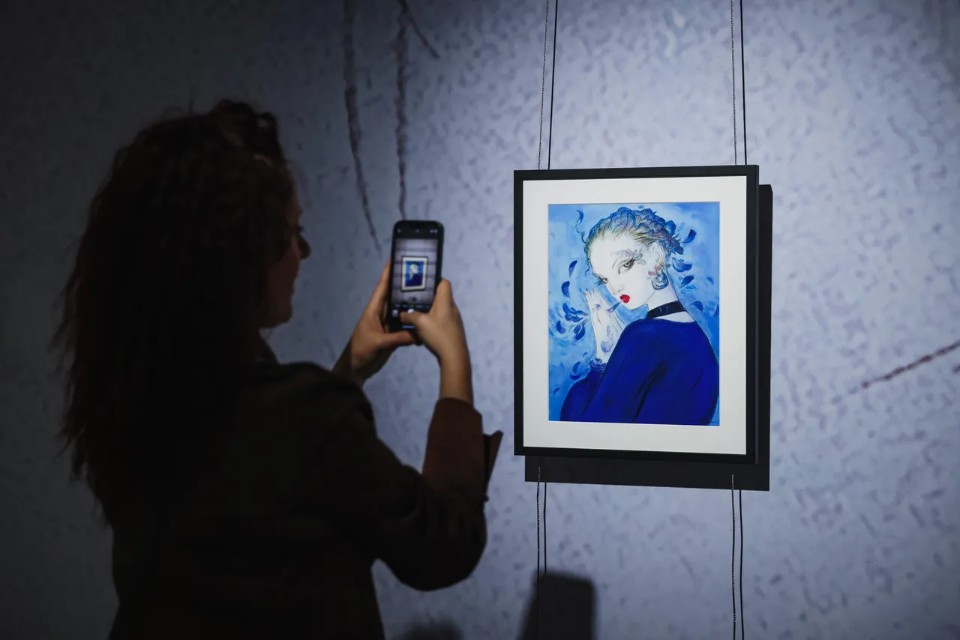 A visitor photographing one of Amano's large-format gallery paintings — the exhibition spaces artwork to encourage close viewing at human scale
The exhibition was funded through a Kickstarter campaign organized by Lucca Comics & Games that reached its €50,000 goal in under three hours, eventually closing at €171,044 — 342% of target, backed by over 300 supporters. Top-tier backers could visit the exhibition accompanied by Amano himself. The campaign included exclusive signed prints, silk scarves bearing his Puccini centenary Tosca illustration, and 7,000 open-day tickets to Lucca Comics. The speed of funding suggests less a promotional campaign than a pre-existing audience waiting for an excuse to act.
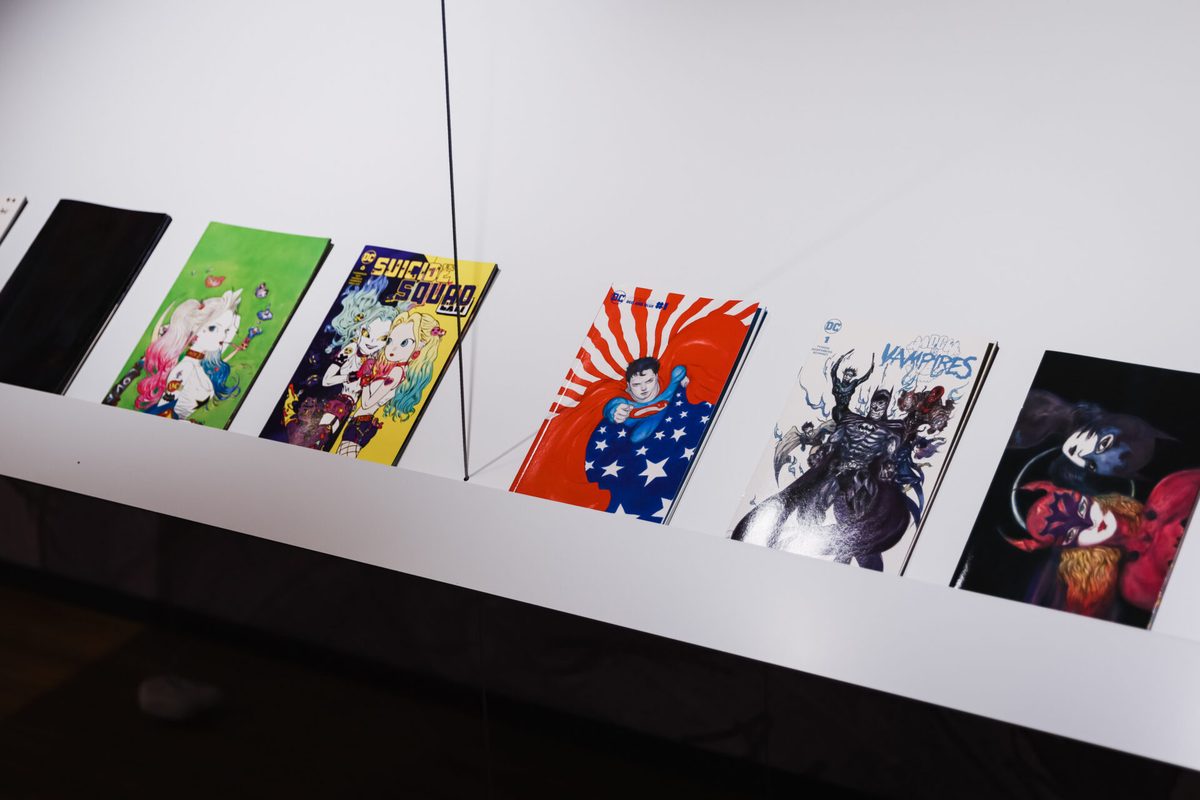 Icons section — DC Comics variant covers including Harley Quinn, Suicide Squad, Superman, and DC Vampires displayed on the exhibition shelf
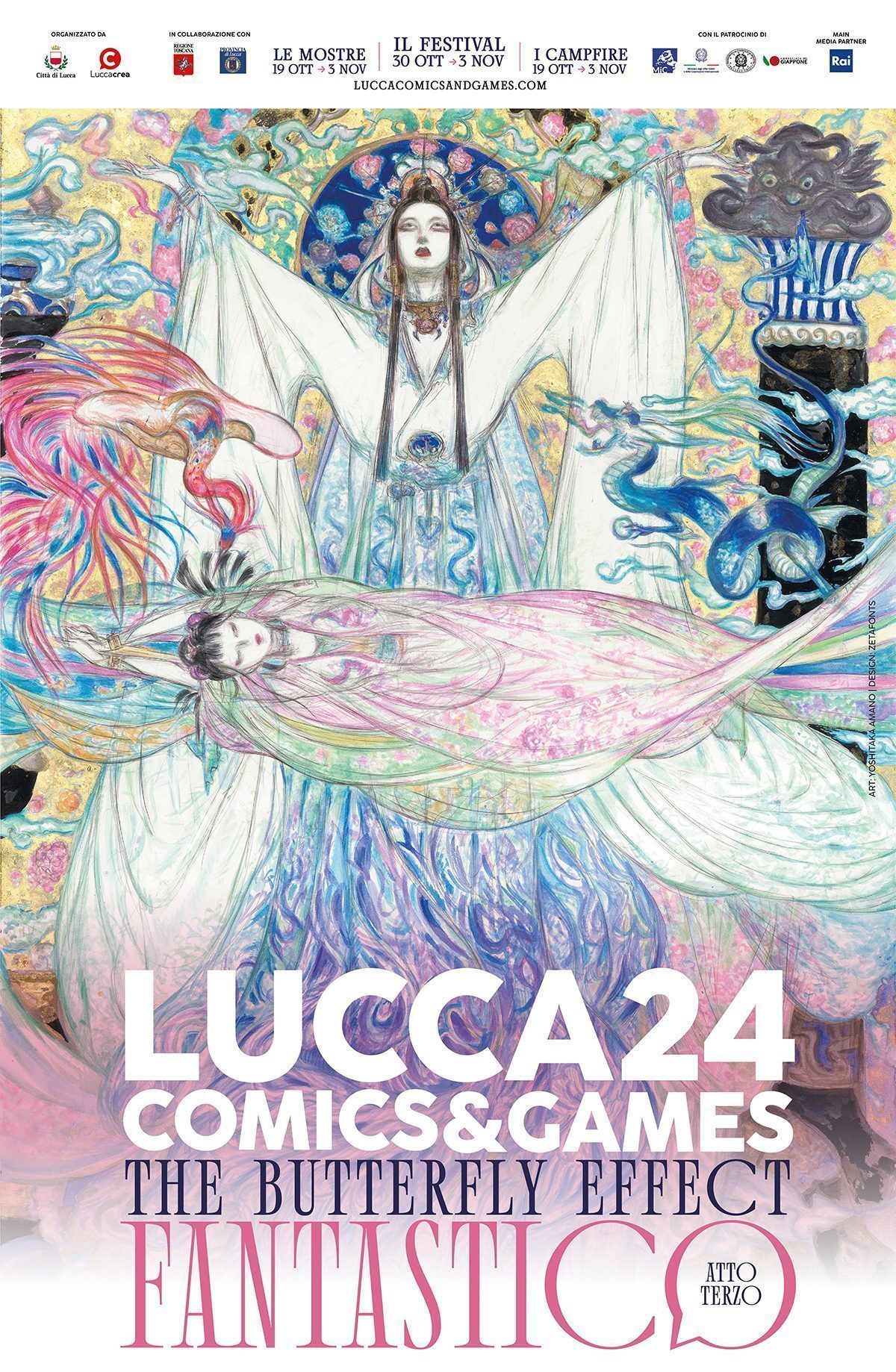 Lucca Comics & Games 2024 poster — The Butterfly Effect festival theme featuring Amano's illustration, the organization that funded the exhibition
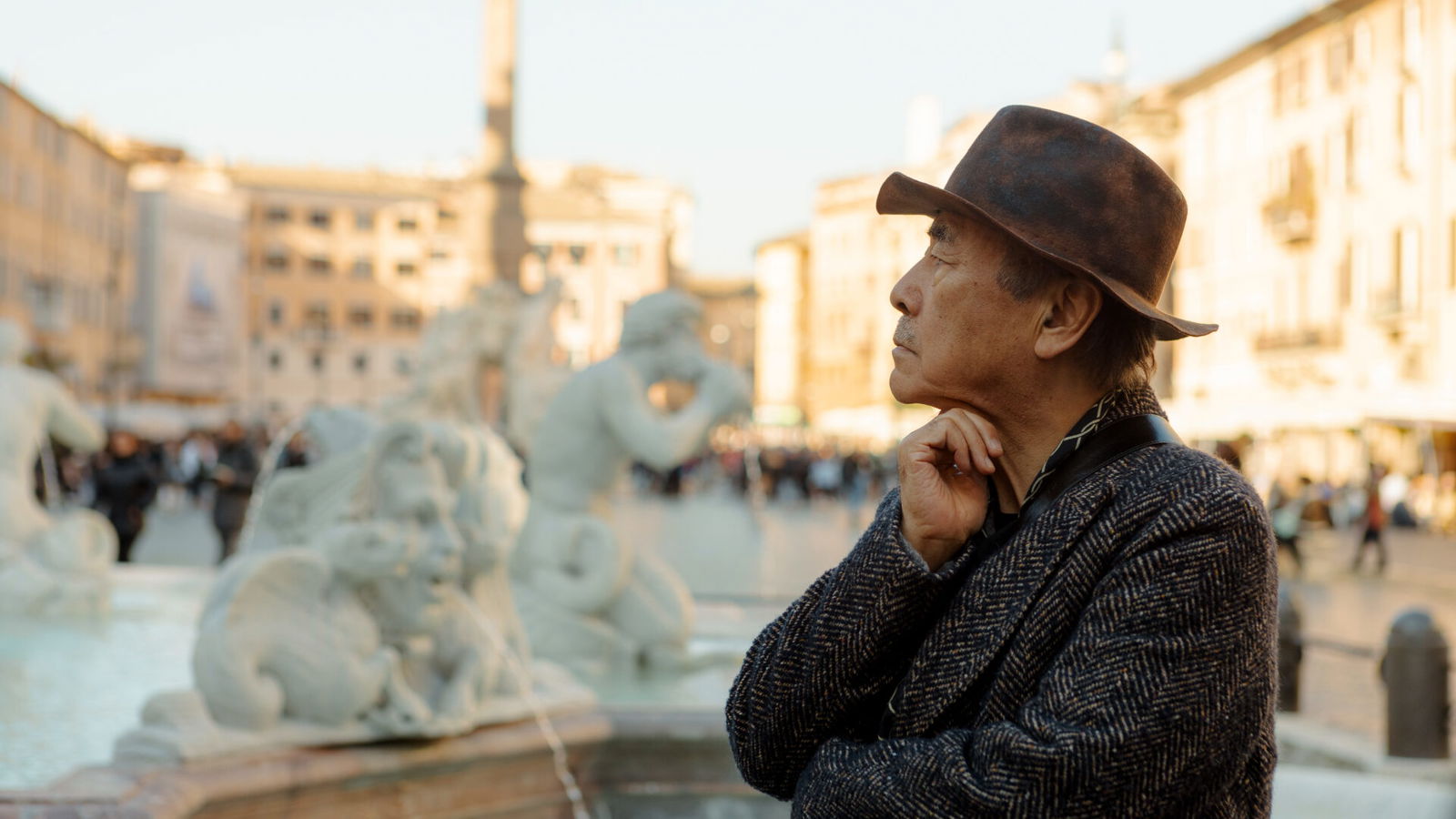 Yoshitaka Amano at Piazza Navona — the artist in Rome, where three new paintings exploring Greek and Roman mythology were created for the exhibition
Three new paintings created for this exhibition explore Greek and Roman mythology — a subject Amano had never addressed directly despite decades of working in fantasy. Placed in a palazzo whose own walls are frescoed with classical scenes, the commissions create a conversation between Amano's floating, translucent figures and the building's existing visual program. The palazzo becomes a collaborator rather than a container. Also on display: a functioning Esh's Aurunmilla arcade cabinet from 1984, one of the few operational units worldwide, and Amano's 2020 Vogue Italia cover — nine paintings, no models, the magazine's first fully illustrated issue.
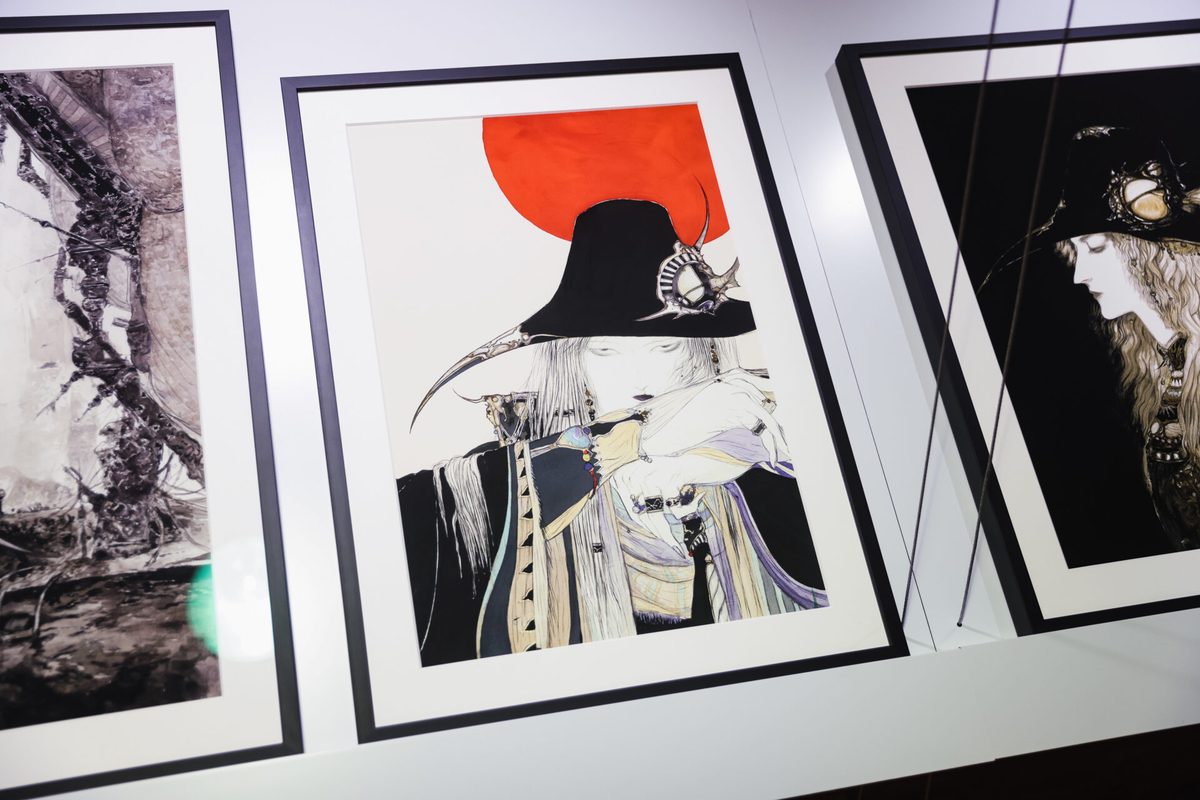 Vampire Hunter D — original illustration showing the dhampir's iconic wide-brimmed hat and pale features against a red sun, flanked by ink drawings from the novel series
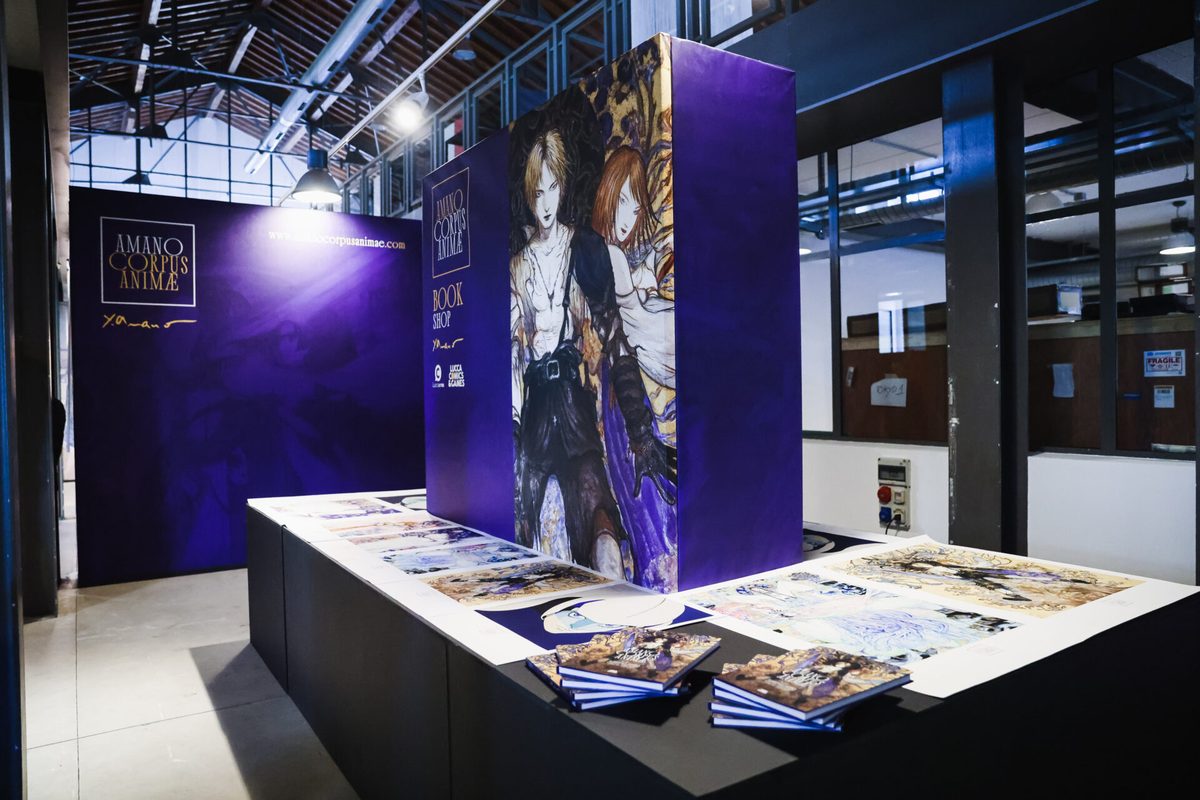 The exhibition bookshop — publications, prints, and Corpus Animae merchandise beneath the exhibition branding
The palazzo's own walls are painted with classical scenes — gods, allegories, historical figures rendered in the Roman tradition. Amano's translucent figures now float through those same rooms, occupying the space between the building's frescoes and the visitors passing through. The exhibition makes no argument about hierarchy. It simply places fifty years of continuous drawing inside a building that has held art for three centuries, and lets the conversation happen at the level of surface, color, and the persistent strangeness of figures that refuse to fully materialize.
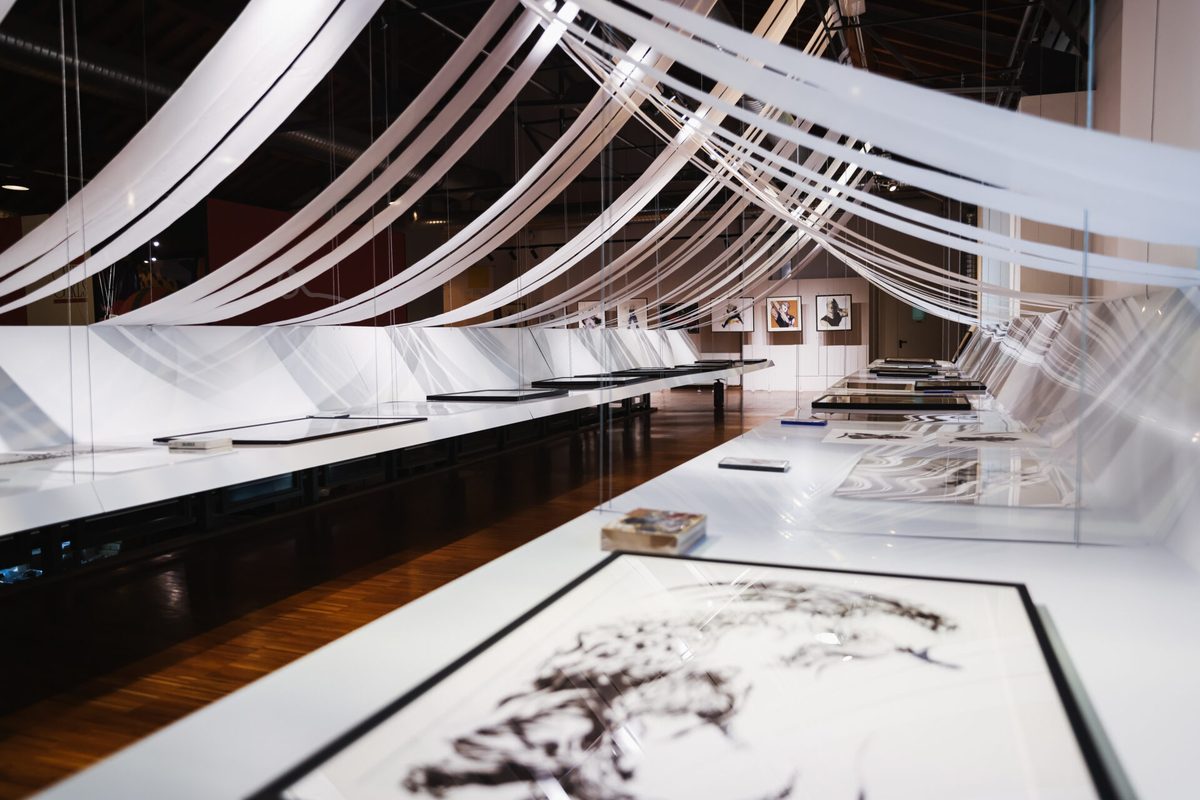 Milan venue installation — framed works displayed under POLI.design's dramatic white ribbon canopy at Fabbrica del Vapore
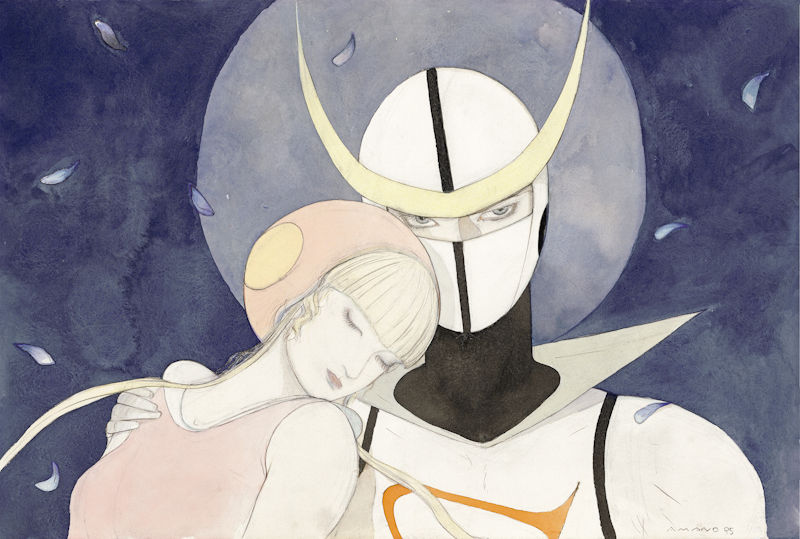 Casshern and Luna — Tatsunoko Years section artwork, Amano's ethereal figures from his foundational decade (1967–1982) at the animation studio
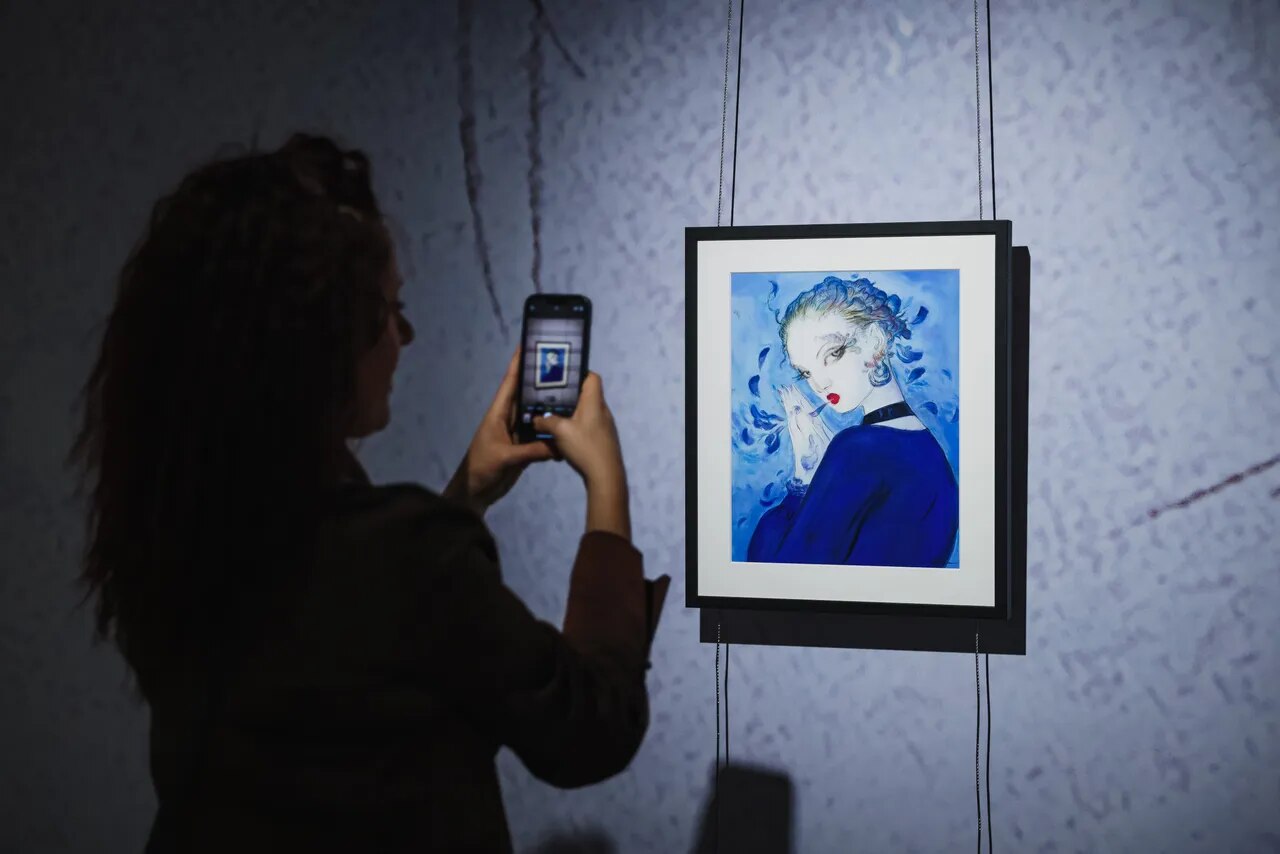 Visitor photographing exhibition artwork — one of Amano's blue-toned portraits on the textured palazzo walls
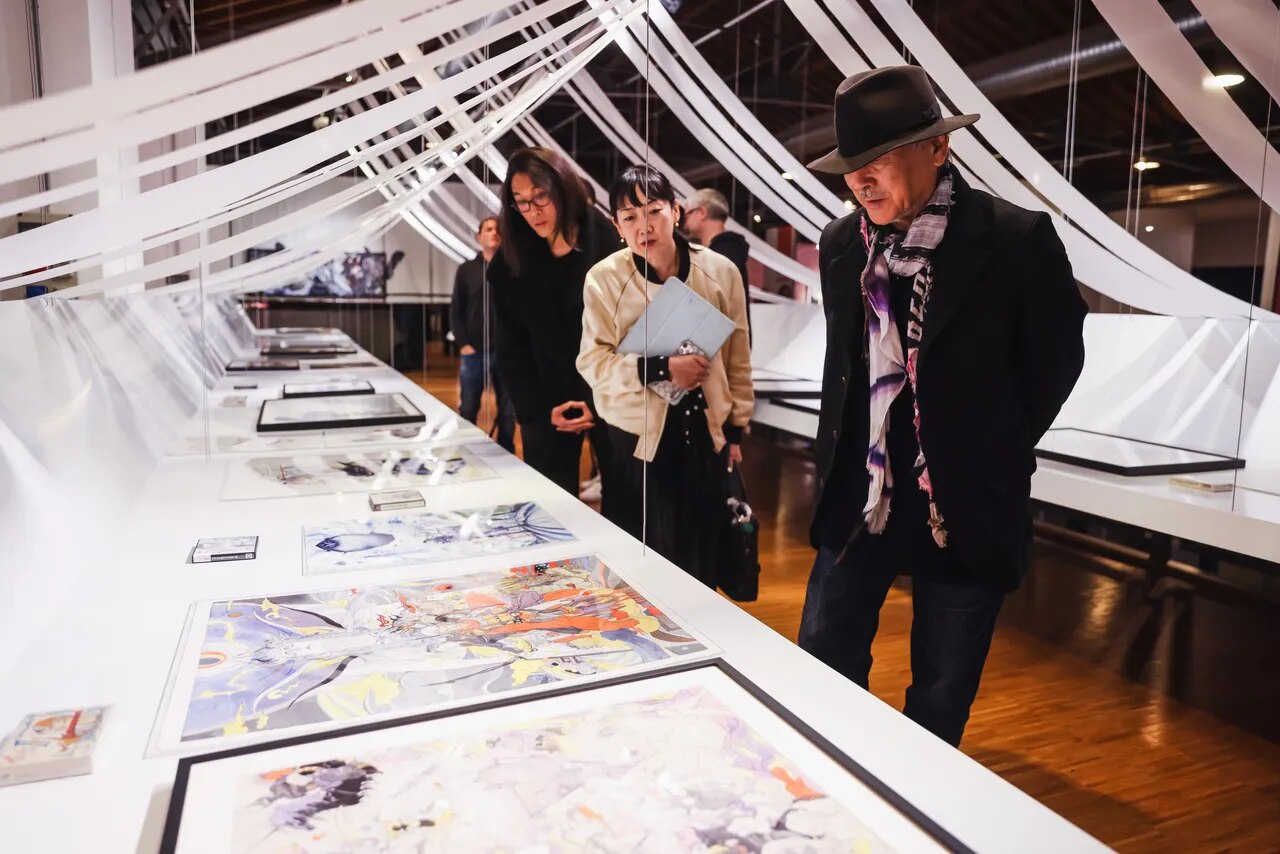 Yoshitaka Amano at the Milan opening — viewing original works under POLI.design's white ribbon installation at Fabbrica del Vapore
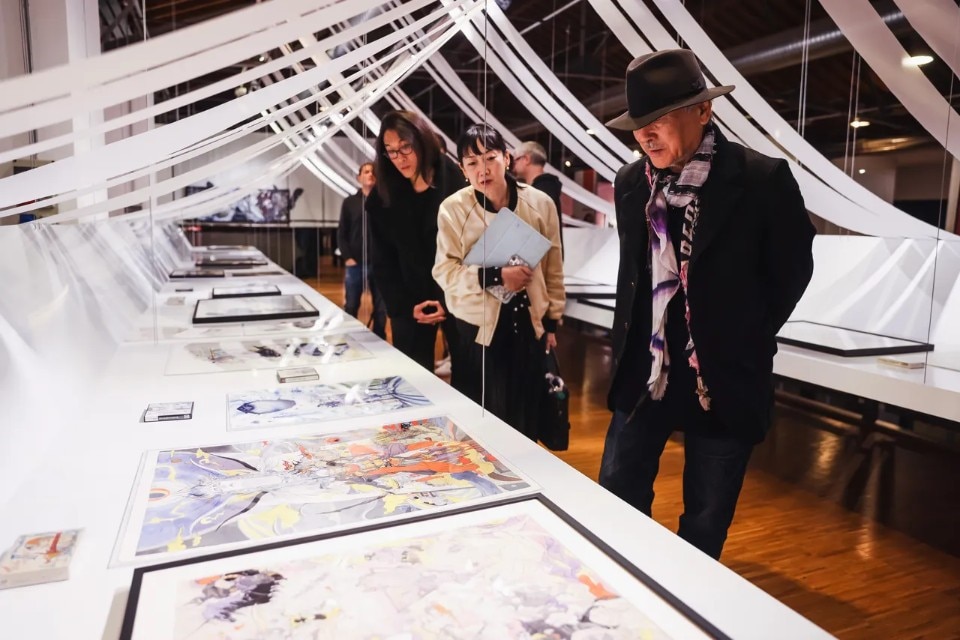 Amano with visitors at Milan — the artist viewing framed artworks alongside attendees during the exhibition opening
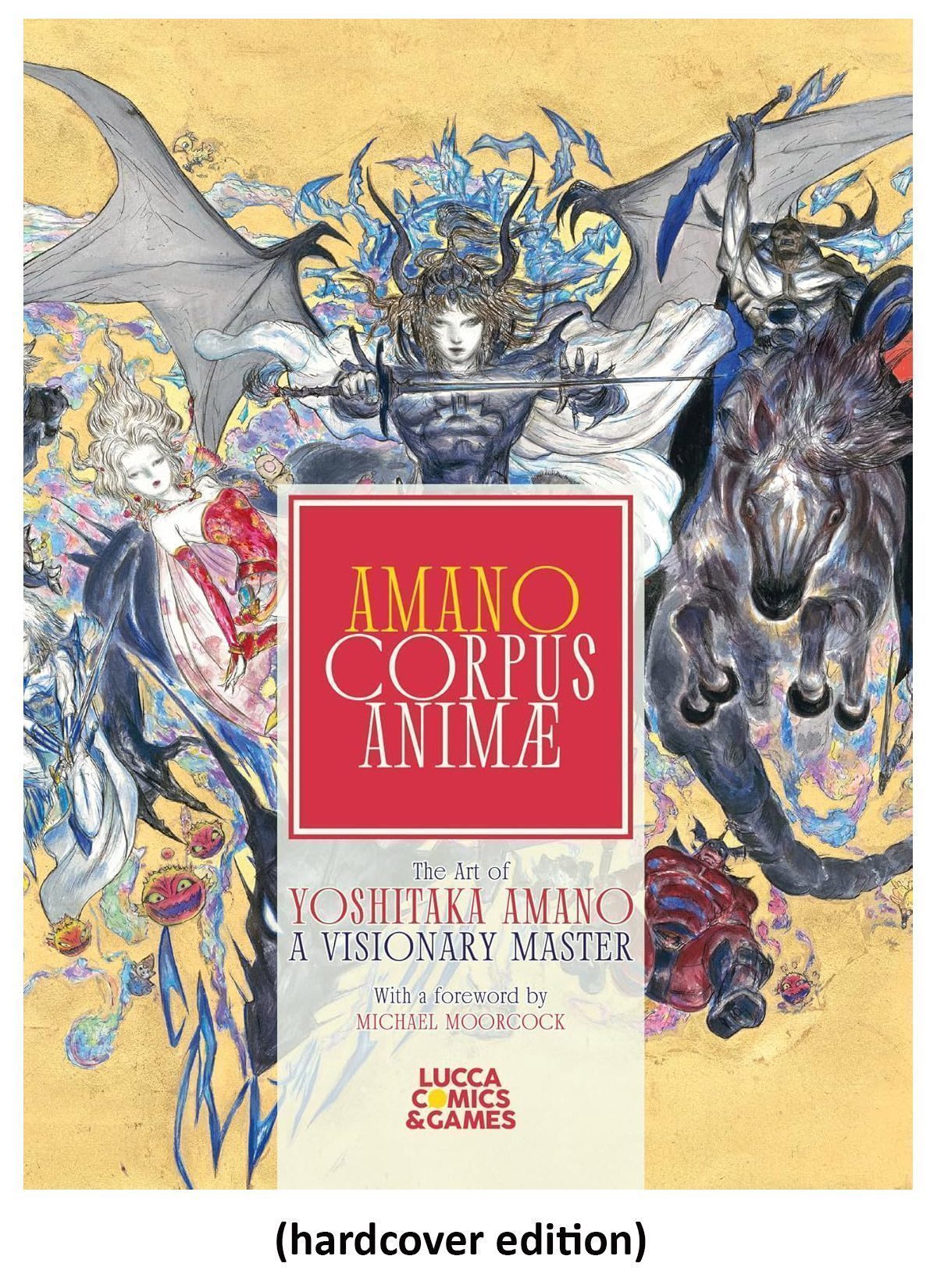 The exhibition catalog — 240 pages, bilingual Italian/English, hardcover and paperback editions
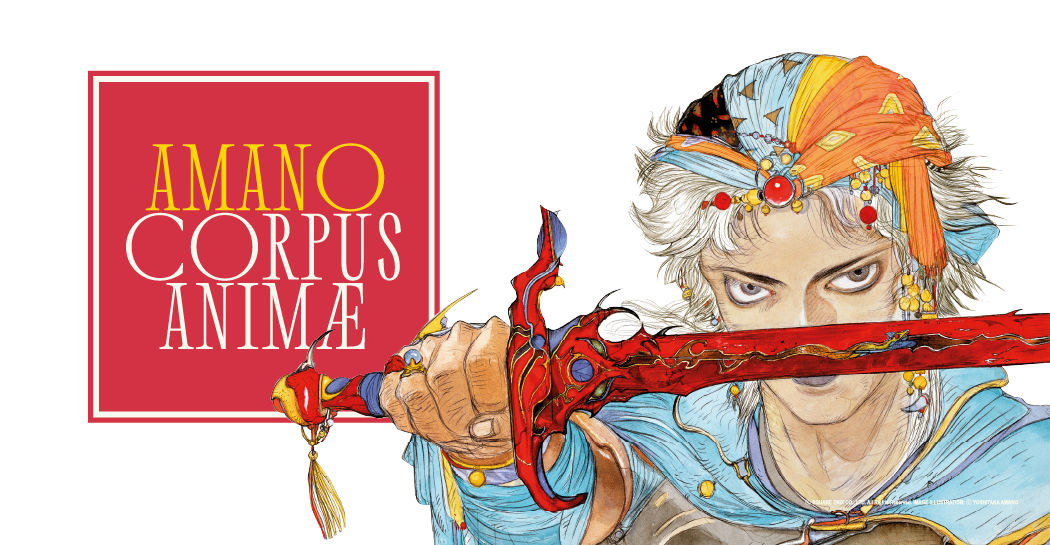 Exhibition key visual — Amano Corpus Animae at Museo di Roma, Palazzo Braschi, March 28 to October 12, 2025
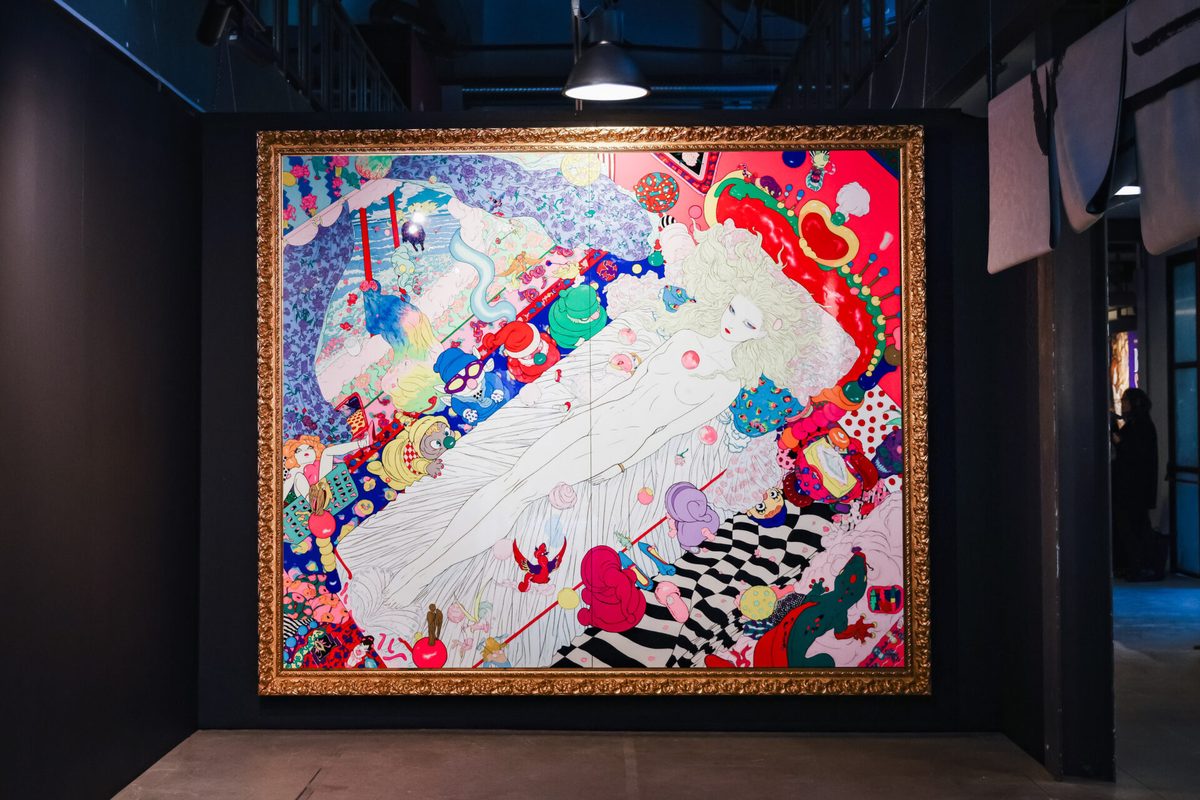 Free Spirit section — one of Amano's large-format gallery paintings in an ornate gold frame, representing his fine art practice outside commercial commissions
- Amano Corpus Animae — Official Site T1
- Exhibition Gallery (48 installation photos) T1
- Kickstarter Campaign T1
- Museo di Roma — Exhibition Page T1
- LOMEX Gallery — APOCALYPSE Exhibition T2
- CGMagazine — Amano Interview T2
- SciFiNow — Exhibition Coverage T2
- SciFiNow — Amano Interview T1
- Domus — Milan Exhibition Review T2
- Juxtapoz — APOCALYPSE Coverage T3
- AUTOMATON WEST — Kickstarter Achievement T3
Loading...