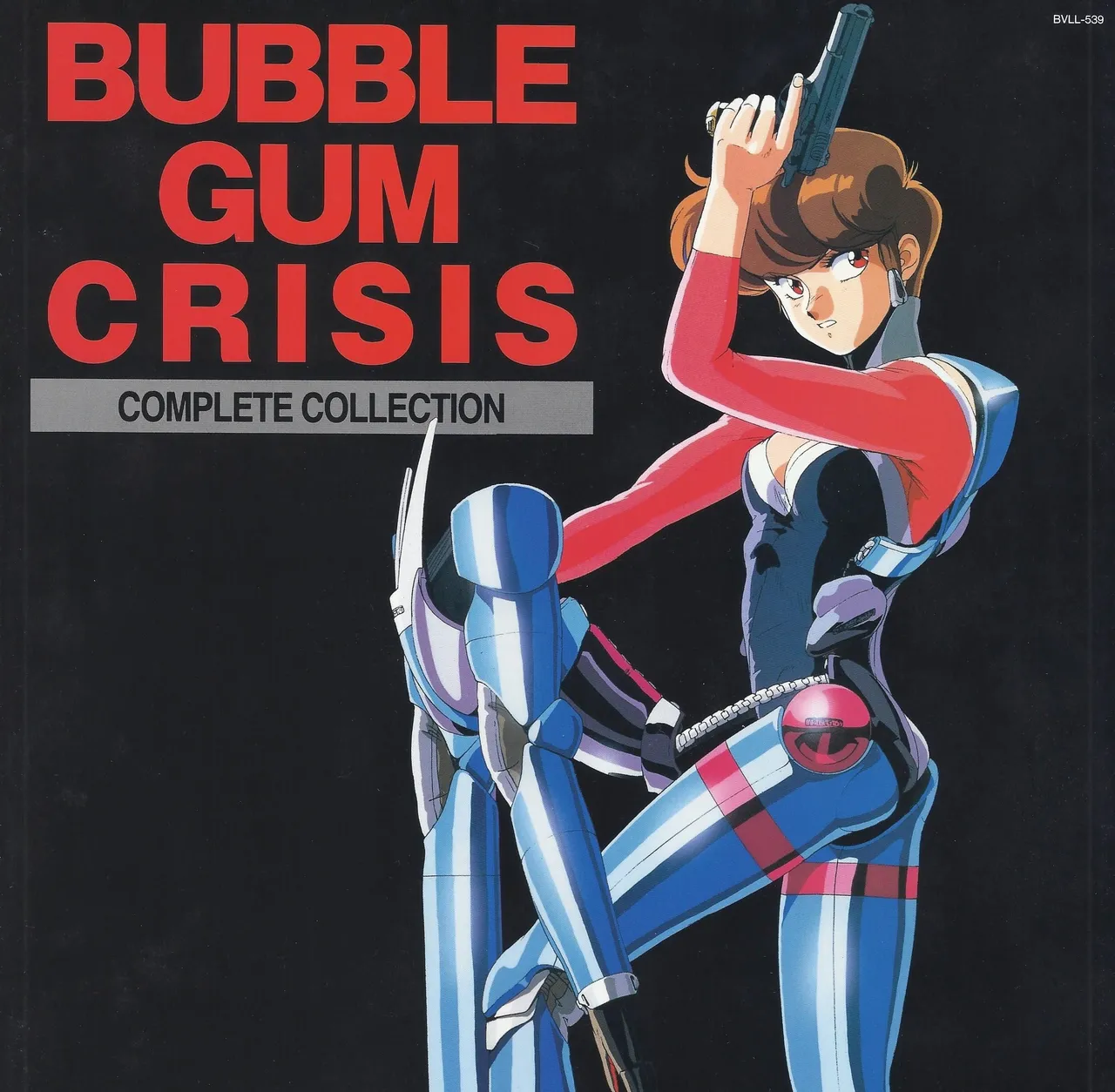
Mega-Tokyo, 2032. A mega-corporation’s artificial lifeforms called Boomers are running out of control. An all-female vigilante team called the Knight Sabers—Priss, Linna, Nene, Sylia—suit up in mechanized power armor and fight back. Eight OVA episodes released between 1987 and 1991. No TV broadcast. Pure direct-to-video ambition from the tail end of Japan’s bubble economy, with character designs by Sonoda Kenichi and mechanical design by Aramaki Shinji.
The Bubblegum Crisis Complete Collection (BVLL-539) was Bandai Visual’s definitive Japanese LaserDisc box set—all eight episodes in one package. The discs are what you’d expect. The booklet is what stops you. Calling it liner notes undersells it. This is architectural documentation—systems, layouts, production logic rendered with the seriousness of a technical manual.
Twenty-four pages of production documentation: director Akiyama Katsuhito narrating the creative decisions behind Parts 1–3, per-episode visual breakdowns with scene-by-scene production stills, full character design sheets by Sonoda, Boomer mecha designs by Aramaki, and a voice actress roundtable recorded seven years after the series ended. This wasn’t a promotional insert. It was a production bible disguised as packaging. You can feel an era where anime still needed to explain itself—not to justify its existence, but to preserve its internal logic.
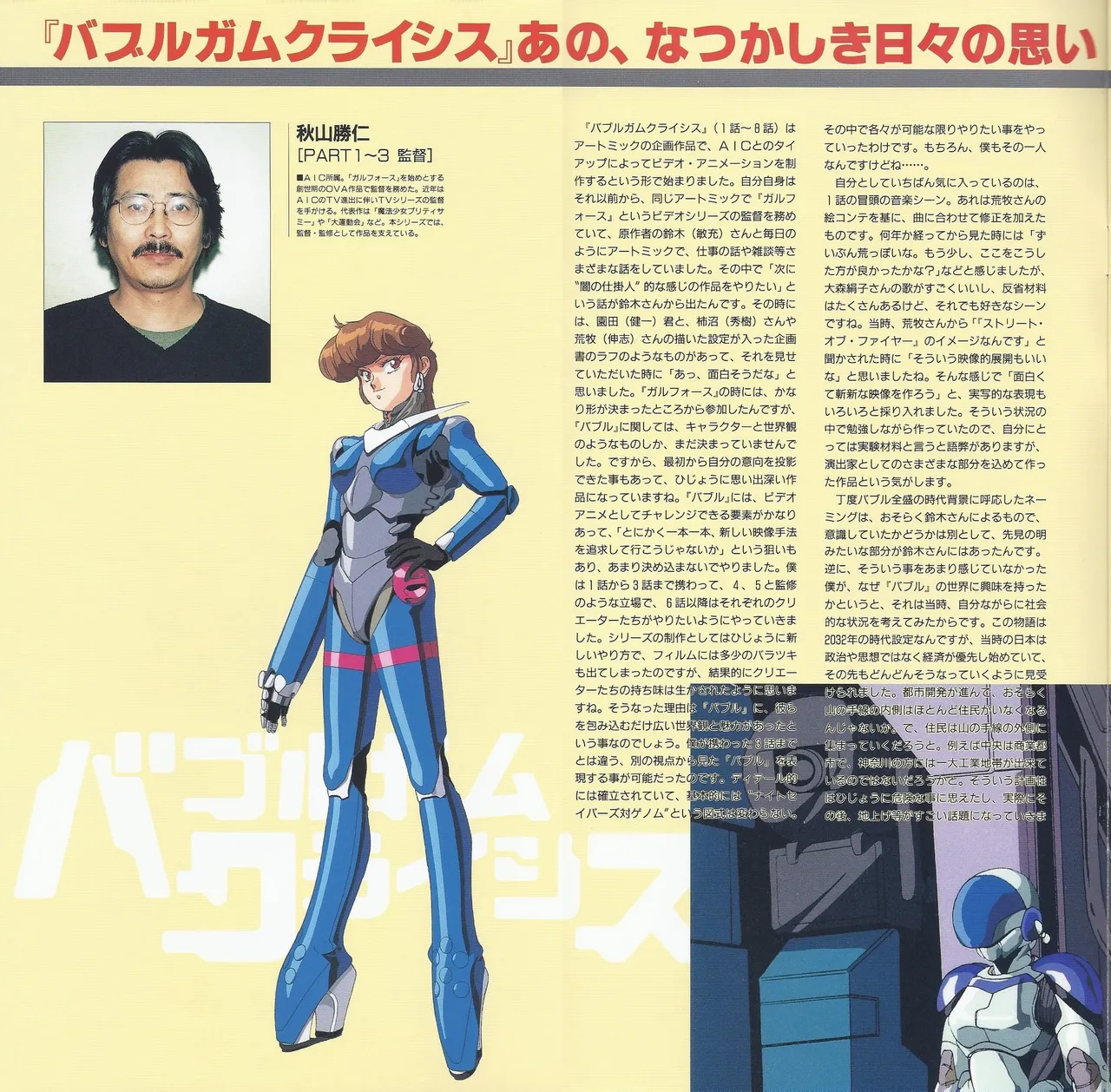 Director Akiyama Katsuhito (Parts 1-3) — full interview spread with production history, from the Artmic/AIC collaboration through each episode's creative direction
Sonoda's Design Sheets
The booklet devotes a full spread to Sonoda Kenichi's character designs for each episode—not promotional art, but the actual production reference sheets animators worked from. Priss Asagiri rendered in civilian clothes, hardsuit, and every angle between. Guest characters, USSD military personnel, Boomer variants. Staff credits running alongside key art. This is the bridge between concept and cel.
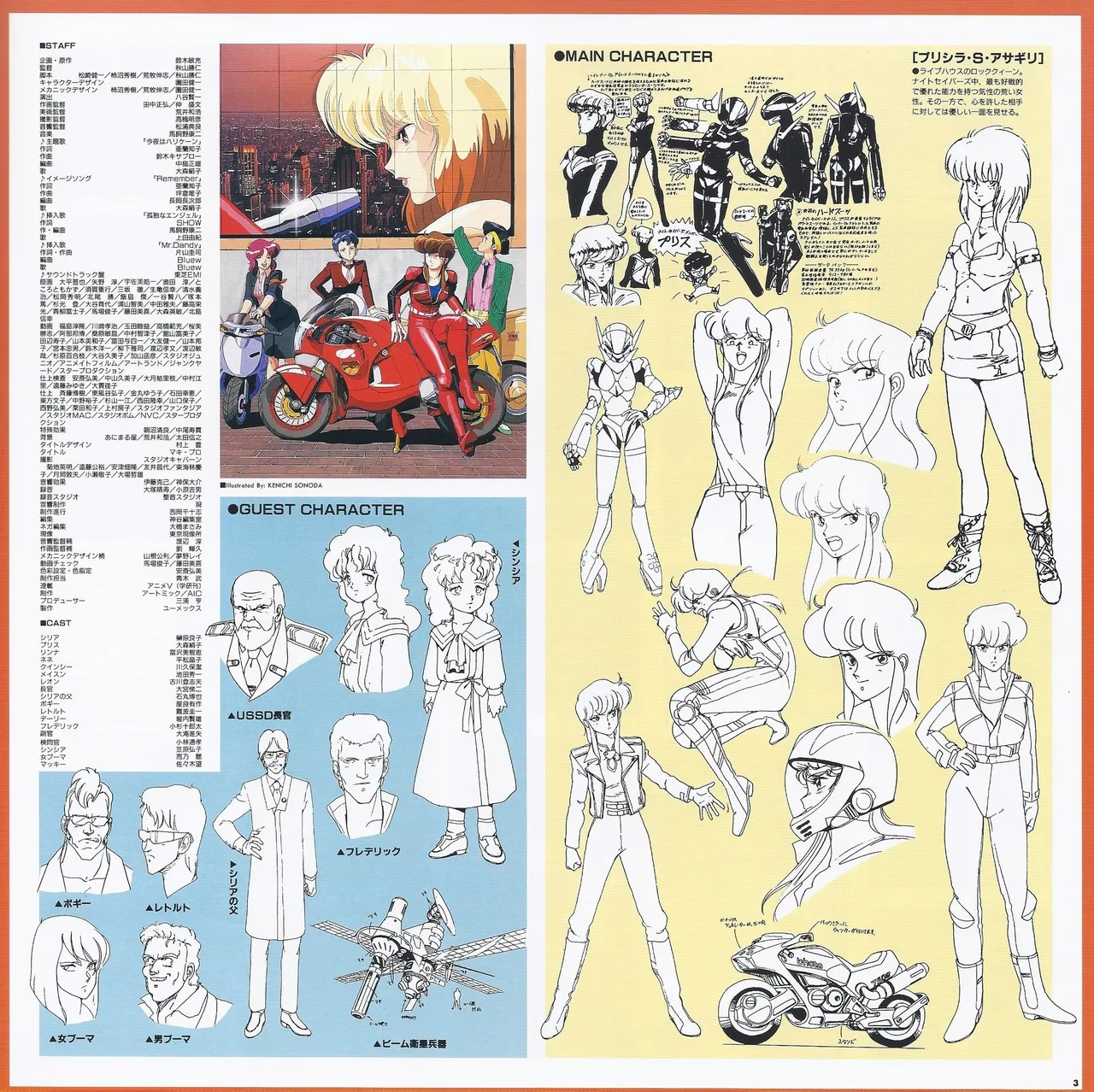 Episode 1 character designs — Priss Asagiri main character sheet by Sonoda Kenichi, guest characters, staff credits, and Kenichi Sonoda key art
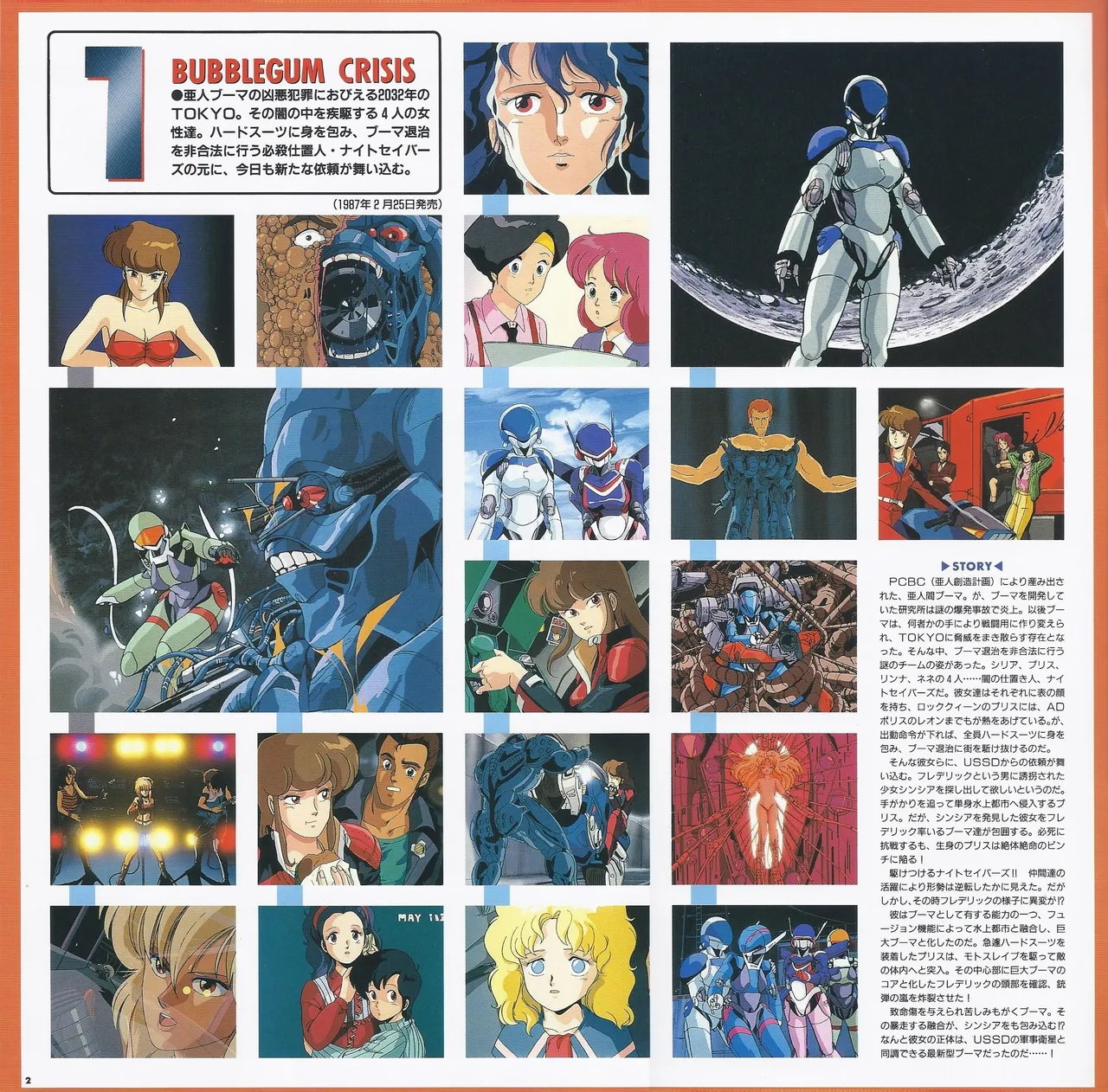 Episode 1 'Bubblegum Crisis' — per-episode guide with scene screenshots, synopsis, and release date (February 25, 1987)
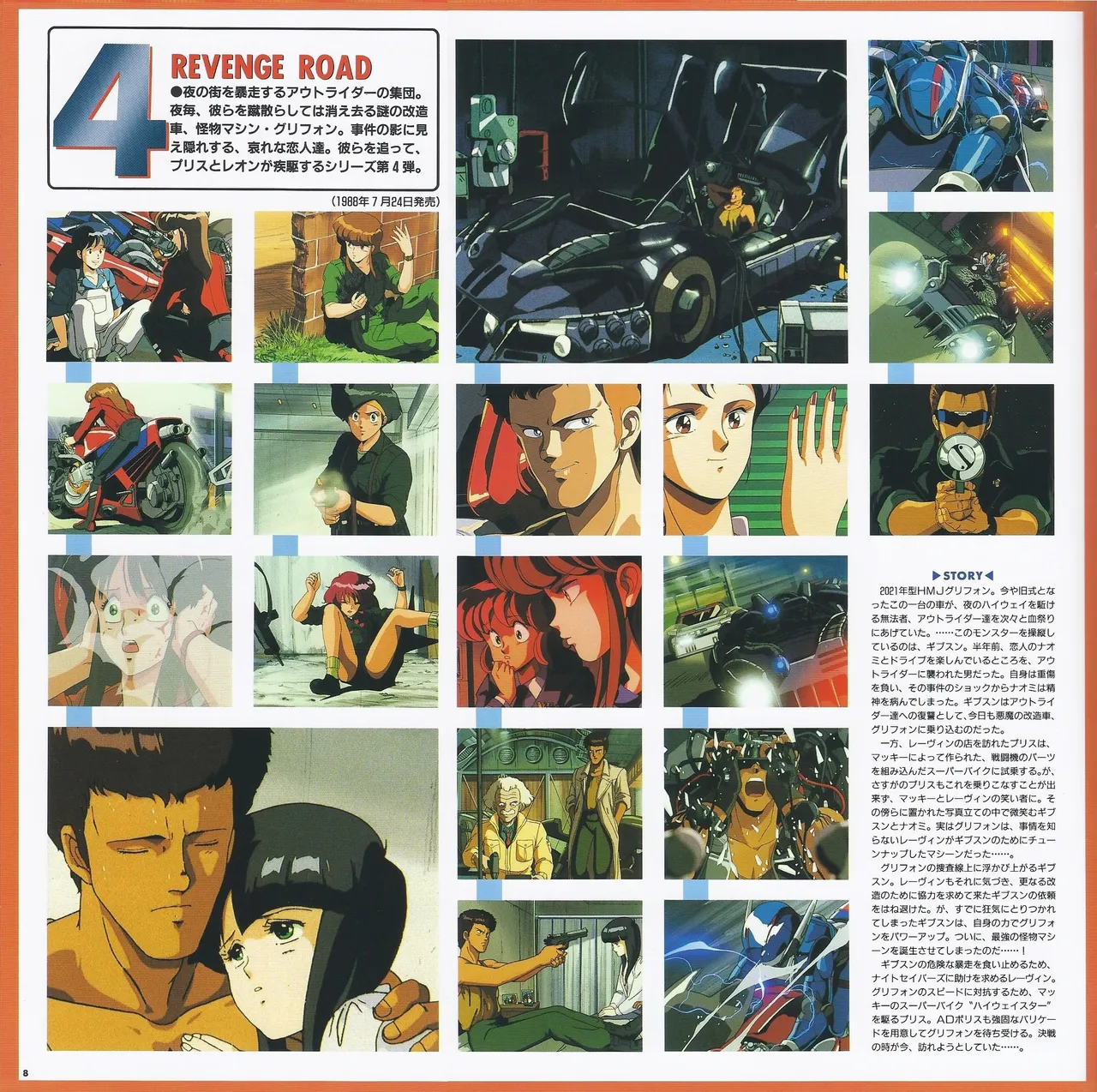 Episode 4 'Revenge Road' — motorcycle action stills, the Griffon, and Priss/Leon dynamic. Released July 24, 1988
Per-Episode Breakdowns
Each of the eight episodes gets a full two-page spread: a numbered header with the episode title, Japanese synopsis, original release date, and a grid of production stills selected to represent the episode's visual peaks. Not promotional screenshots—these are chosen to show the animation at its most technically ambitious. The Griffon chase in Revenge Road. The satellite beam in Moonlight Rambler. The booklet assumes you've seen the series and want to study it.
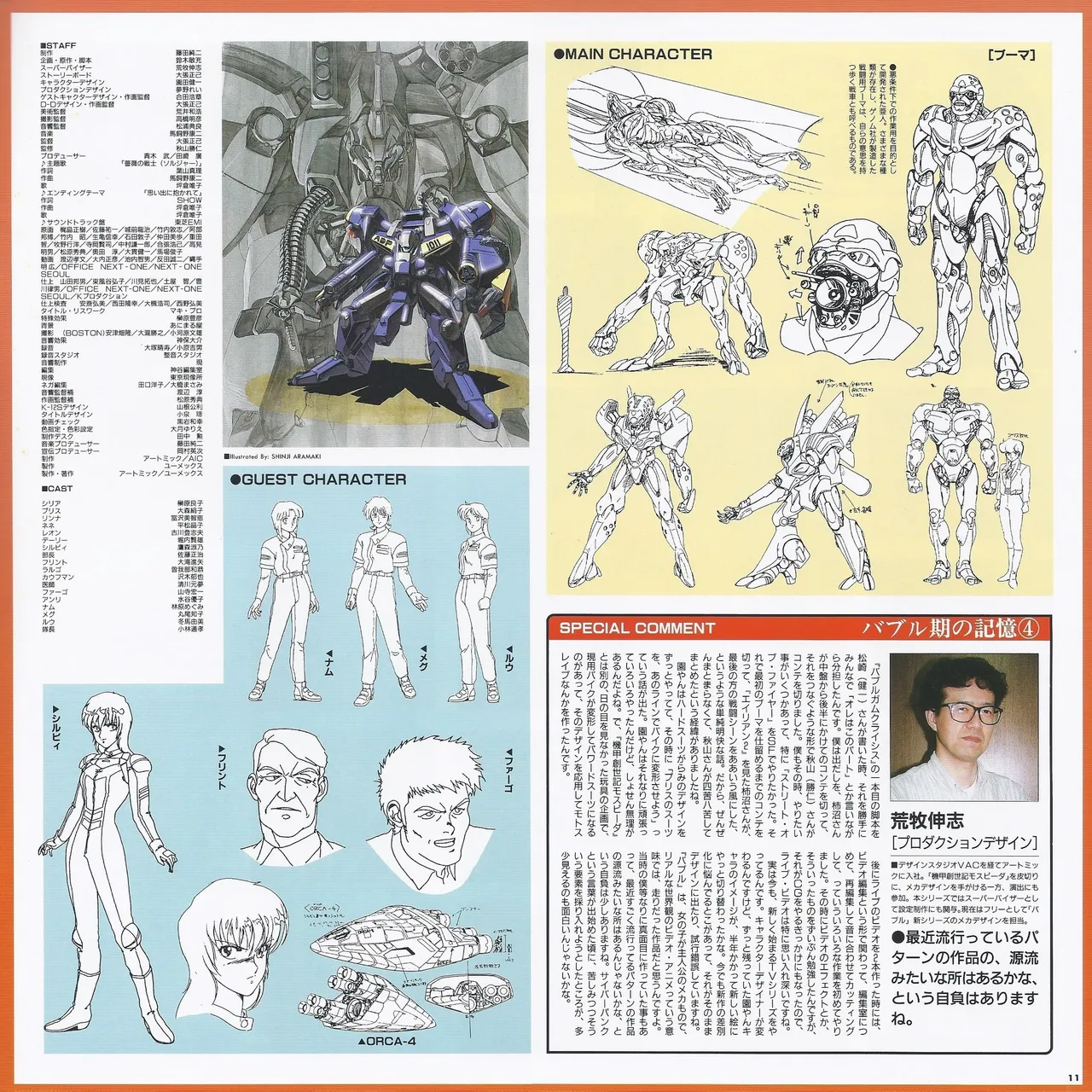 Boomer mecha designs by Aramaki Shinji — DRCA-4 combat Boomer blueprints, guest characters, and a production design interview on the mechanical aesthetic
Memories of the Bubble Era
“With the pattern of works that have been popular recently, there’s a kind of cheap harmony to them. I have a certain pride that what we did was something different.”
Seven Years Later
The booklet's final section is a Knight Sabers Memorial Meeting—a roundtable with the four lead voice actresses recorded in 1996, seven years after the series ended. They discuss the recording process, character relationships, and what Bubblegum Crisis meant to their careers. It's an oral history embedded in a box set insert.
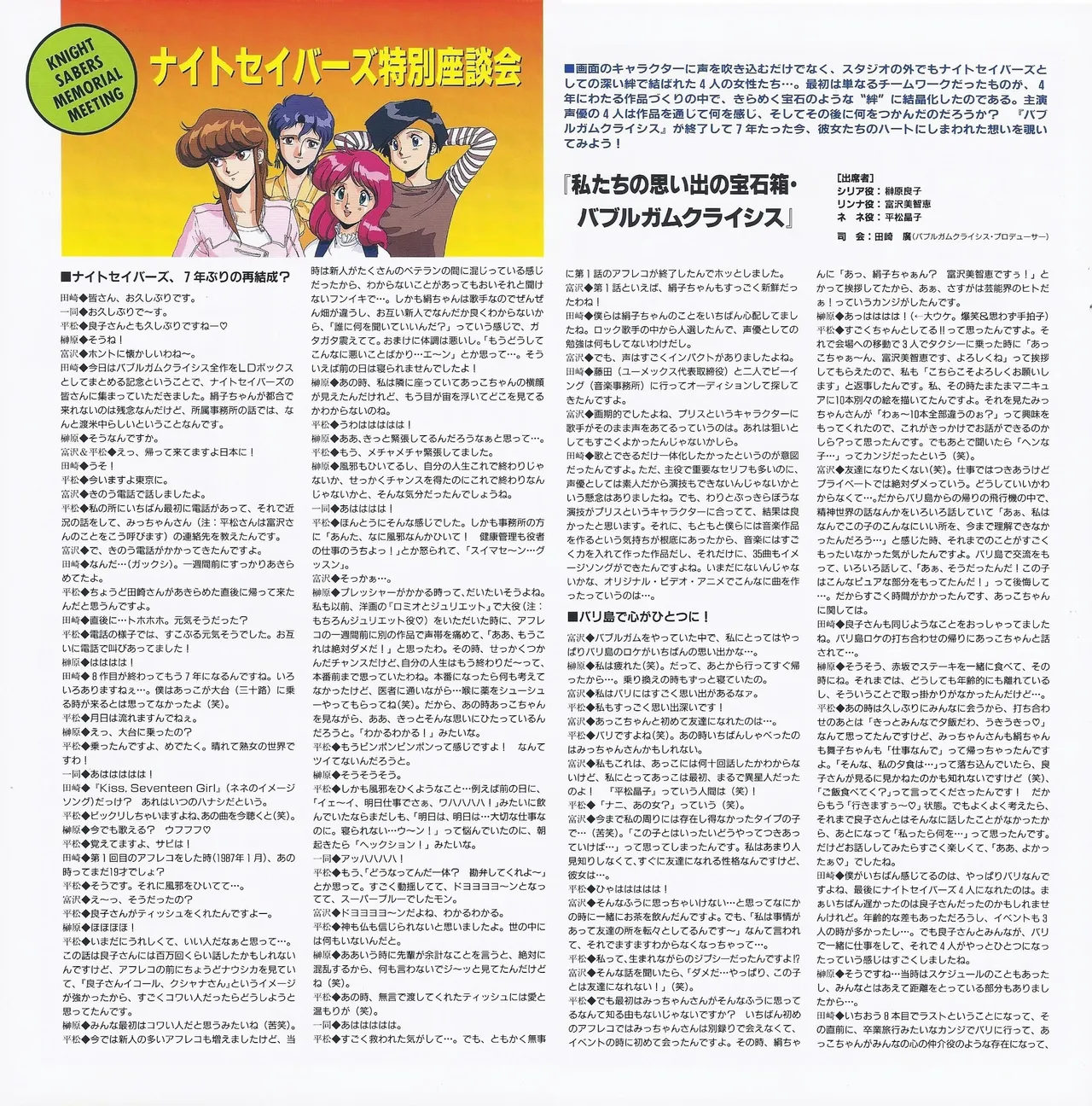 Knight Sabers Memorial Meeting — voice actress roundtable with Sakakibara Yoshiko (Sylia), Tomizawa Michie (Linna), Hiramatsu Akiko (Nene), and the cast reflecting on the series seven years later
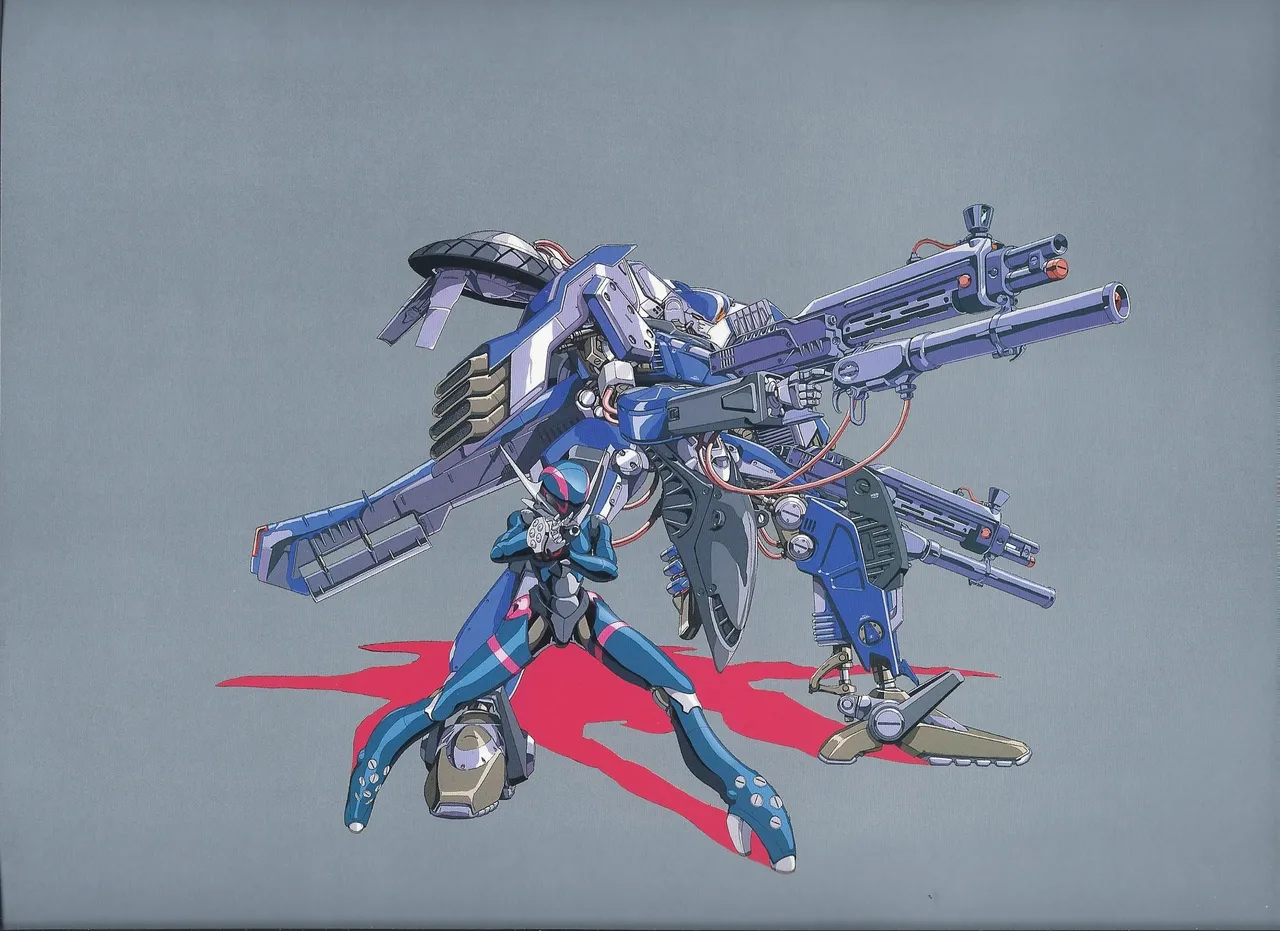 Priss's hardsuit with Motoslave heavy weapons platform — full production illustration, the mechanical design philosophy of Bubblegum Crisis in a single image
The booklet weighs almost nothing. It fits inside the gatefold like an afterthought. But everything in it — the blueprints, the interviews, the seven-year roundtable — treats eight OVA episodes as a system to be understood, not a product to be consumed. Bandai Visual packed twenty-four pages of architectural documentation into a box set insert because in 1996, that's what LaserDisc buyers expected. Not bonus features. Instructions.
Loading...