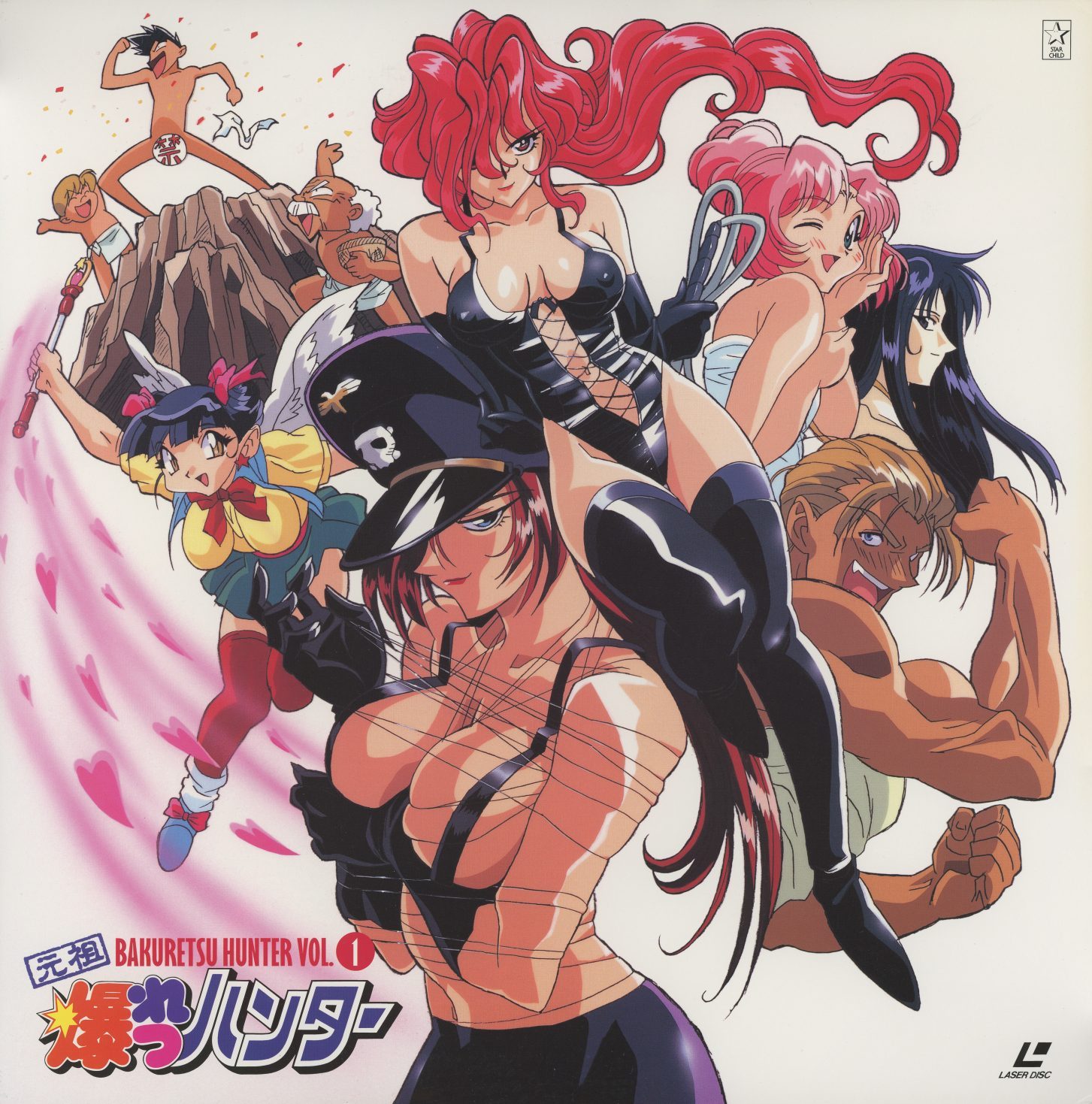
元祖 爆れつハンター (Gansou Bakuretsu Hunter / Original Sorcerer Hunters) — King Records, KILA-308 for Vol.1, ¥5,600 retail, no rental copies issued. Each 12-inch disc is CAV, analog stereo, one episode per volume. The series ran to six volumes across the OVA's run. Each disc ships with a booklet insert. The inserts are not production documentation. They are fan community infrastructure: floor plans of episode locations, cross-media character appearance matrices, relationship diagrams, knowledge quizzes, and a comprehensive catalog of every King Records Bakuretsu Hunter release by catalog number.
Bakuretsu Hunter ran as a 26-episode TV comedy-fantasy from J.C.Staff, based on Satoru Akahori's scripting and Rei Omishi's illustration in Monthly G Fantasy: in a world where sorcerers form an abusive ruling class, a team of five bounty hunters — the Sorcerer Hunters — tracks them down. The leads are Carrot Glaces, cursed to transform into a monster whenever struck by magic, and the Misu sisters, Tira and Chocolate, whose franchise gimmick became the series' commercial identity: gentle and polite by default, they transform when triggered into sadistic, whip-wielding enforcers. The tonal switch was played as comedy, as fanservice, and as something harder to categorize. The OVA continuation, branded 元祖 (original/founding), took the same cast into heavier material: torture, social oppression, the backstory the TV series mostly set aside. The packaging does not acknowledge the shift. The booklets celebrate the franchise as it already existed.
The TV series had aired in the United States as Sorcerer Hunters — licensed by ADV Films, dubbed and broadcast on early cable anime programming blocks, issued on VHS rental copies that appeared on Blockbuster shelves next to Ghost in the Shell and Dragon Ball Z in the mid-to-late 1990s. The English title dropped 爆れつ (bakuretsu — explosive, reckless, wild) entirely. American fans watching the dub had no access to any of this packaging.
CAV, ¥5,600, No Rental
King Records positioned this as a retail-only series — レンタル禁止 stamped on every back cover. ¥5,600 per volume, CAV format, one episode per disc, analog stereo audio. The price point and format signal the intended buyer: someone already invested in the franchise, adding the OVA to a shelf that likely already held the TV series volumes. The back cover of each disc reproduces the episode's full staff and cast listing, story synopsis, and a chapter index — the CAV format supports chapter access, and the index is provided. Character design across all three front jackets belongs to Hiroki Kanno, who handled the same duties on the TV series.
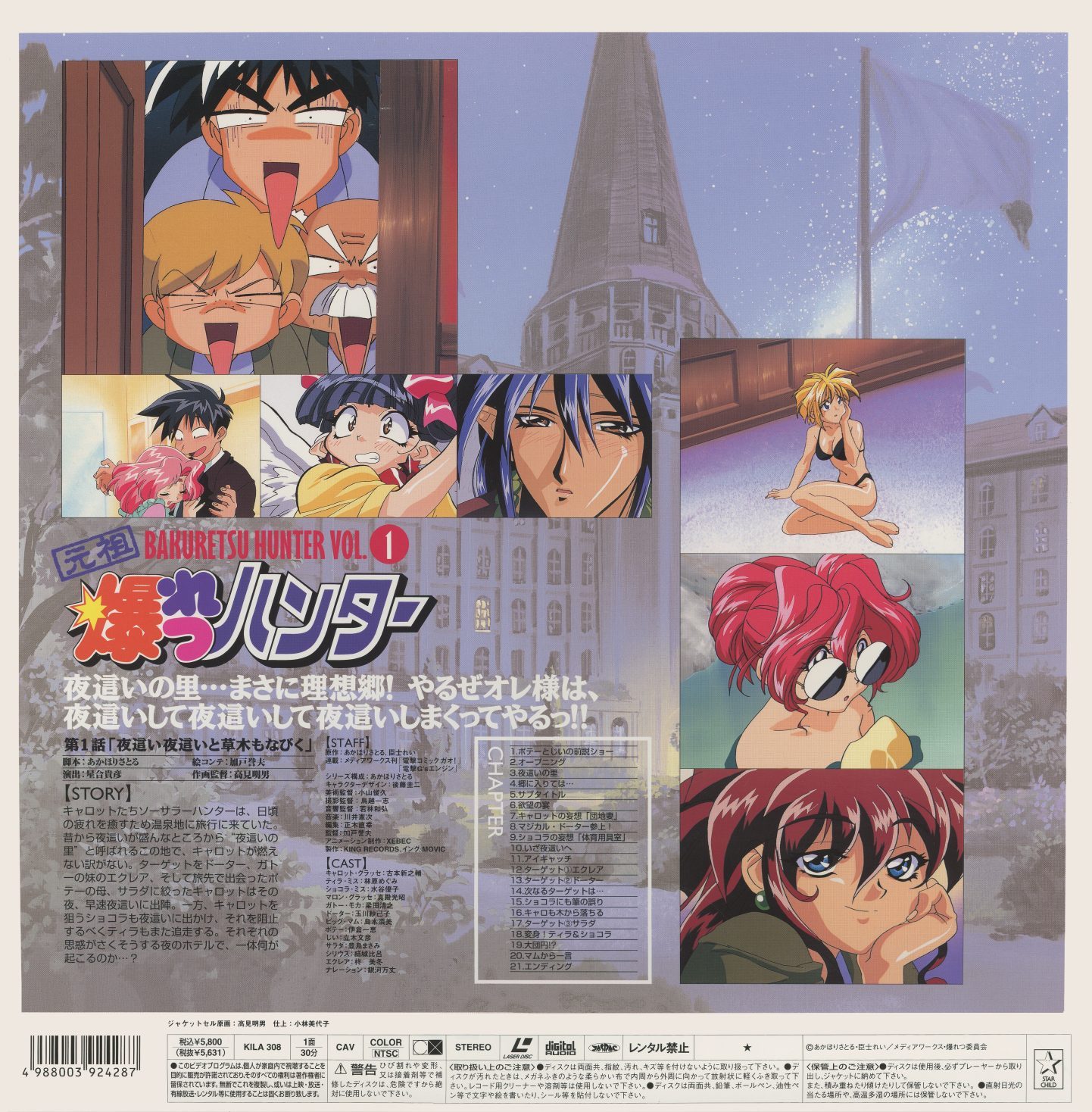 Vol.1 jacket back — KILA-308, ¥5,600. Episode 1: 「夜這い夜違いと草木もなびく」. Format bar: CAV, COLOR NTSC, STEREO. レンタル禁止. Staff, cast, and story synopsis printed in full.
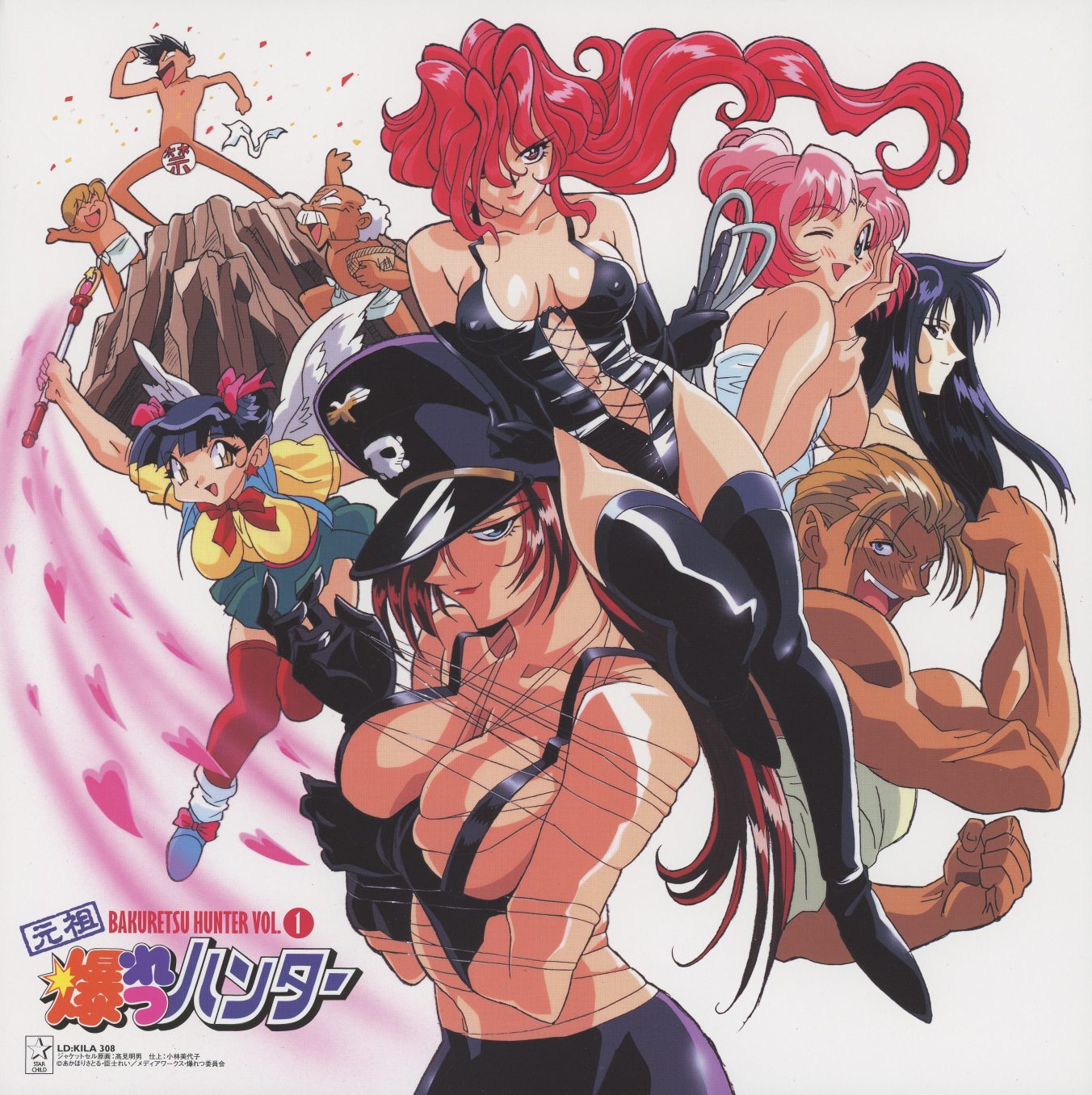 Vol.1 disc art — the same Hiroki Kanno illustration as the jacket, printed directly onto the disc face. Without the obi's catalog text, the composition reads differently: Chocolate's whip reaches toward the disc's edge.
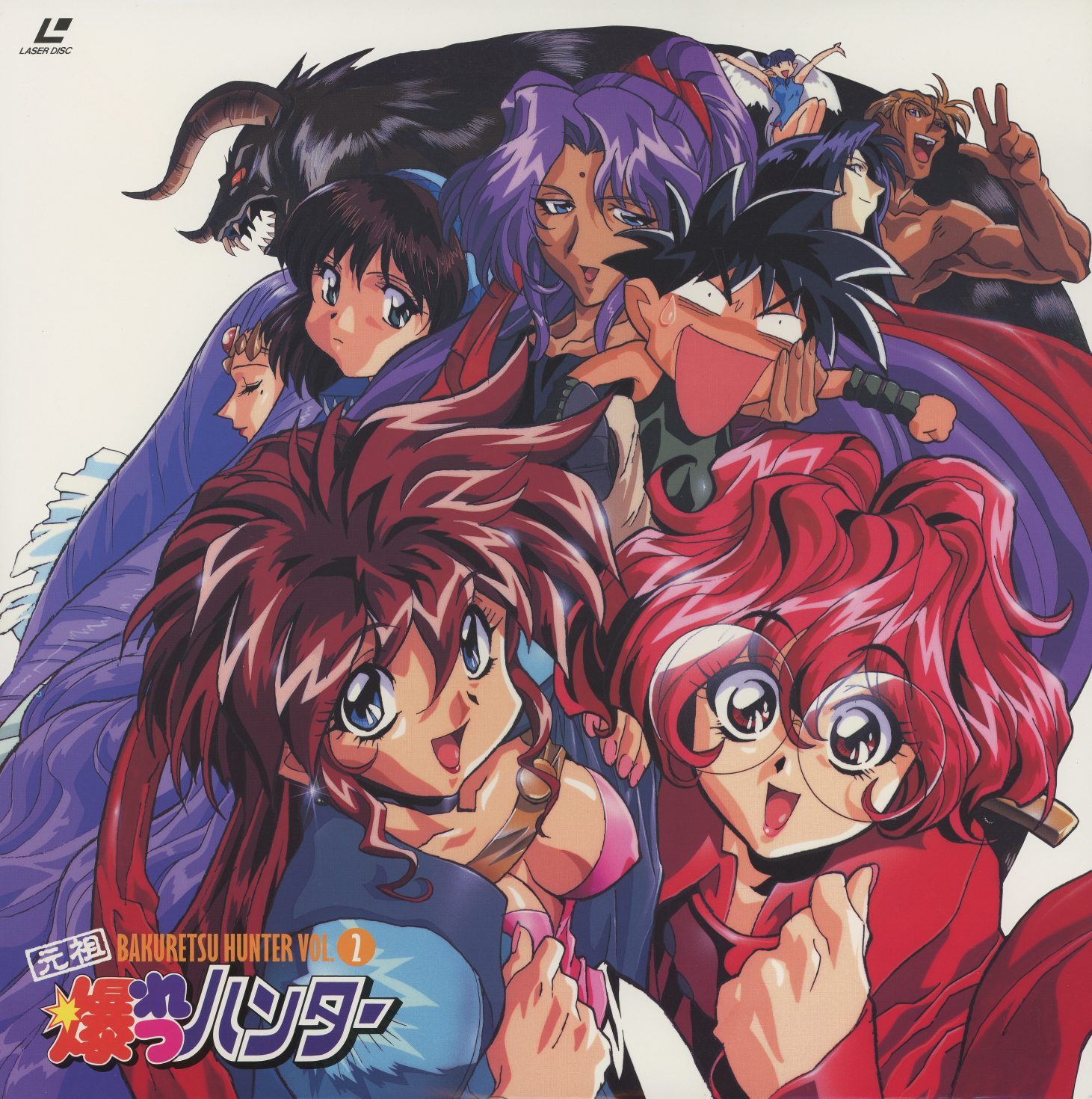 Vol.2 jacket front — KILA-309. Tira and Chocolate in their default personalities: smaller-proportioned, open, smiling. The full supporting cast around them. The jacket series shows both halves of the gimmick.
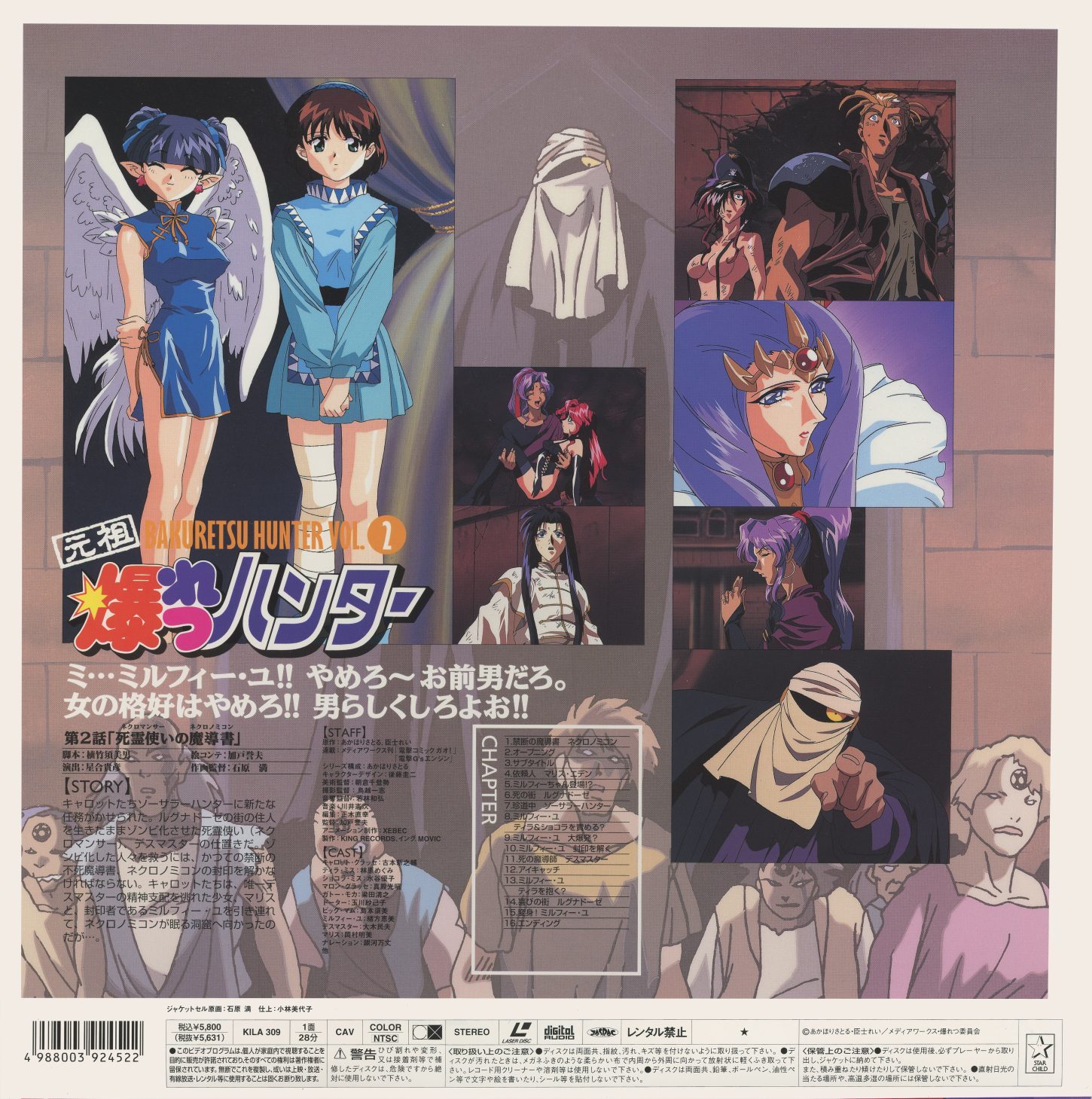 Vol.2 jacket back — KILA-309, ¥5,600. Episode 2: 「死霊使いの館専業」. Episode stills arranged across the back panel. Format bar: CAV, COLOR NTSC, STEREO.
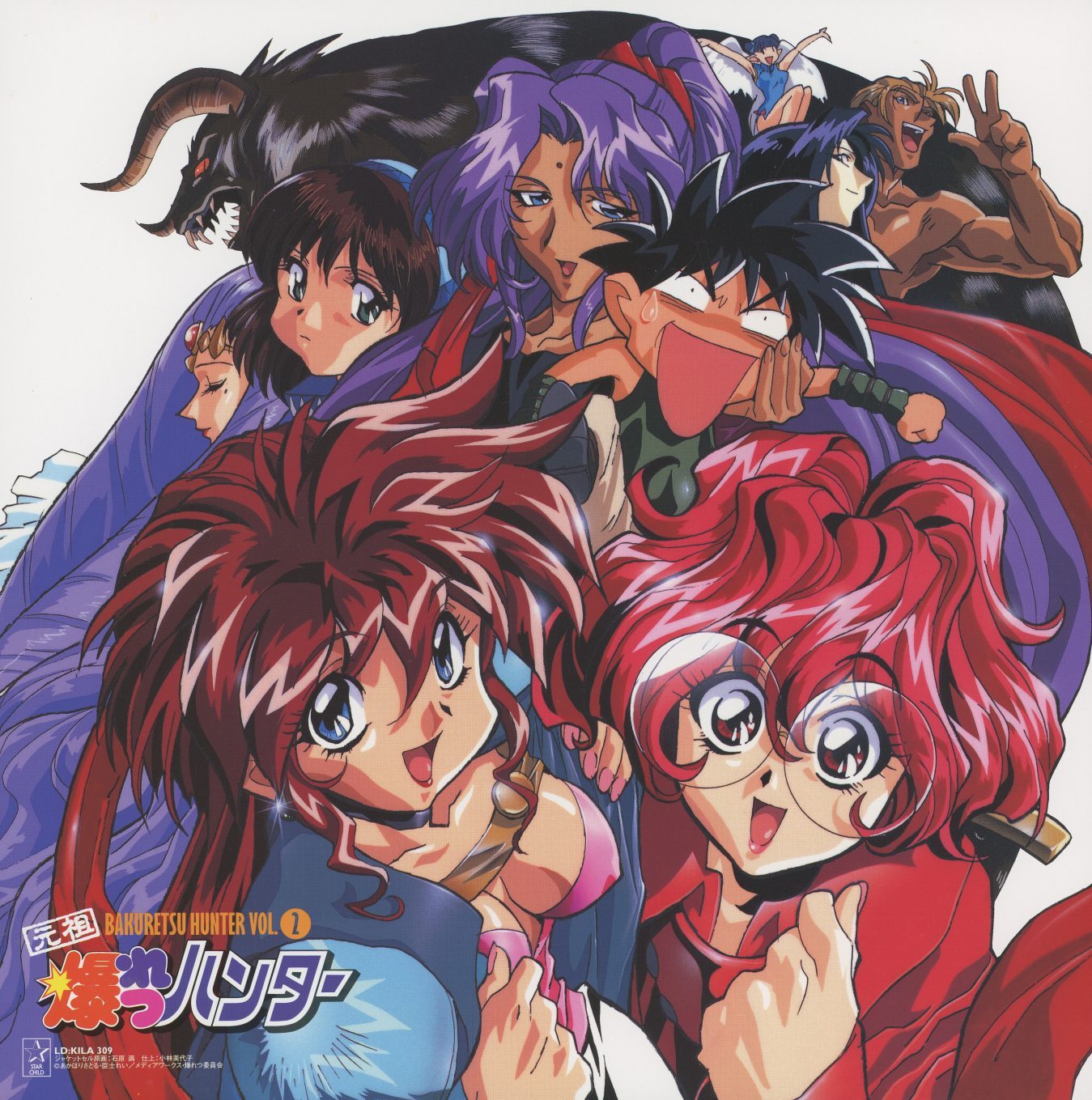 Vol.2 disc art — clean print of the Vol.2 jacket illustration. Tira and Chocolate with the supporting cast, printed at the disc label scale. No obi text.
The Jacket Series as Argument
Vol.1 leads with the transformed Chocolate — dominatrix outfit, center frame, whip raised — while the cast orbits in chaos. Vol.2 flips to the sisters in their sweet default personalities: demure, smaller-proportioned, open expressions. Vol.3 places everyone in a spring meadow with cherry petals falling and Carrot reaching forward as though trying to catch something. Three volumes, three registers, no resolution. Hiroki Kanno's art holds both halves of the transformation gimmick across the series without committing to one. The packaging is more honest about the show's tonal instability than the show itself was.
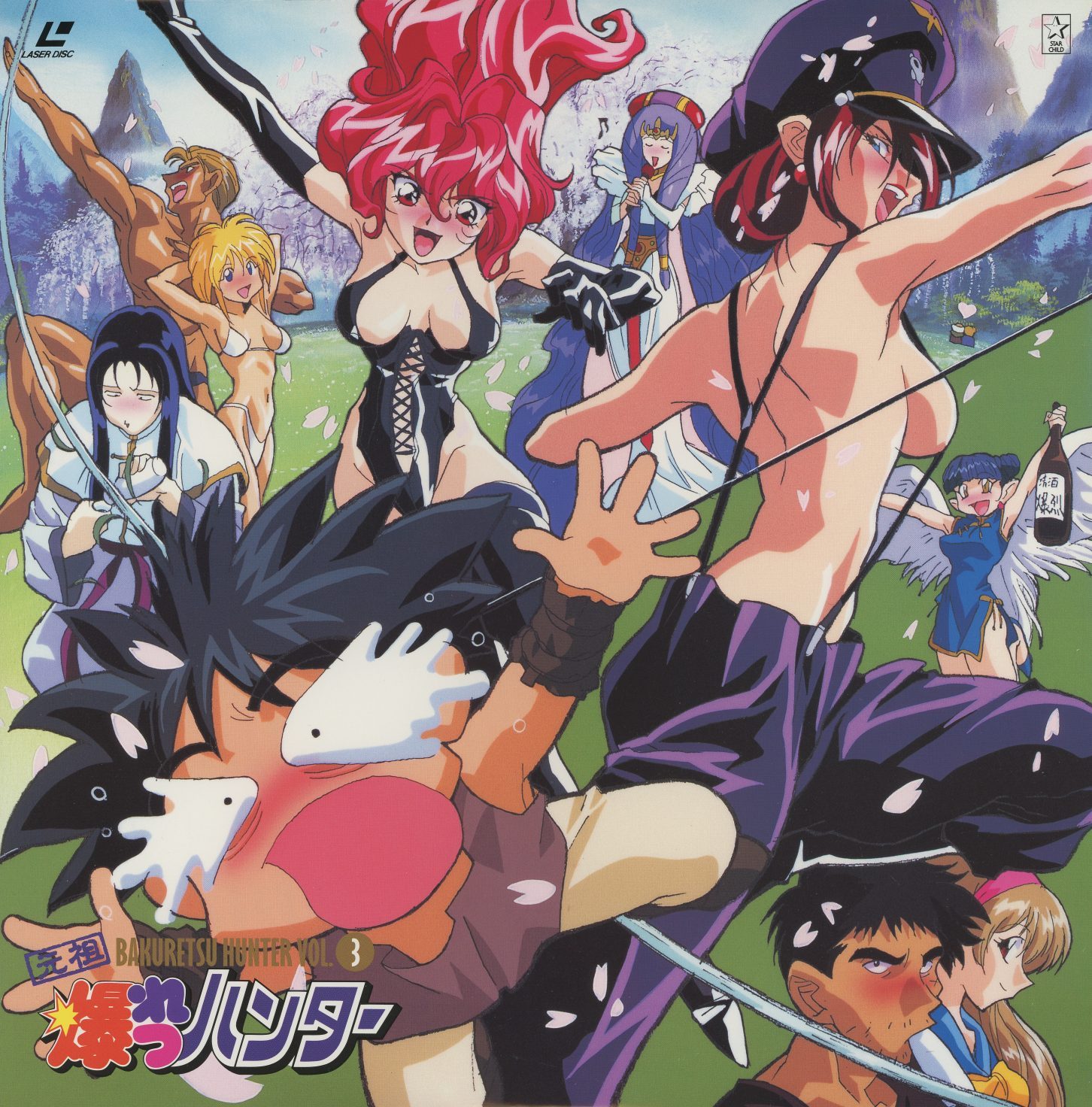 Vol.3 jacket front — KILA-310. Cherry blossom setting; the full ensemble in a spring outdoor scene. Carrot reaches toward the viewer. The comedy register of the TV series; the OVA's darker material is not visible here.
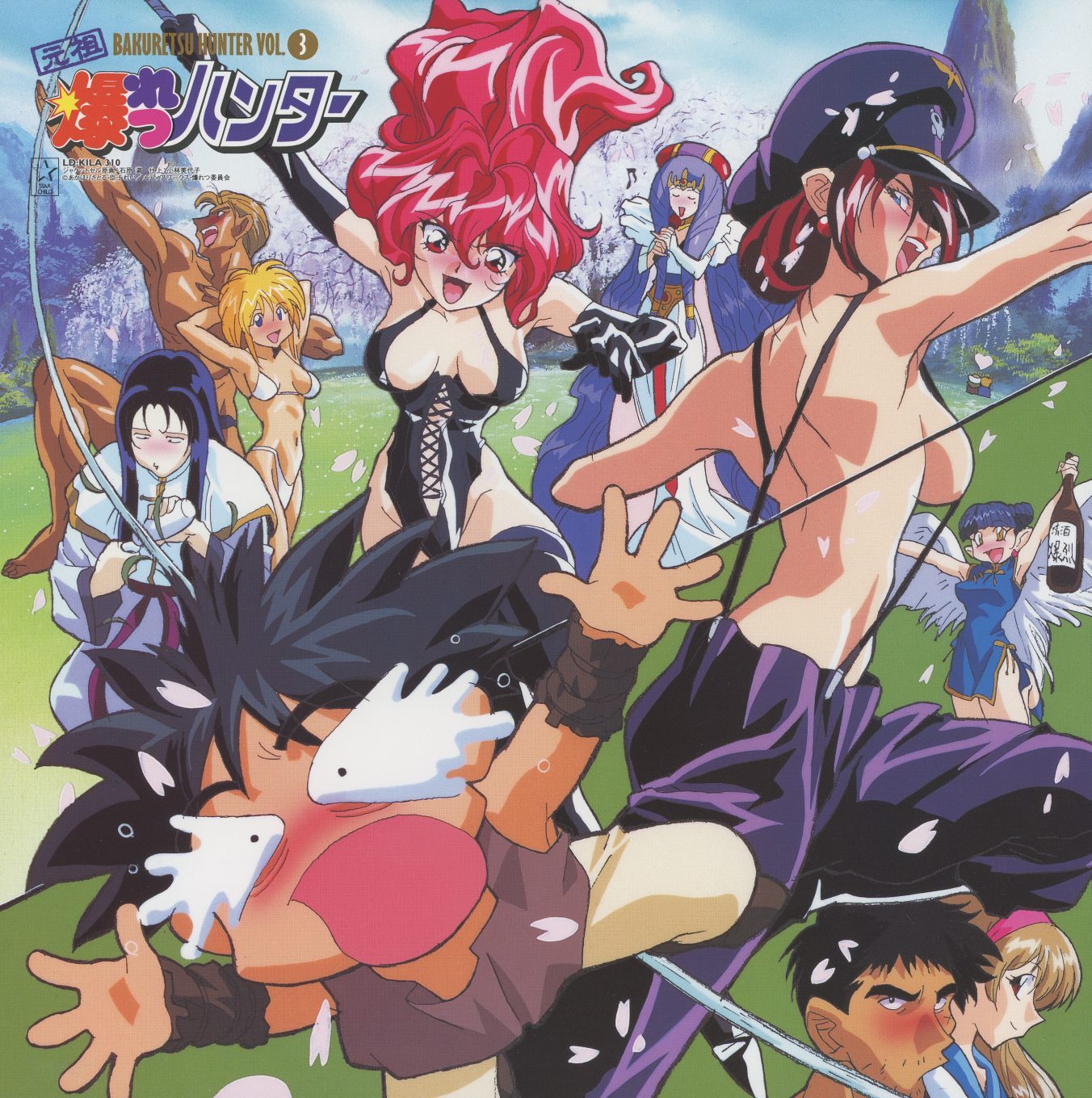 Vol.3 disc art — the spring ensemble illustration without obi. Cherry petals print well at disc-label scale; the warm palette reads clearly even in reduced dimensions.
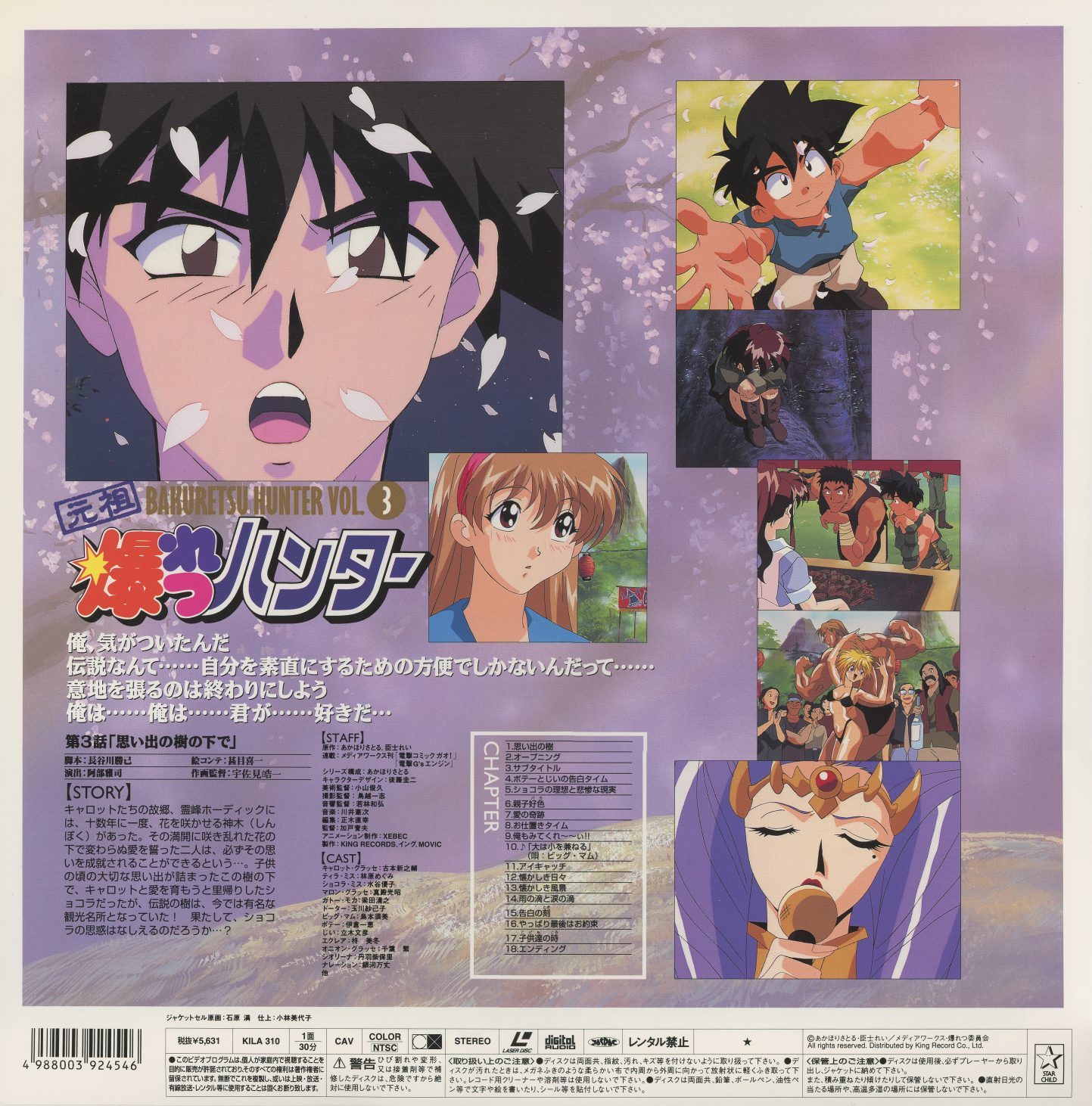 Vol.3 jacket back — KILA-310. Episode 3: 「思い出の夜の下で」(Under the Night of Memories). Episode stills show a tonally heavier installment — Carrot's close-up, a character in apparent distress. The line printed on the back: 「俺は…君が好きだ…」 (I... I like you...).
Under the Night of Memories
By Vol.3 the OVA is introducing its actual intentions. The episode title, the back-cover still selection, the tagline printed in large type — together they signal an installment about memory, feeling, and something Carrot is admitting for possibly the first time. The TV series ran 26 episodes of slapstick and transformation gags; the OVA uses the same characters to say something about what was underneath that. King Records printed the confession across the back cover and let buyers draw their own conclusions before putting the disc on.
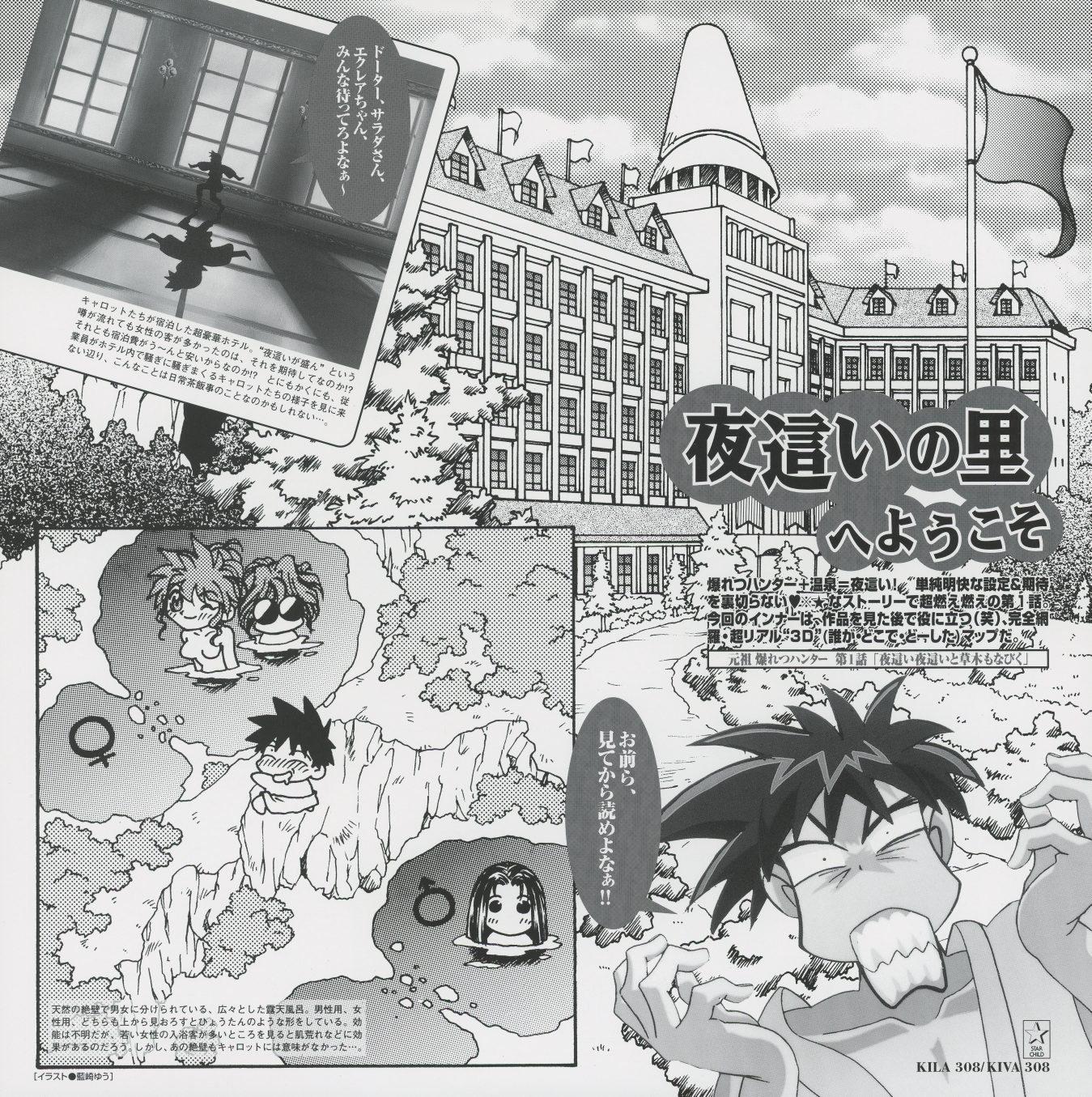 Vol.1 booklet insert — 「夜這いの里へようこそ」(Welcome to the Night-Crawling Village). Manga-style illustration of the episode's inn location with an introductory text block. Catalog reference: KILA-308/KIVA-308.
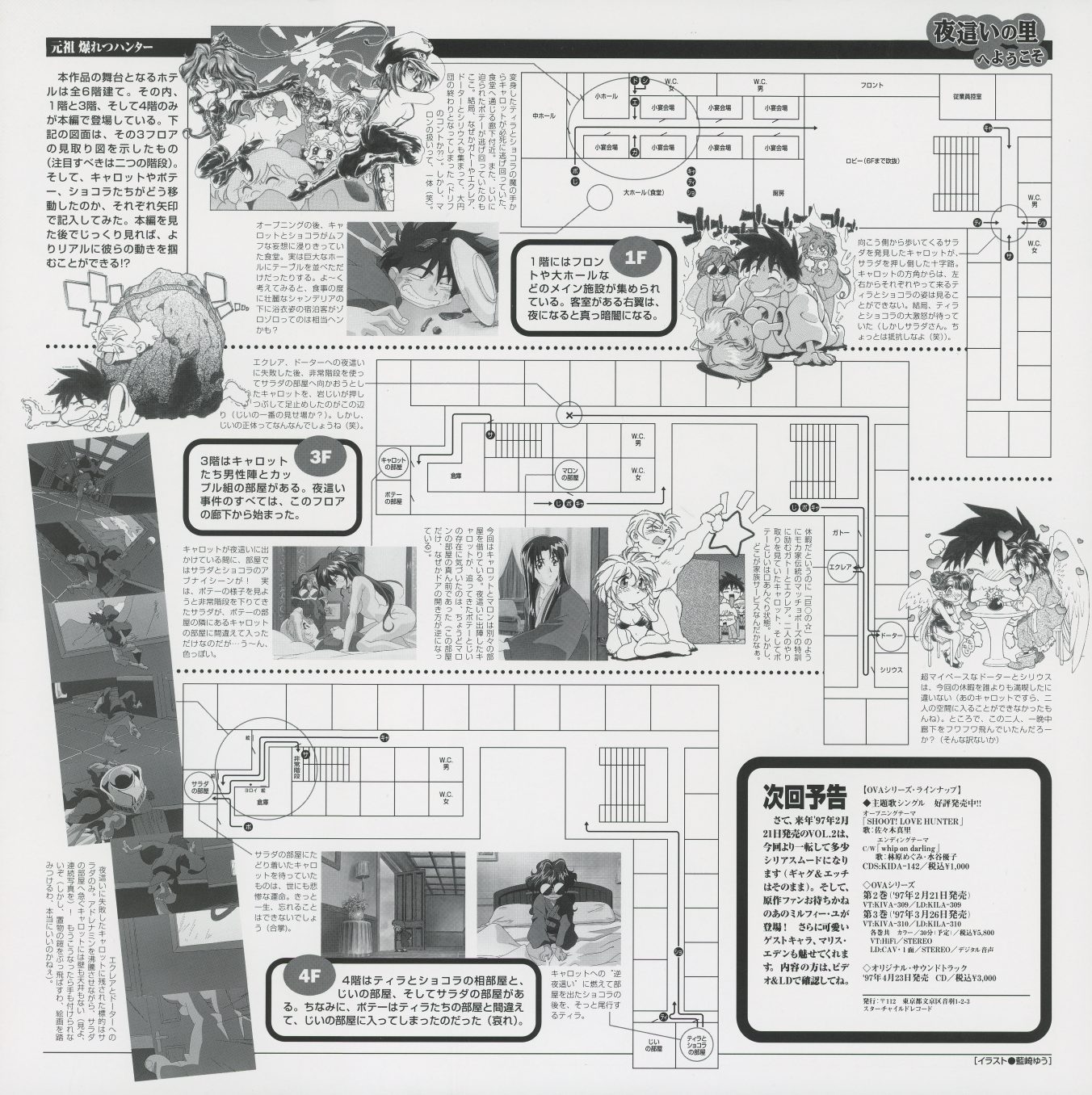 Vol.1 booklet — floor-by-floor layout diagram of the episode's inn. 1F: front desk and gathering area. 3F: Carrot's room and the male cast quarters. 4F: Tira and Chocolate's rooms. Episode stills placed on each floor alongside character annotations.
The Floor Plan
Two full booklet pages document the physical layout of the inn where Episode 1 takes place. Every floor labeled. Room functions explained. Character placement mapped with precision. No one needed to know the floor plan to understand the episode. King Records produced this as a form of play — extending the episode's universe into the booklet, giving buyers a reason to read before and after watching. The vocabulary is architectural documentation applied to a comedy premise. It is completely unnecessary and completely correct for the audience it was written for.
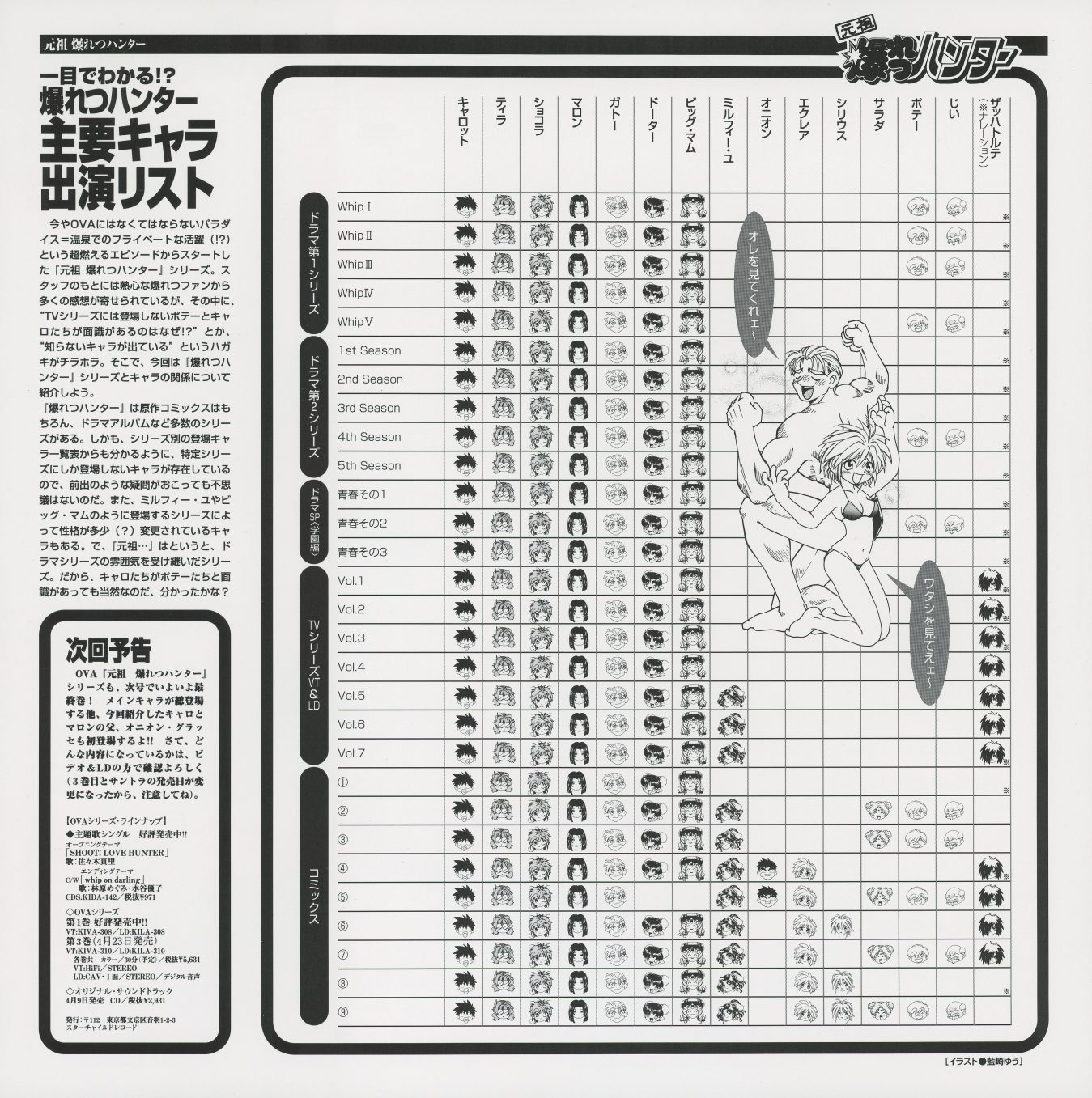 Vol.2 booklet — 「主要キャラ出演リスト」(Major Character Appearance List). Grid tracking every named character across all TV series seasons (Seasons 1–5) and all OVA volumes. Portrait icons populate each cell. Catalog reference: KILA-309/KIVA-309.
The Character Matrix
The appearance chart tracks the entire franchise — TV Series Seasons 1 through 5, all OVA volumes — in a single grid. Every named character is given a row; every broadcast season or LD volume gets a column. Portrait icons mark each appearance. The document assumes you can identify Marron Glacé and Nuu on sight and track their movement across the full series run. No explanations are offered. Below the chart, a next-volume preview lists upcoming OVA volumes by catalog number (KILA-310 onwards), with pricing. The booklet insert doubles as a purchase checklist.
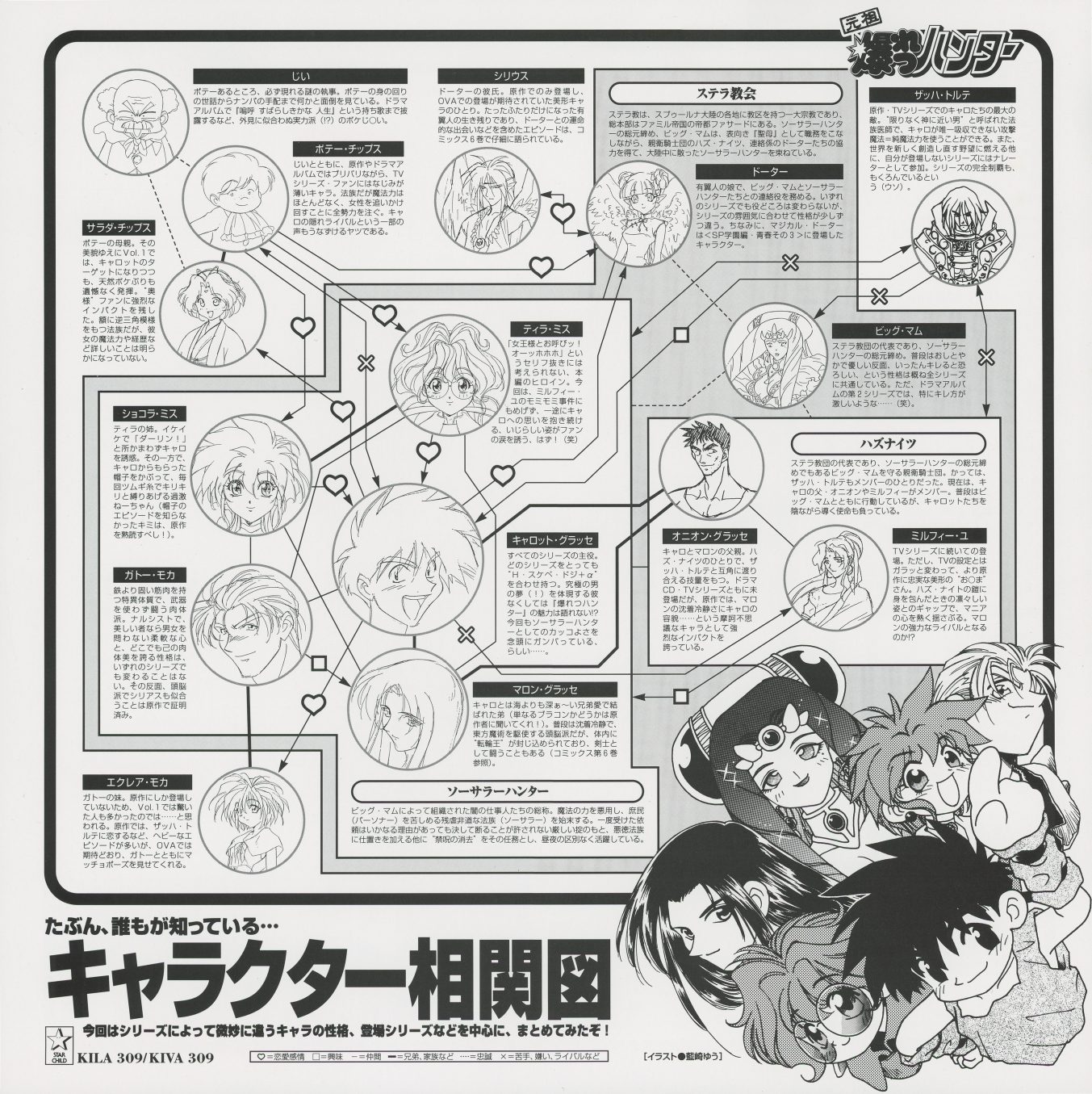 Vol.2 booklet — 「キャラクター相関図」(Character Relationship Diagram). Approximately thirty characters mapped with directional connection lines indicating romantic interest, rivalry, and family ties. KILA-309/KIVA-309.
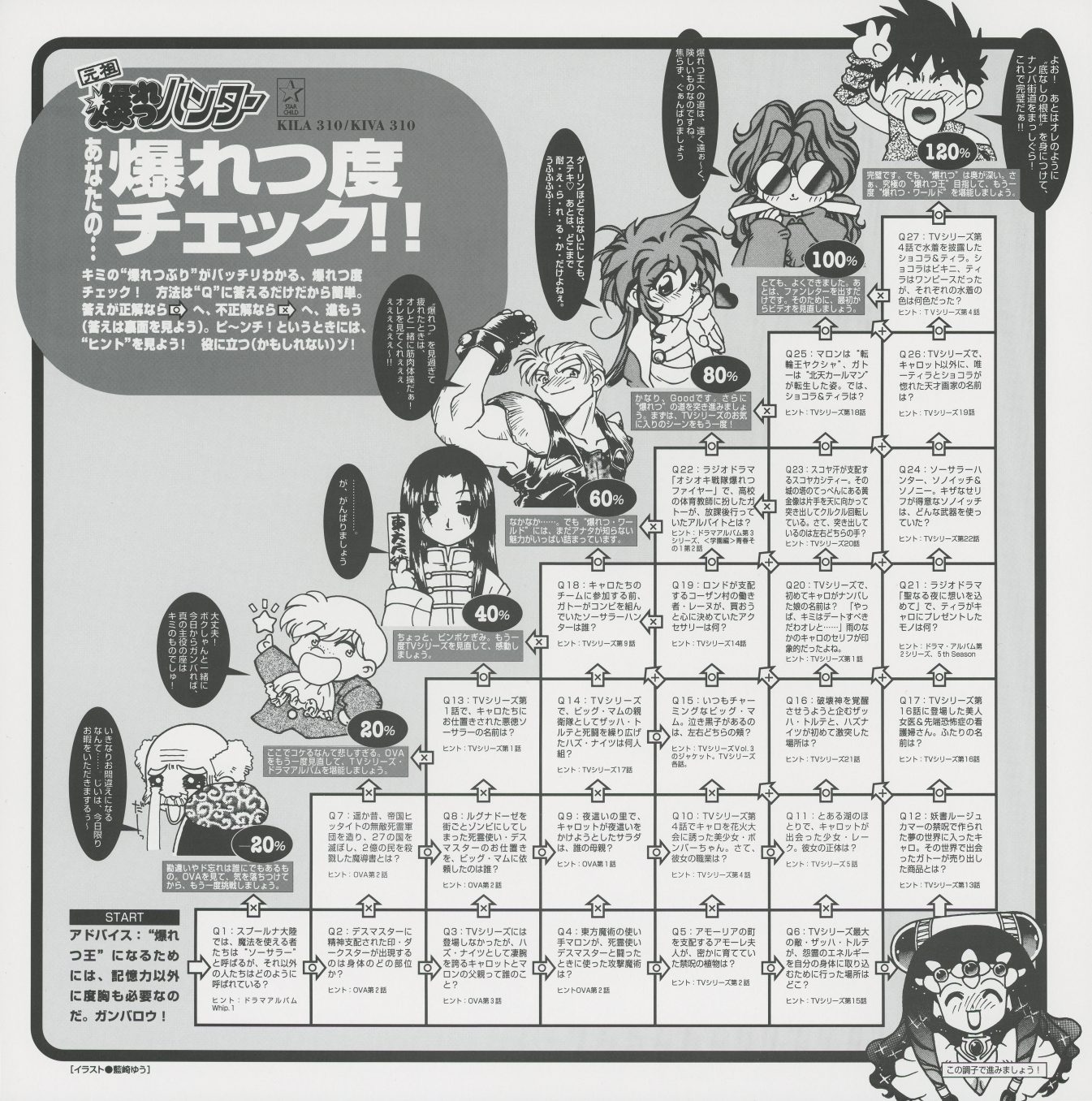 Vol.3 booklet — 「爆れつ度チェック!!」(Sorcerer Hunters Knowledge Check!!). Flowchart quiz with approximately 30 questions branching to five result tiers from 20% to 120% completion. Questions span TV series seasons, manga, drama albums, and OVA. Catalog reference: KILA-310/KIVA-310.
Two Fandoms, Two Frameworks
The knowledge quiz tests fluency across every Bakuretsu Hunter media format — TV series minutiae, drama album storylines, OVA plot details. The questions assume ownership of the drama albums, the manga, the prior LD volumes. It was designed for the completionist Japanese collector. ADV Films' American VHS buyers — who had been watching the same episodes on rental copies at Blockbuster, without subtitles on the Japanese content, without access to any of this packaging — were playing a different game entirely. The two fandoms shared a franchise and had almost nothing else in common.
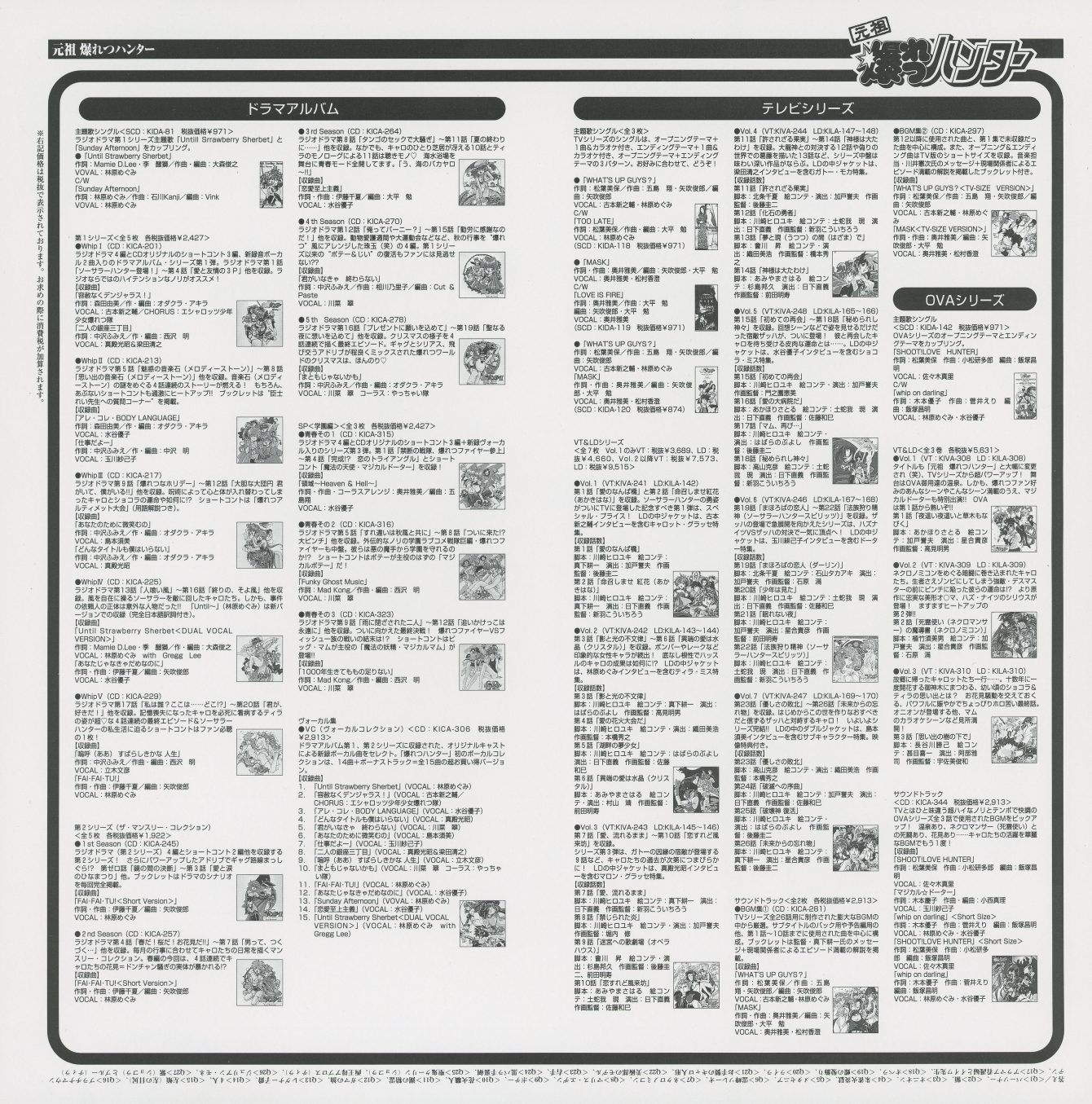 Vol.3 booklet — comprehensive King Records Bakuretsu Hunter product catalog. Four columns: Drama Albums, TV Series LaserDiscs, OVA Series, additional releases. Each entry listed with catalog number, subtitle, and track breakdown. Printed as a collector's checklist.
The Vol.3 product catalog lists every King Records Bakuretsu Hunter release across four columns: drama albums by season, TV series LaserDisc volumes, OVA volumes, additional releases. Each entry has a catalog number. By the time this page was printed, the franchise had generated enough ancillary product to fill a back panel — audio dramas, character CDs, the full TV series across individual disc releases, the OVA run in progress.
No subsequent home video release replicated any of the booklet content. The DVD compilation collected the episodes. The floor plan of the inn from Episode 1, the character appearance matrix spanning Seasons 1 through 5, the relationship diagram, the knowledge quiz — these existed for the domestic Japanese LD buyer across 1996 and, once that market moved on, for no one else.
The American fandom discovered Sorcerer Hunters on a rental shelf. The Japanese collector discovered it one disc at a time, with a checklist tucked inside each sleeve.
Loading...