Giant Robo: The Animation — 地球が静止する日 ran for seven episodes from 1992 to 1997. Director Yasuhiro Imagawa, produced at Sunrise / PLEX. Each episode released on LaserDisc through Emotion/Bandai Visual — BEAL-495 through BEAL-743 — with jacket art by Yamashita Akihiko, the series' character designer. The jackets were not promotional illustrations. They were Yamashita's visual interpretations of each episode's dramatic core, commissioned as each episode finished production and released one at a time across five years.
The 30th Anniversary Book reproduces all seven in sequence. Chapter 3 — 版権ギャラリー — opens with the series' advance visual and lays the jackets out in production order, 1992 to 1997. Looking at them together, you can see the production deciding what it was: first an action OVA, then an ensemble drama, then something heavier. The visual shift is there across the covers before it's fully legible in the episodes themselves.
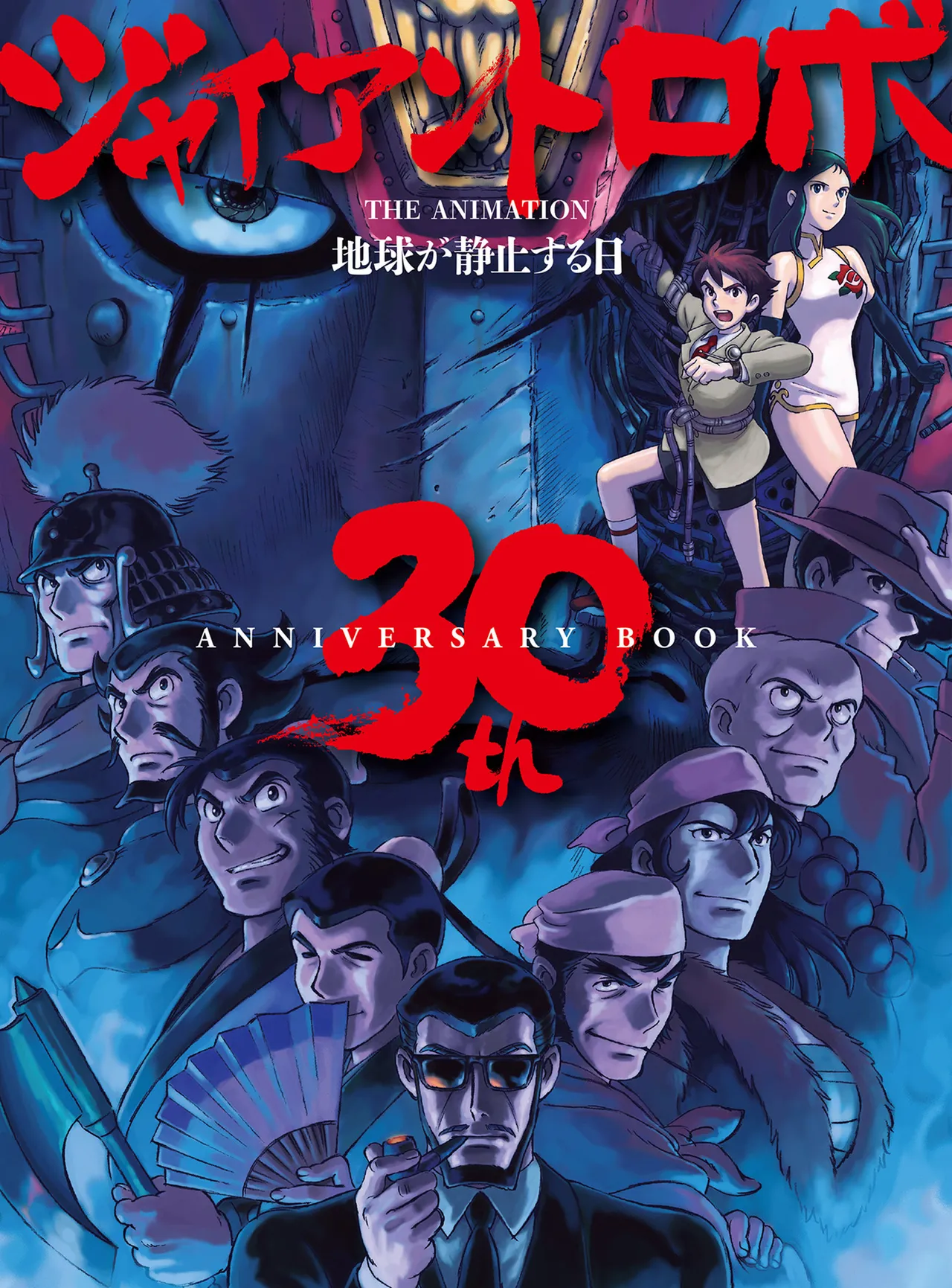 Cover — ジャイアントロボ THE ANIMATION 地球が静止する日 30th ANNIVERSARY BOOK, 2022. Full cast illustration with Daisaku, Ginrei, the Ten Magnificent, and the antagonist faction against Giant Robo's face. New art for the anniversary volume.
版権ギャラリー
Chapter 3 of the anniversary book is titled 版権ギャラリー — Copyright Gallery. The name is bureaucratic. What it contains is not. All seven episode jacket artworks by Yamashita Akihiko, reproduced in full color alongside B-CLUB magazine features, promotional pin-ups, and production screencaps. The chapter opens with the 先行ビジュアル — the advance visual drawn before Episode 1 was finished, the first image released to the press. It shows Daisaku standing on Giant Robo's shoulder, pointing forward. That posture — a boy commanding a city-sized machine — defined the series' visual identity before a single episode aired.
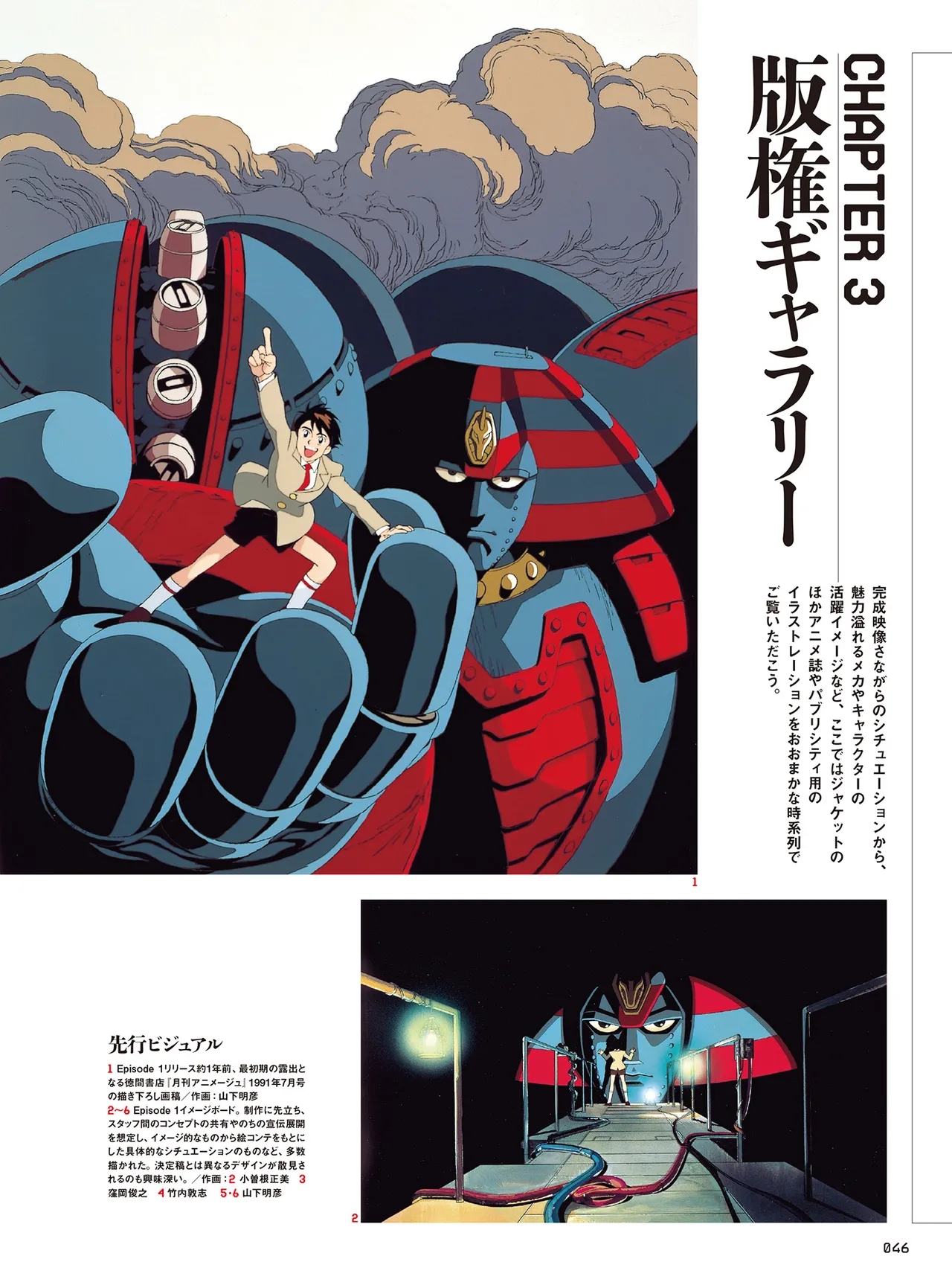 Chapter 3: 版権ギャラリー — opening spread with the 先行ビジュアル (advance visual) by Yamashita Akihiko. Daisaku on Giant Robo's shoulder, 1991. Released before Episode 1 as the series' first public image.
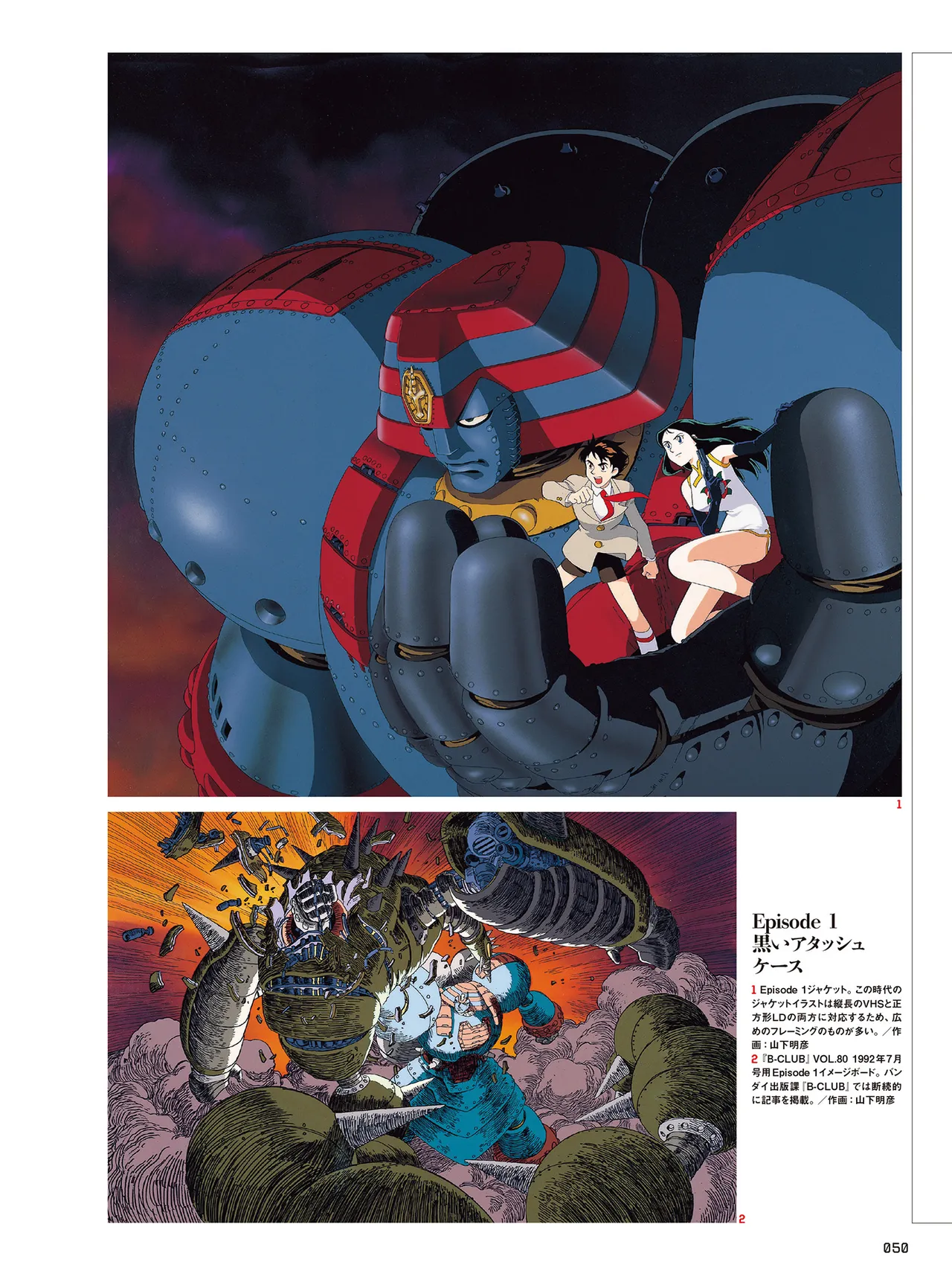 Episode 1 — 黒いアタッシュケース (The Black Attaché Case), 1992. BEAL-495, Emotion/Bandai Visual. Jacket art: Yamashita Akihiko. Daisaku and Ginrei on Giant Robo's fist; the first BF Dan confrontation below. The framing is classic superhero: boy, robot, clear enemy.
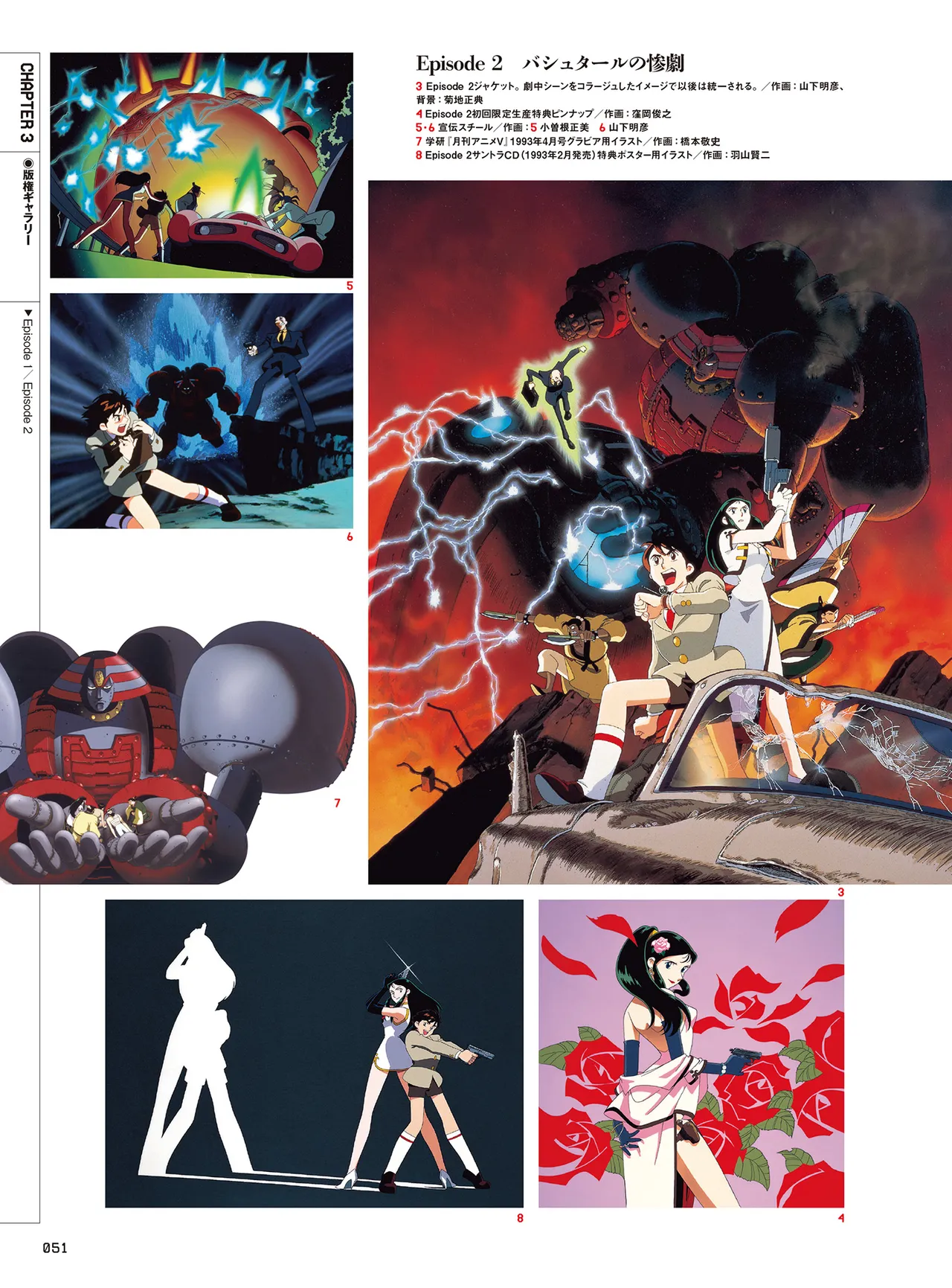 Episode 2 — バシュタールの悲劇 (The Tragedy of Bashtarle), 1992. BEAL-496. The ensemble arrives: Ten Magnificent in their configurations, Daisaku at center, lightning. This became the series' primary promotional image.
The Full Cast
The Episode 2 jacket established the visual grammar: multiple high-contrast characters filling the frame at different scales, each posture coding their role. Tetsugyu with his chain-fist. Kouensha in flame. Ginrei armed. Daisaku at center and smallest. It is the image that defines the series for most people — all of them together, the stakes named in the episode title: バシュタール. The tragedy is announced. The jacket shows everyone who will carry it.
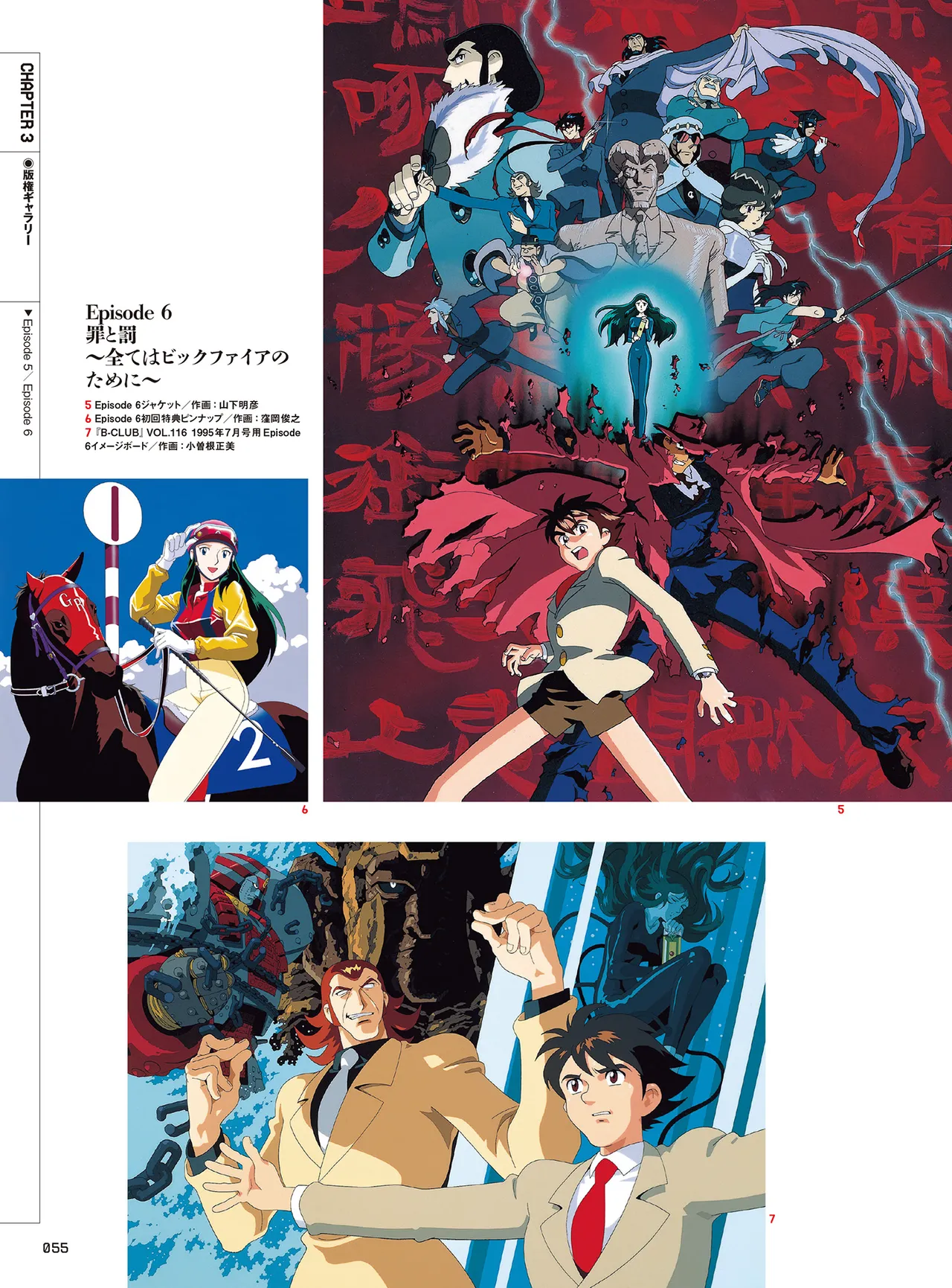
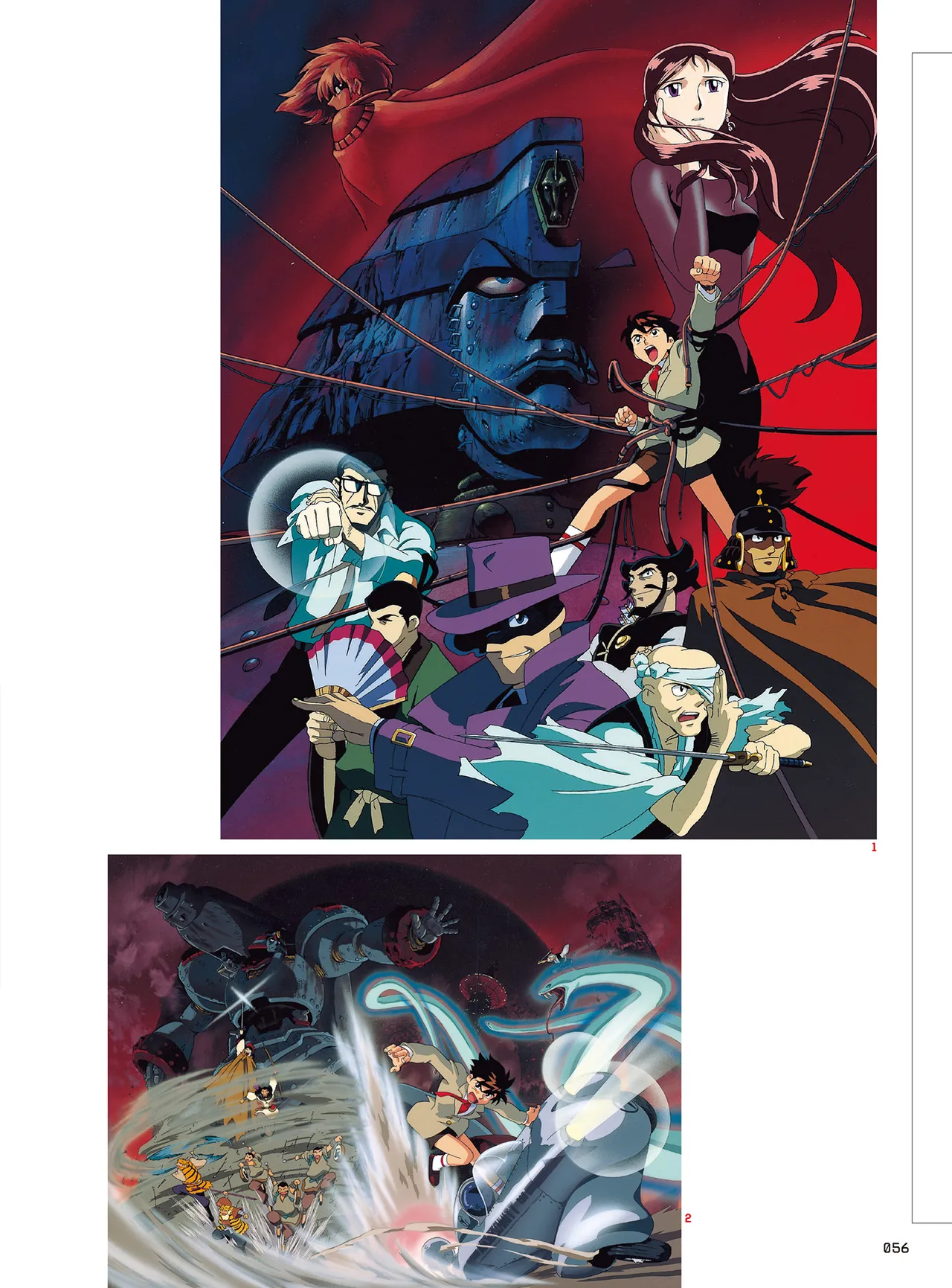
Episode 6 — 罪と罰〜全てはビッグファイアのために〜 (Crime and Punishment — All for Big Fire), 1996. Jacket art: Yamashita Akihiko. The composition has changed: figures entangled in crisis, a red ground pressing behind. Four years after Episode 1.
What Four Years Does
The Episode 6 jacket is where the comparison becomes stark. In 1992, the Episode 1 jacket had clear space — robot, boy, enemy below. By 1996, Yamashita's Episode 6 composition fills the frame entirely: everyone tangled in crisis, the red ground pressing like a stage backcloth for something operatic. This is also the episode where the Shizuma Catastrophe's truth is delivered. The jacket was drawn knowing what it contained. It reads accordingly.
 Last Episode — 七人〜敗れゆくは、美しき幻の夜〜 (The Seven — Fading into the Beautiful Night's Dream), 1997. BEAL-743. Jacket art: Yamashita Akihiko. Dark and intimate: Daisaku, Ginrei, and the antagonist faction compressed together. Giant Robo does not appear.
五年後
Last Episode was released in 1997. BEAL-743. Five years after BEAL-495. Giant Robo does not appear on the jacket of its own series' final episode. What appears instead: Daisaku and Ginrei in the foreground, the villain faction above them, a tilted rather than frontal composition. The Blu-ray releases used new key art. The original LaserDisc jackets, reproduced here, are the only place all seven exist in sequence in the format for which they were made.
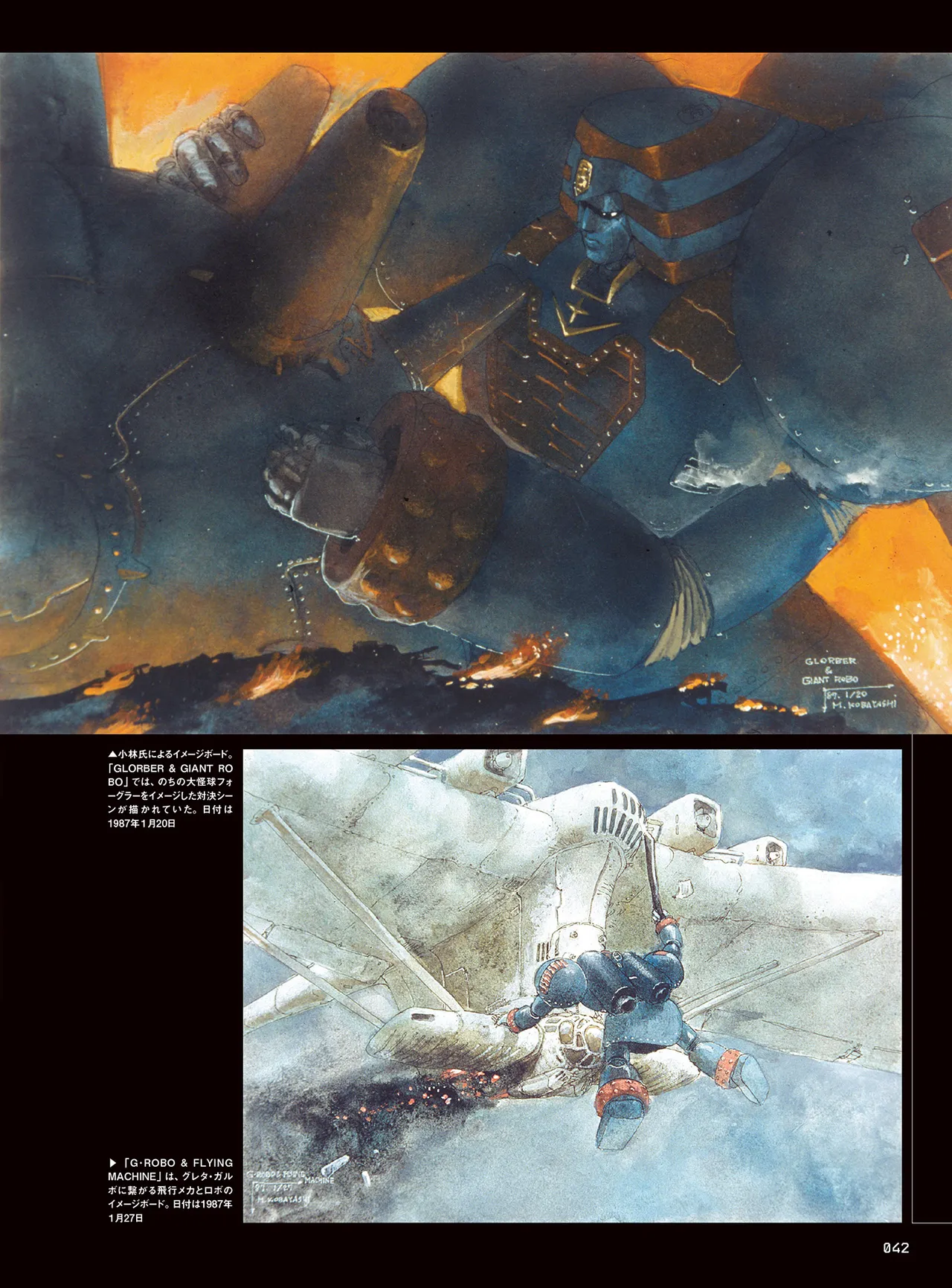 Chapter 2: 初期画稿 — image board tracing the 1967 Mitsuteru Yokoyama designs, "GLOBBER & GIANT ROBO." Watercolor and gouache. The production documented its visual lineage back to Yokoyama's original robot before constructing the 1992 version.
Before the Animation
Chapter 2 is 初期画稿 — early production sketches. It opens with image boards from 1987, the year Imagawa's concept crystallized, alongside the original 1967 Yokoyama designs. The premise: not an adaptation of one Yokoyama manga but a synthesis of all of them. Characters from Suikoden, Babel II, Sangokushi, Akakage, the original Giant Robo — collapsed into one world for Imagawa to stage his opera. The book documents both spans: 1987 to 1992 in Chapter 2, 1992 to 1997 in Chapter 3. The Last Episode jacket roughs in Chapter 5 show the process by which Yamashita arrived at that final compressed composition — four rough layouts before the one that made it onto BEAL-743.
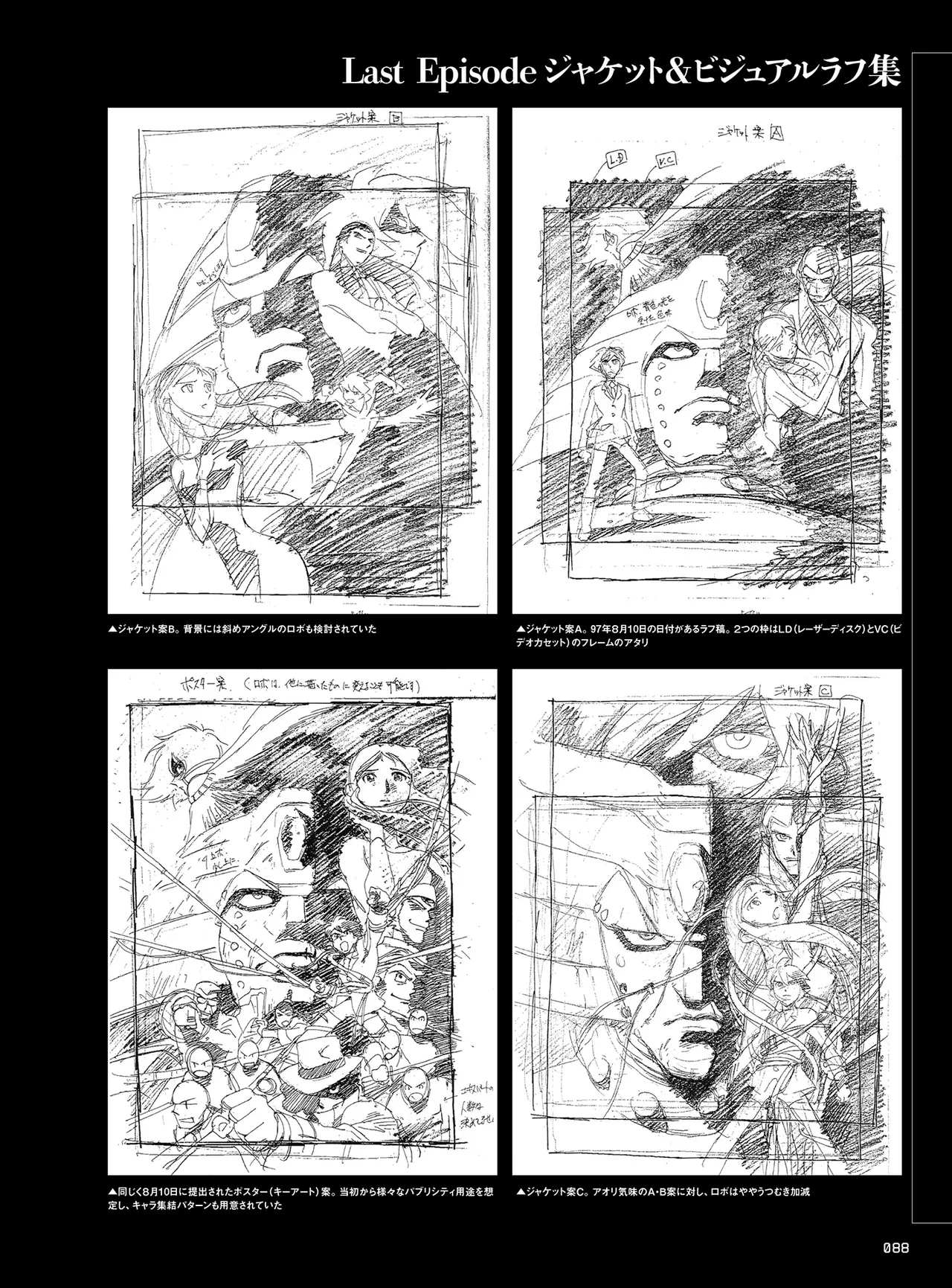 Chapter 5: Last Episode ジャケット&ビジュアルラフ集 — composition roughs by Yamashita Akihiko. Four layouts testing framings of the final confrontation before arriving at the composition used for BEAL-743.
The Blu-ray Ultimate Box released by Frontier Works used newly commissioned key art. The standard Blu-ray editions that followed used variations of the same image. Each of the seven original Yamashita Akihiko jacket artworks was created for a specific physical object in a specific year — drawn from inside the production as each episode finished, not assembled retrospectively as a set.
The anniversary book does the assembly thirty years later. Looking at all seven in sequence is the only way to see what that production looked like to itself, from inside, across the five years it took to finish.
Loading...