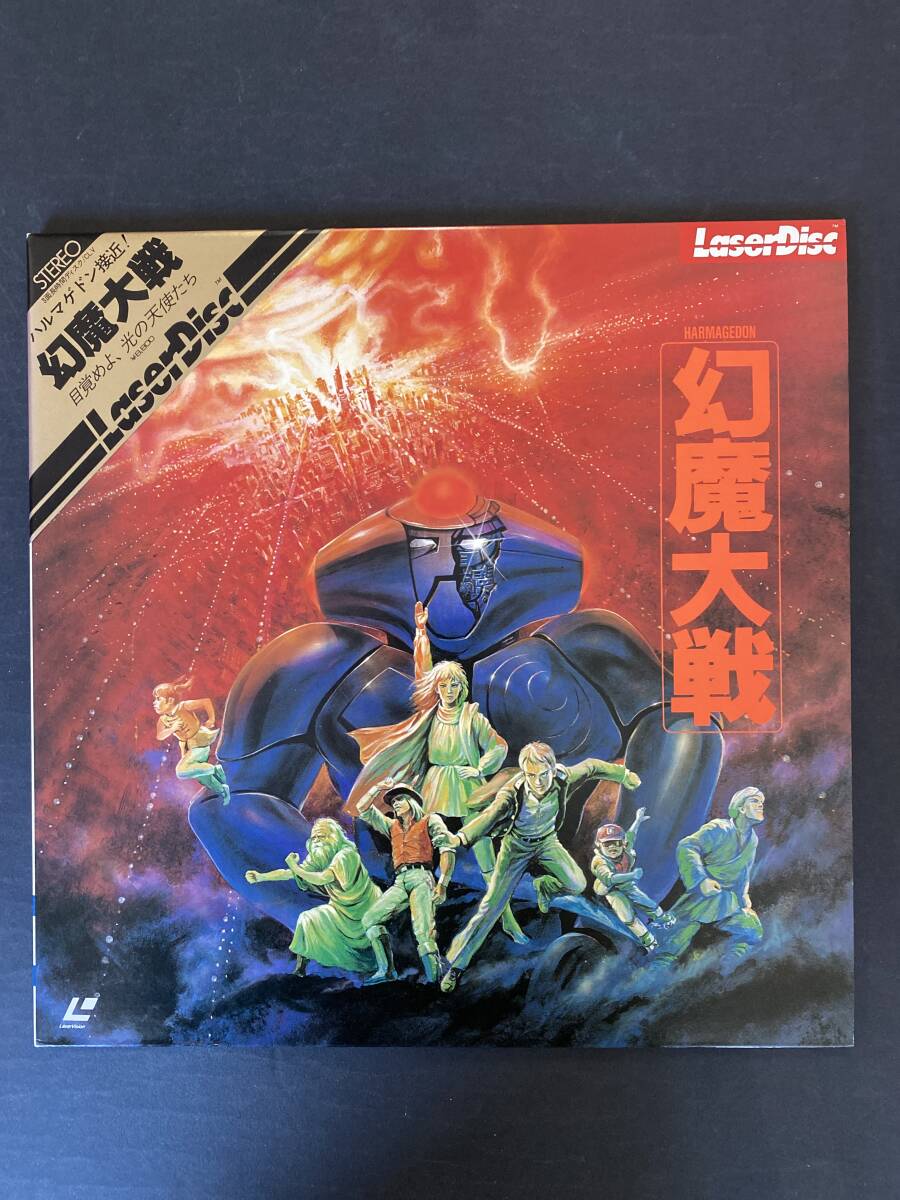
幻魔大戦 on LaserDisc is catalog number AH009-35KD. Manufactured by LaserDisc Corporation, Tokyo. Distributed by Pioneer Electronic Corporation. Retail price: ¥8,800. Two discs, three content sides at CLV (長時間ディスク) — 131 minutes total. The fourth side of Disc 2 carries a Pioneer standard label: 片面ディスクです、うらがえしてお楽しみください。 This is a single-sided disc. Please enjoy the other side. There is no other side.
The film is Rintaro's 1983 adaptation of Kazumasa Hirai and Shōtarō Ishinomori's psychic apocalypse manga. Haruki Kadokawa produced it — a publisher's first film, scaled as an event, budgeted at 250 million yen. Character design by Katsuhiro Otomo, five years before Akira. Music direction by Keith Emerson. The gatefold opens to reveal both interior panels covered with キャラクタースケッチ — Otomo's working character drawings, printed in cream line on a lavender hexagonal ground. No DVD or Blu-ray release has reproduced them.
The Back Cover
The back panel runs a grid of production stills beside two principal character standing shots — the male lead in a dark school uniform, the female psychic Luna in white. These are Otomo's character designs at the scale and specificity that animators at Madhouse worked from: real people in ordinary clothes, not costumed heroes. Below the stills: the full staff listing. 製作 (production): Haruki Kadokawa and Shōtarō Ishinomori. 監督 (director): Rintaro. キャラクターデザイン (character design): Katsuhiro Otomo. 音楽監督 (music direction): Keith Emerson. 主題歌「光の天使」 — theme song “Angel of Light” — sung by Rosemary Butler, lyrics by Tony Allen, composed by Keith Emerson. One back cover, 1983, and every person named on it is unexpected.
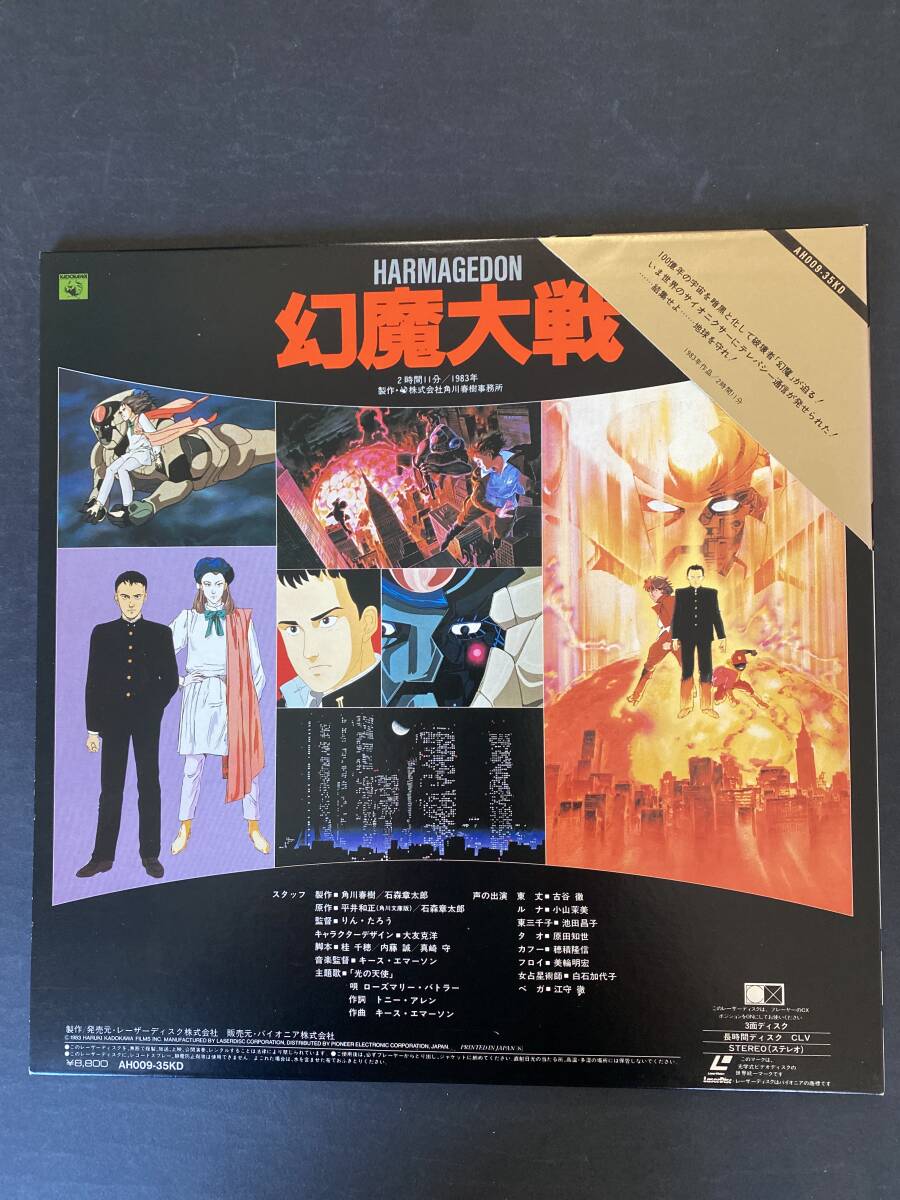 Back cover — Otomo's character standing designs (male lead, female psychic Luna), production stills grid, full staff listing. Catalog number AH009-35KD visible top right. Format specification bottom right: 3面ディスク / 長時間ディスク CLV / STEREO(ステレオ). ¥8,800.
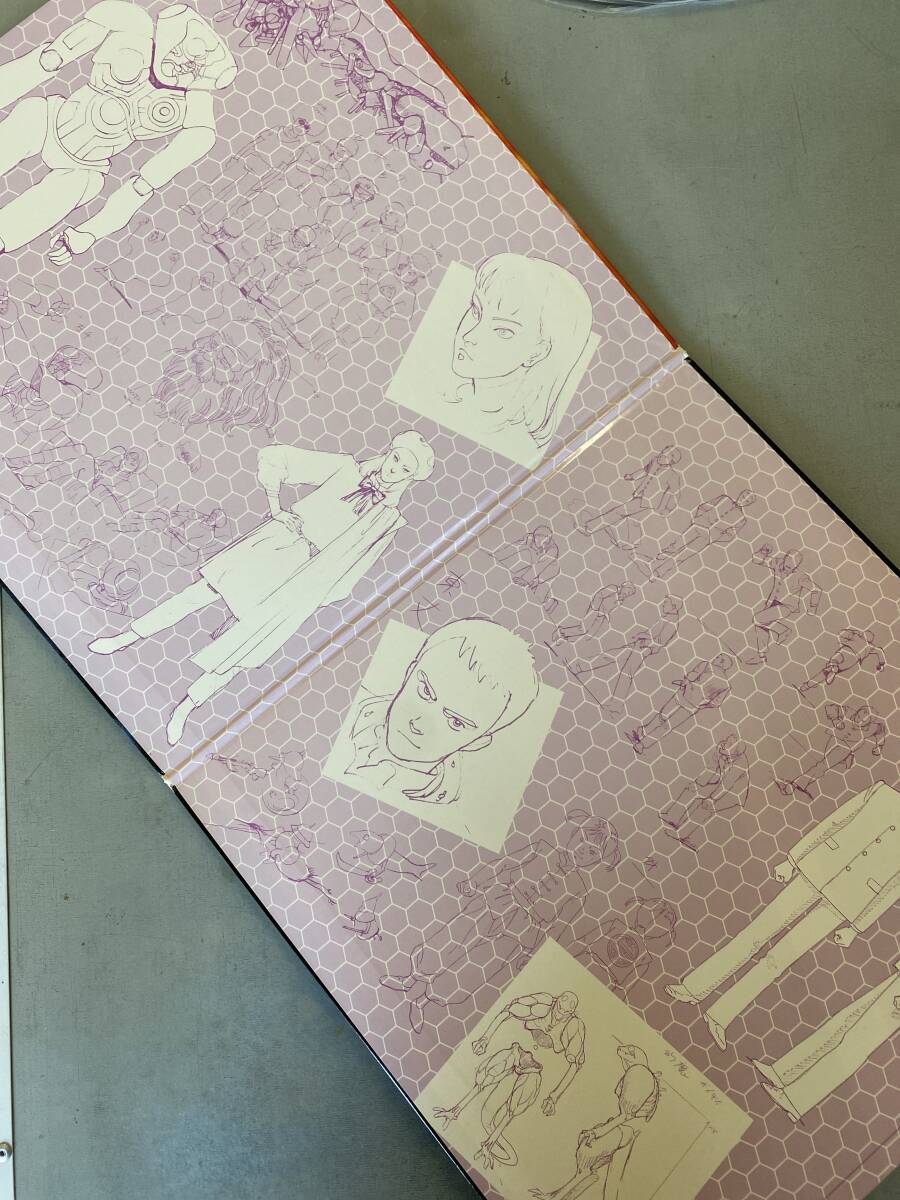 Gatefold interior — full span. "キャラクタースケッチ 大友克洋" (Character Sketches, Katsuhiro Otomo). Both interior panels printed with Otomo's working drawings on a lavender hexagonal-pattern ground — robot poses, figure studies, face portraits, action sketches. Production documentation reproduced as packaging.
What Opens Inside
The hexagonal ground under Otomo's sketches is the same honeycomb visual system used in the production's reference materials — carried from the studio into the consumer object. The drawings across both panels include the robot in multiple scales and poses, Luna with a separate face study, the male protagonist in motion, peripheral characters in action. Some lines are cream against the lavender field; some are printed in rose against the honeycomb. The density is high. Otomo was 30 years old when this film was made. These are the working drawings of a draftsman still building the visual language that would define Akira. The gatefold held them, in 1983, before anyone knew what they were becoming.
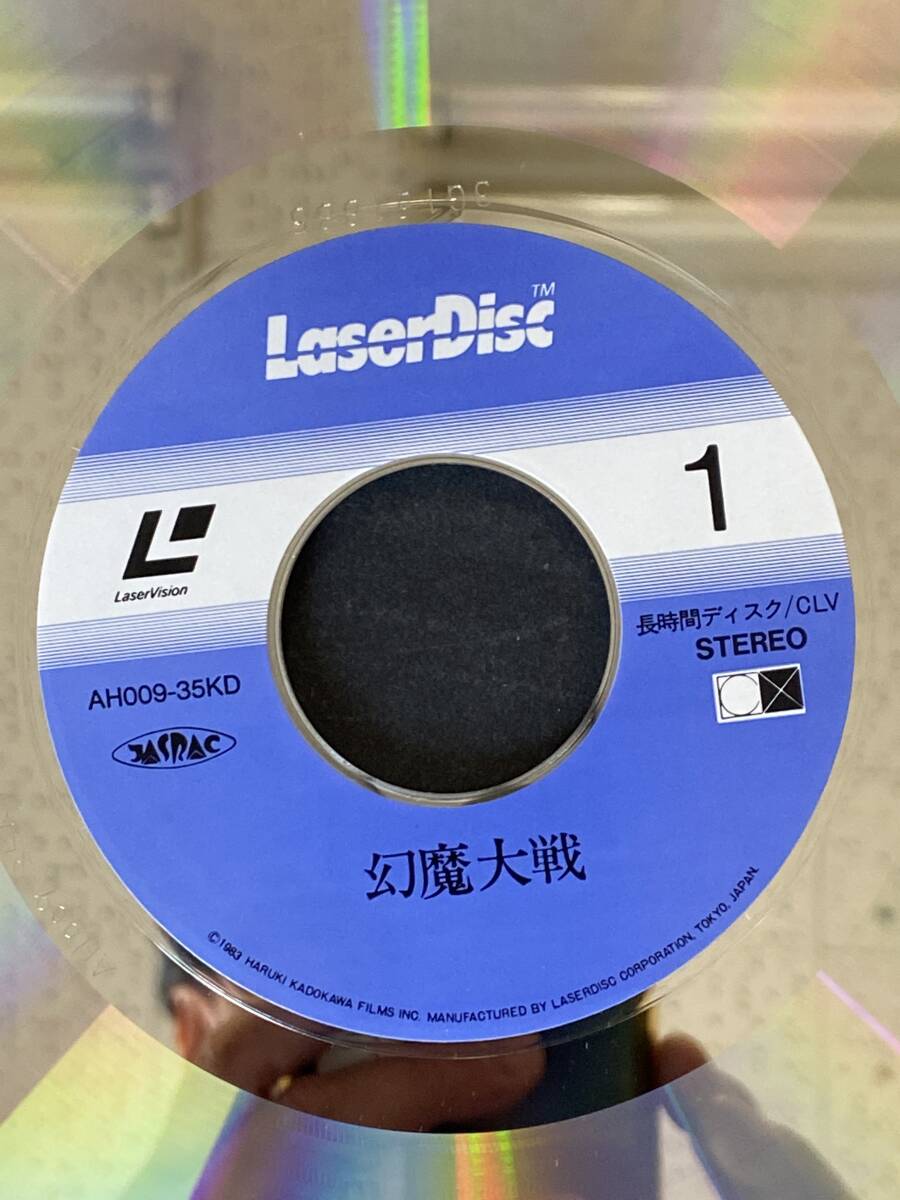 Disc 1, Side 1 label — AH009-35KD. LaserVision mark. JASRAC licensing stamp. 長時間ディスク/CLV. STEREO. ©1983 HARUKI KADOKAWA FILMS INC. MANUFACTURED BY LASERDISC CORPORATION, TOKYO, JAPAN.
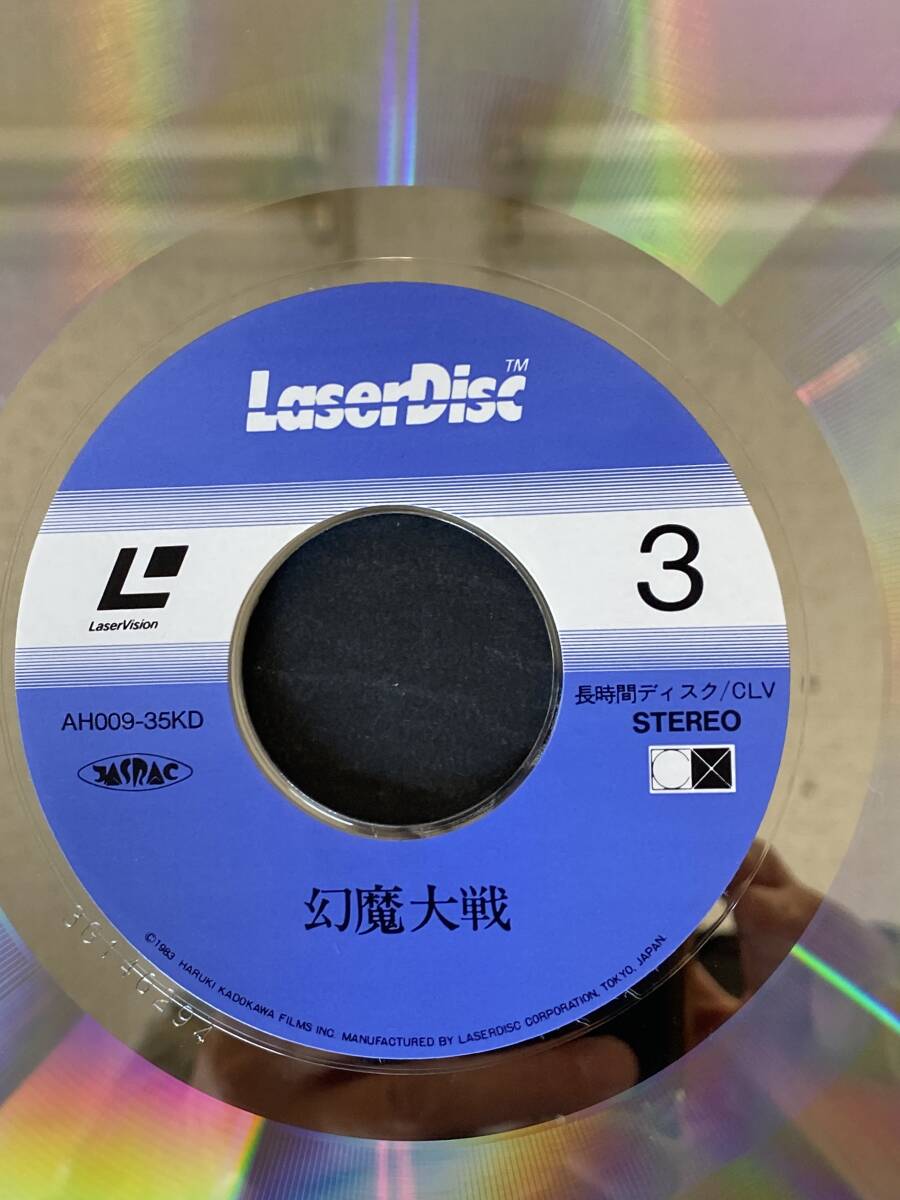 Disc 2, Side 3 label — the third and final content side. AH009-35KD. 長時間ディスク/CLV. STEREO. 幻魔大戦. The reverse of this disc holds nothing.
Three Sides
Disc 1 is double-sided. Disc 2 uses Side 3 only. The fourth side is blank — labeled 片面ディスクです, Pioneer's standard notation for a one-sided pressing. 131 minutes doesn't divide cleanly into two discs. The remainder is a polite label telling you there's nothing on the other side.
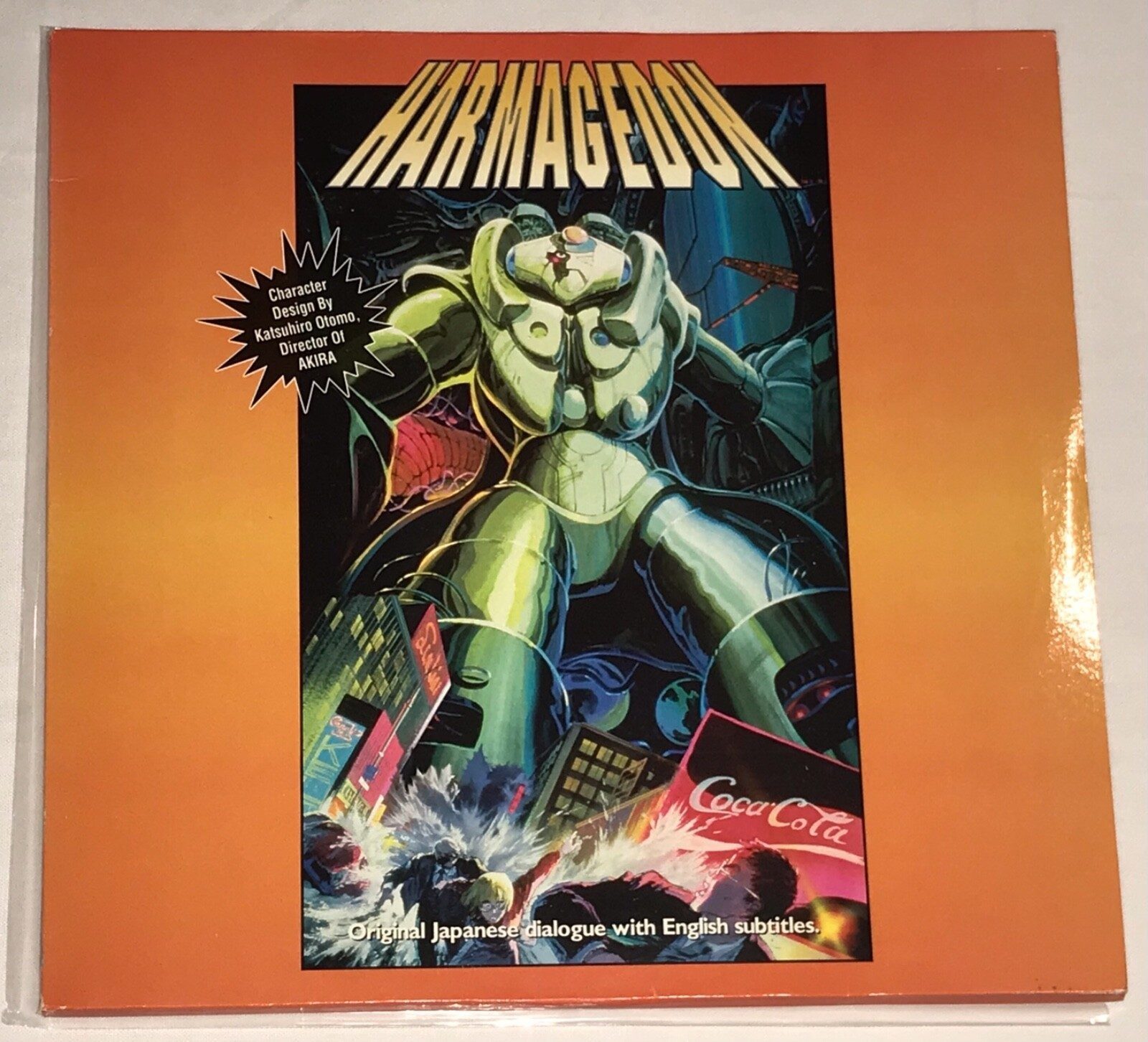 US release — U.S. Manga Corps / Central Park Media, 1990s. Orange ground, entirely different key visual. Burst sticker reads: "Character Design By Katsuhiro Otomo, Director of AKIRA." Rintaro, Keith Emerson, and the gatefold sketches all absent.
The US release arrived years later, after Akira had defined what Otomo was. The Central Park Media cover leads with a burst sticker: "Character Design By Katsuhiro Otomo, Director of AKIRA." Rintaro goes unmentioned. Keith Emerson goes unmentioned. The gatefold interior with its Otomo sketches does not exist in the US version.
The Japanese release didn't know Akira was coming. It named Otomo as キャラクターデザイン and built a gatefold around his working drawings because those drawings were what the film had. That is the version this LaserDisc preserved.
Loading...