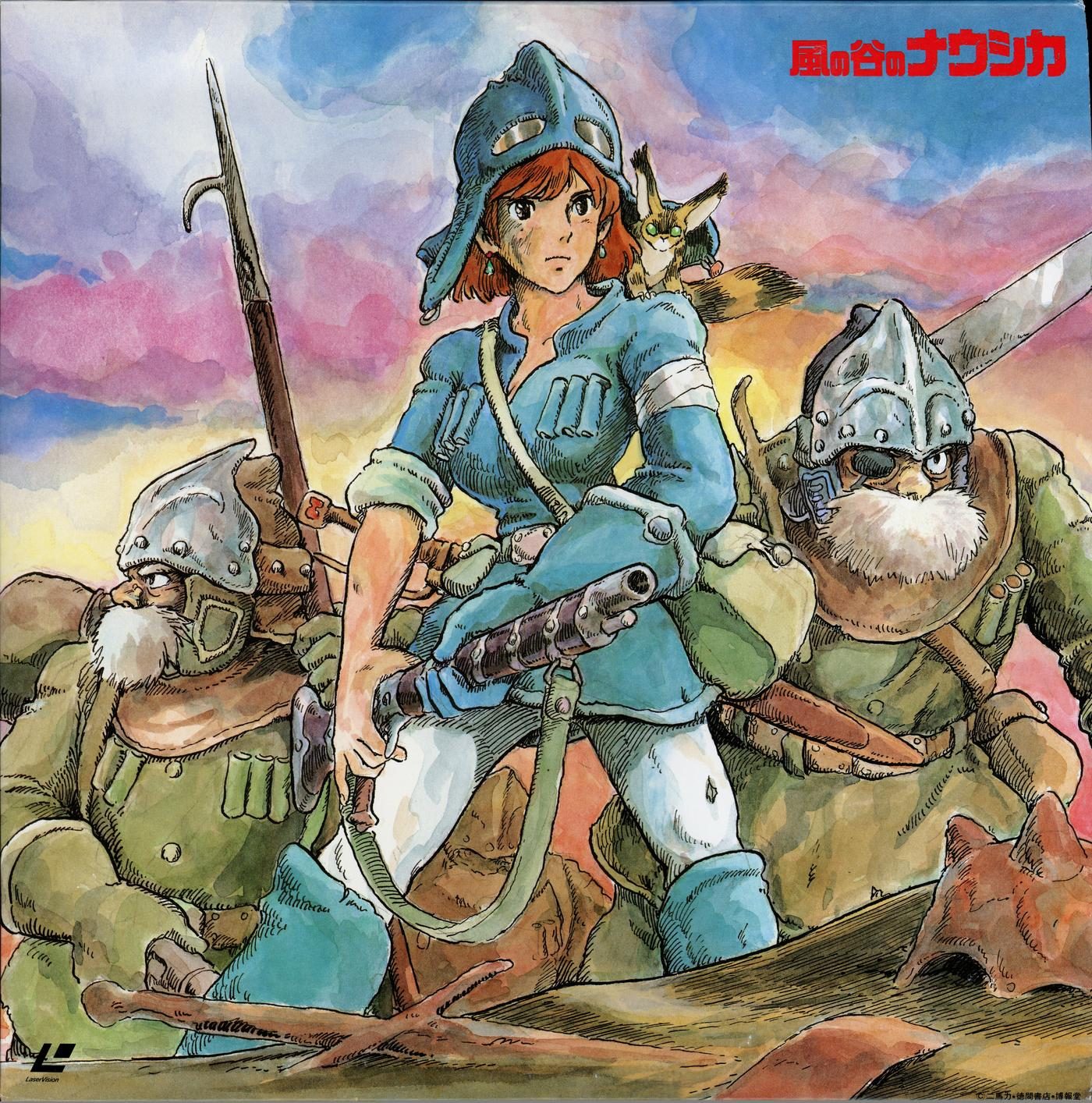
98LX-1. Single disc, two sides. CLV, Mono. ¥9,800. Tokuma Japan / Animage Video, April 21, 1984 — six weeks after the theatrical premiere. The film runs 116 minutes across both CLV sides, audio in mono throughout. The back cover reproduces a rough pencil sketch of Nausicaä's face: genga, a working production drawing, with blue and orange colored pencil correction marks and handwritten annotations still on the sheet. The top credit line reads: 徳間書店「月刊アニメージュ」連載 / 作画/宮崎 駿.
Inside the sleeve: a two-sided insert. The white face carries an essay titled 美しい自然とナウシカ (Beautiful Nature and Nausicaä) and a plot synopsis, illustrated with Miyazaki's detailed ink drawing of the Sea of Decay — toxic spores, giant insects, a masked figure navigating the jungle floor. The reverse is gold stock: an essay by Miyazaki Hayao titled 「ナウシカと悲壮感」 (Nausicaä and the Tragic Sense), accompanied by a manga illustration of Nausicaä in the toxic forest with a Japanese poem in vertical type above her; the full production staff and cast credits in dense type; and along the right margin, a continuous vertical strip of storyboard panels drawn from the production conte.
風の谷のナウシカ was adapted by Miyazaki Hayao from his own manga serialized in Tokuma's Monthly Animage from 1982 — while the film was already in development. Directed by Miyazaki, produced by Takahata Isao (高畑勲) at Topcraft. Studio Ghibli would not exist until the following year. The film opened theatrically March 11, 1984. 98LX-1 was the first title pressed for the Animage Video LaserDisc line — catalog number one.
The Back Cover
The front carries Miyazaki's finished painted illustration — rich color, complete. The back is a rough pencil sketch of Nausicaä's face with blue and orange colored pencil correction marks and production annotations in Miyazaki's hand. The top line credits the source: 徳間書店「月刊アニメージュ」連載 (serialized in Tokuma Shoten's Monthly Animage). Credit: 作画/宮崎 駿. Copyright: NIBARIKI・TOKUMA SHOTEN・HAKUHODOO・TOKYO JAPAN. The front shows the finished work; the back shows the working document with the marks of production still on its surface.
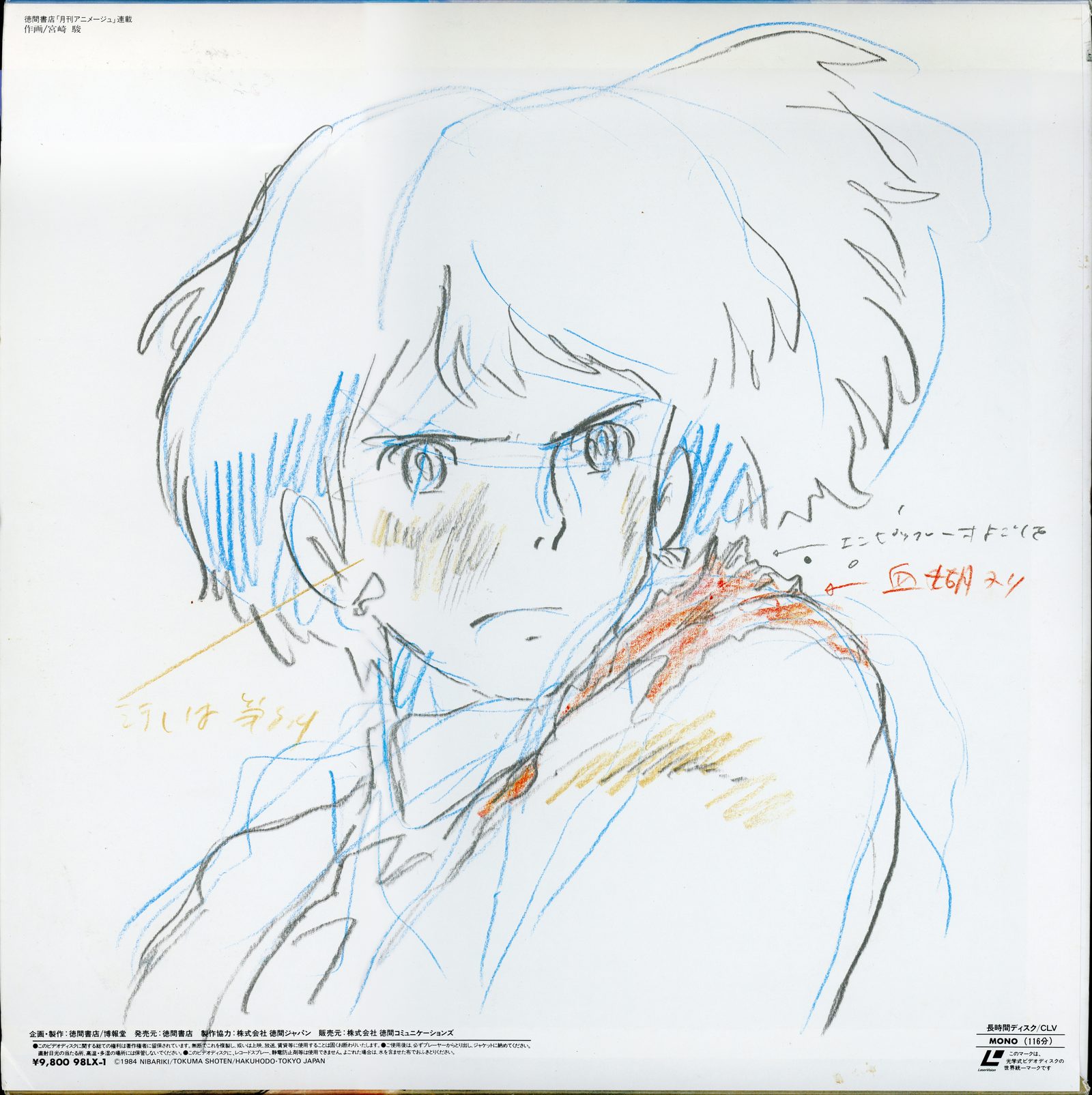 Back cover — pencil genga of Nausicaä's face with blue and orange colored pencil corrections and handwritten production annotations. Credit: 作画/宮崎 駿. ©1984 NIBARIKI・TOKUMA SHOTEN・HAKUHODOO・TOKYO JAPAN. Bottom right: 長時間ディスク/CLV MONO.
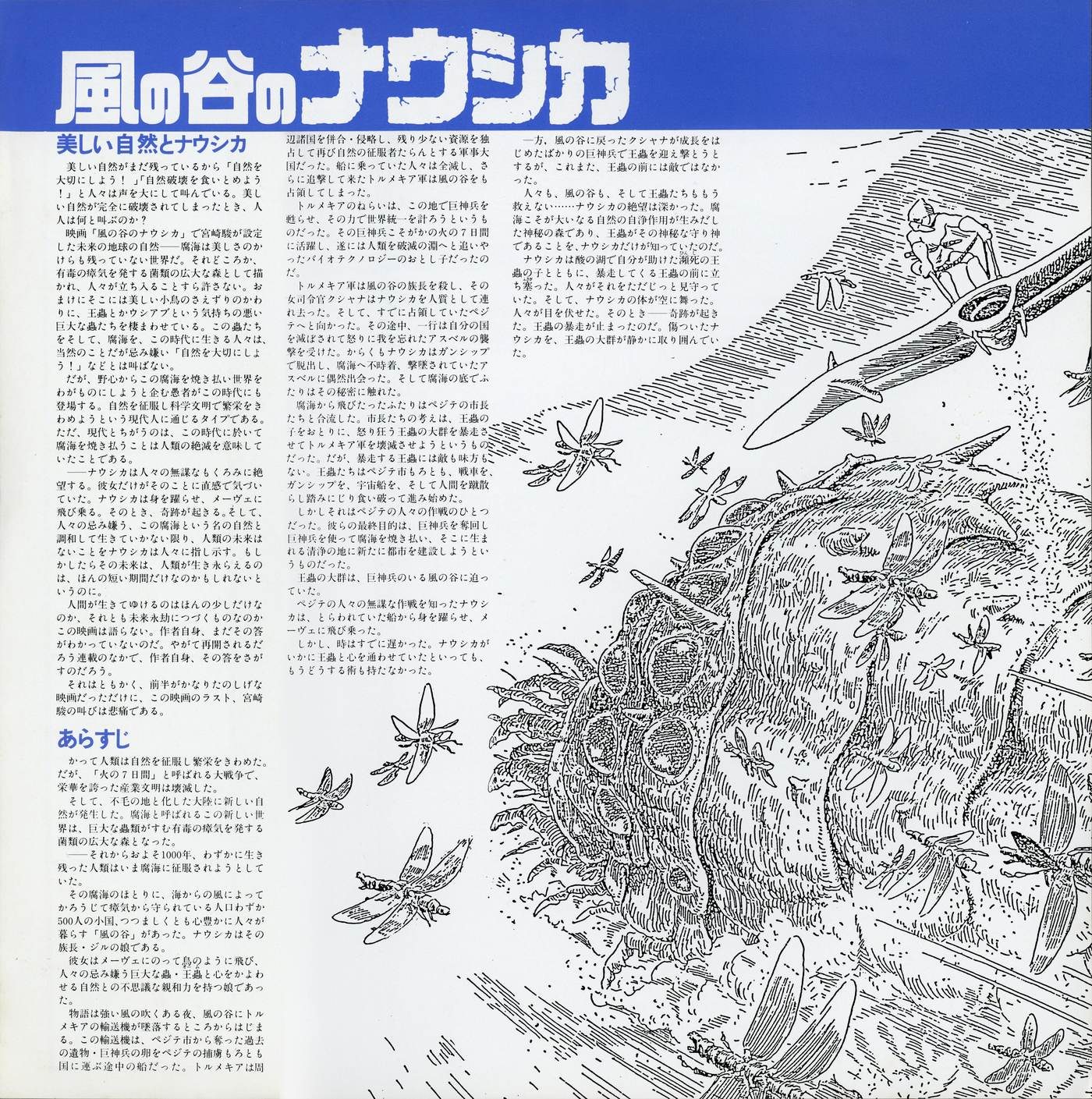 Insert — white face. Left columns: essay 美しい自然とナウシカ (Beautiful Nature and Nausicaä) and plot synopsis あらすじ in dense type. Right: Miyazaki's ink illustration of the Sea of Decay — giant insects, toxic spore plants, a hazmat-suited figure in the jungle. Linework consistent with the manga serialization style.
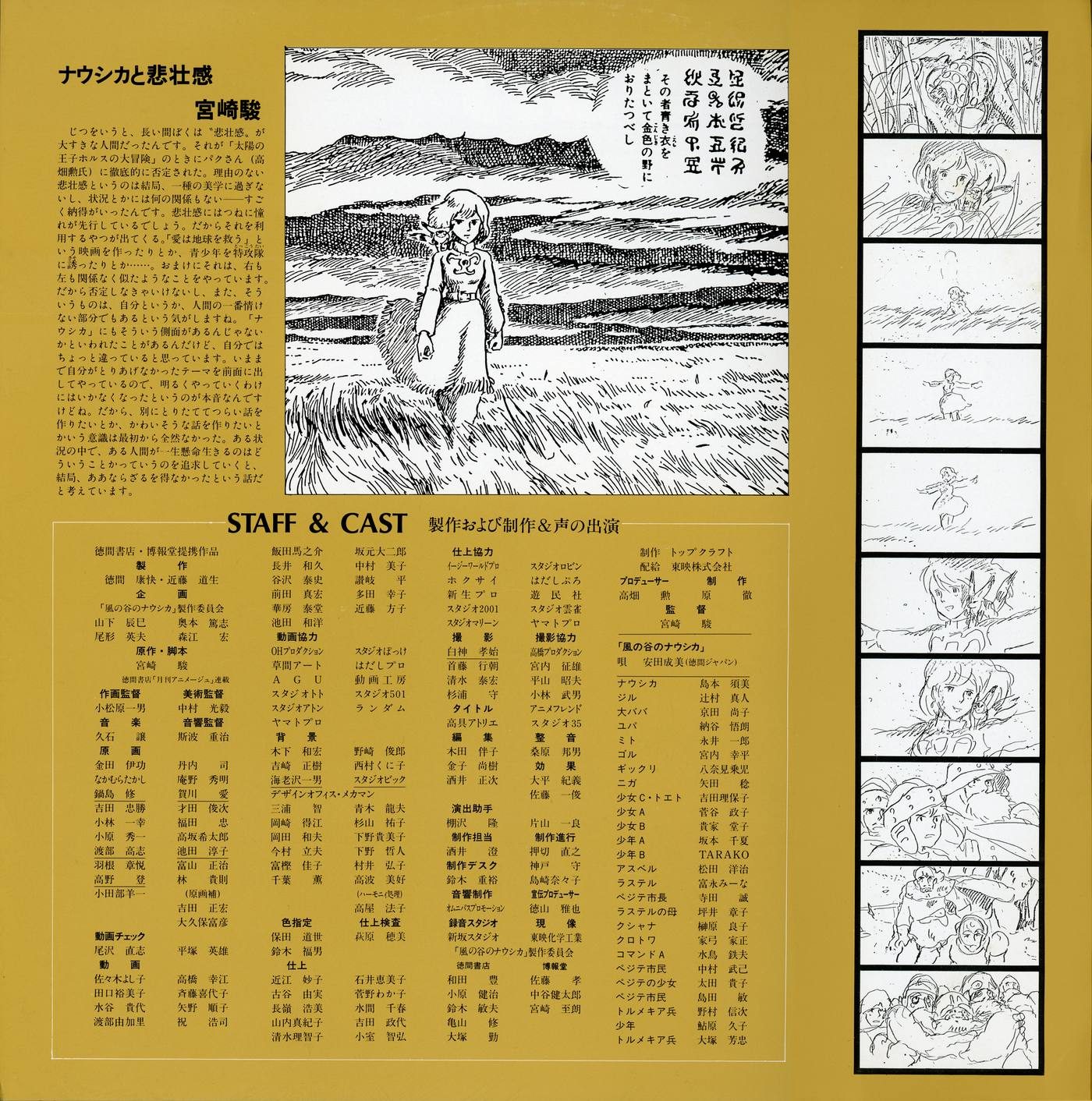 Insert — gold face. Top left: essay 「ナウシカと悲壮感」 by Miyazaki Hayao with manga illustration and poem in vertical type. Lower: full production staff and cast credits. Right margin: vertical storyboard panel strip from the production conte, running top to bottom.
「ナウシカと悲壮感」
The gold face opens with Miyazaki's essay — ナウシカと悲壮感, Nausicaä and the Tragic Sense. A manga illustration runs alongside it: Nausicaä standing in the toxic forest, surrounded by giant spore plants, a Japanese poem in vertical type above her. Below it, the full production credits: director 宮崎駿, producer 高畑勲, the complete animation and voice cast staff. Along the right margin: a vertical strip of hand-drawn storyboard panels from the production conte, scene sketches stacked top to bottom.
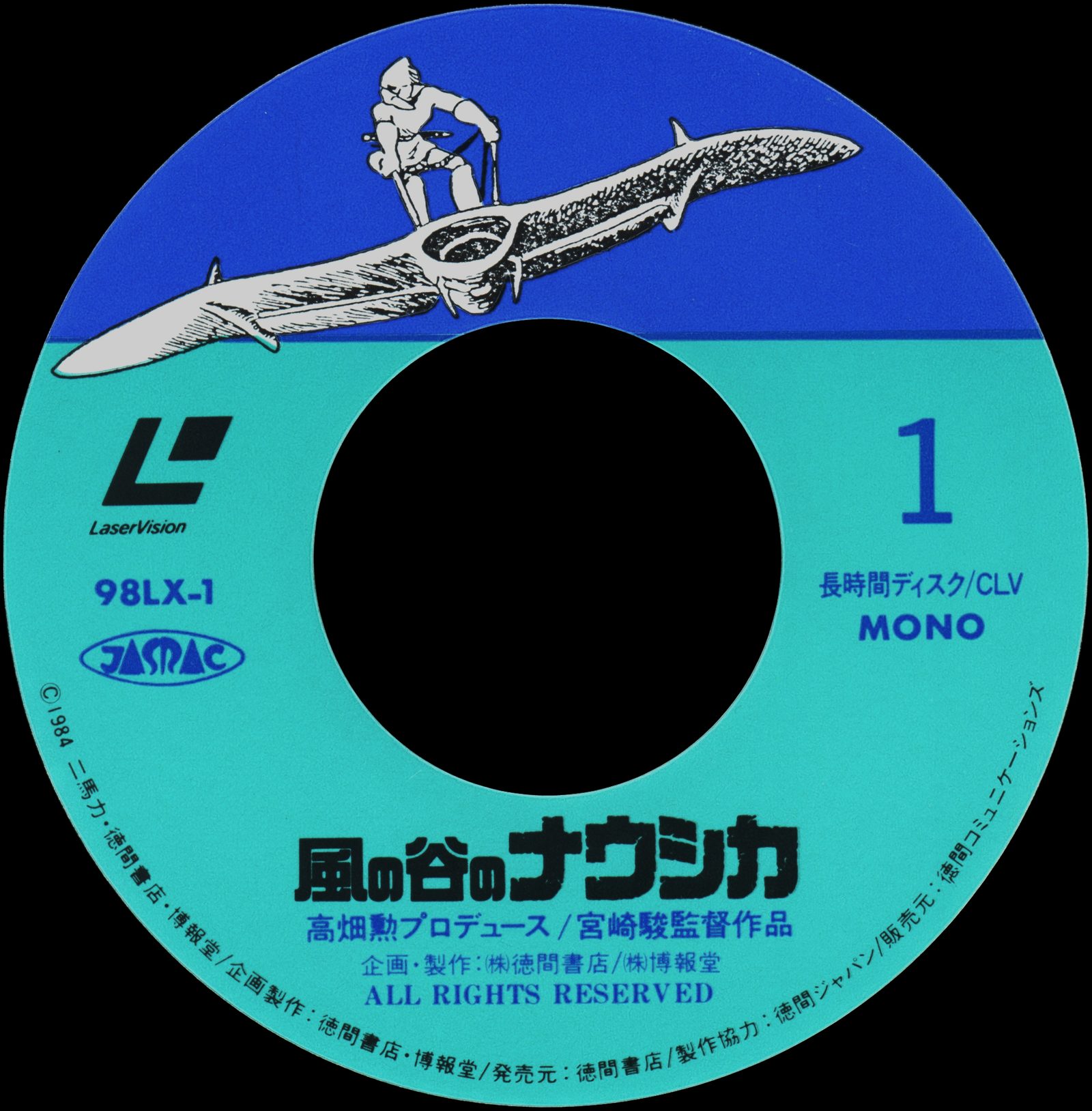 Disc label, Side 1 — 98LX-1. Split teal/blue design: Nausicaä riding the Mehve glider as line art in the upper blue field. Lower teal field: 風の谷のナウシカ, 高畑勲プロデュース/宮崎駿監督作品, 企画・製作:㈱徳間書店/㈱博報堂. LaserVision and JASMAC logos. 長時間ディスク/CLV MONO.
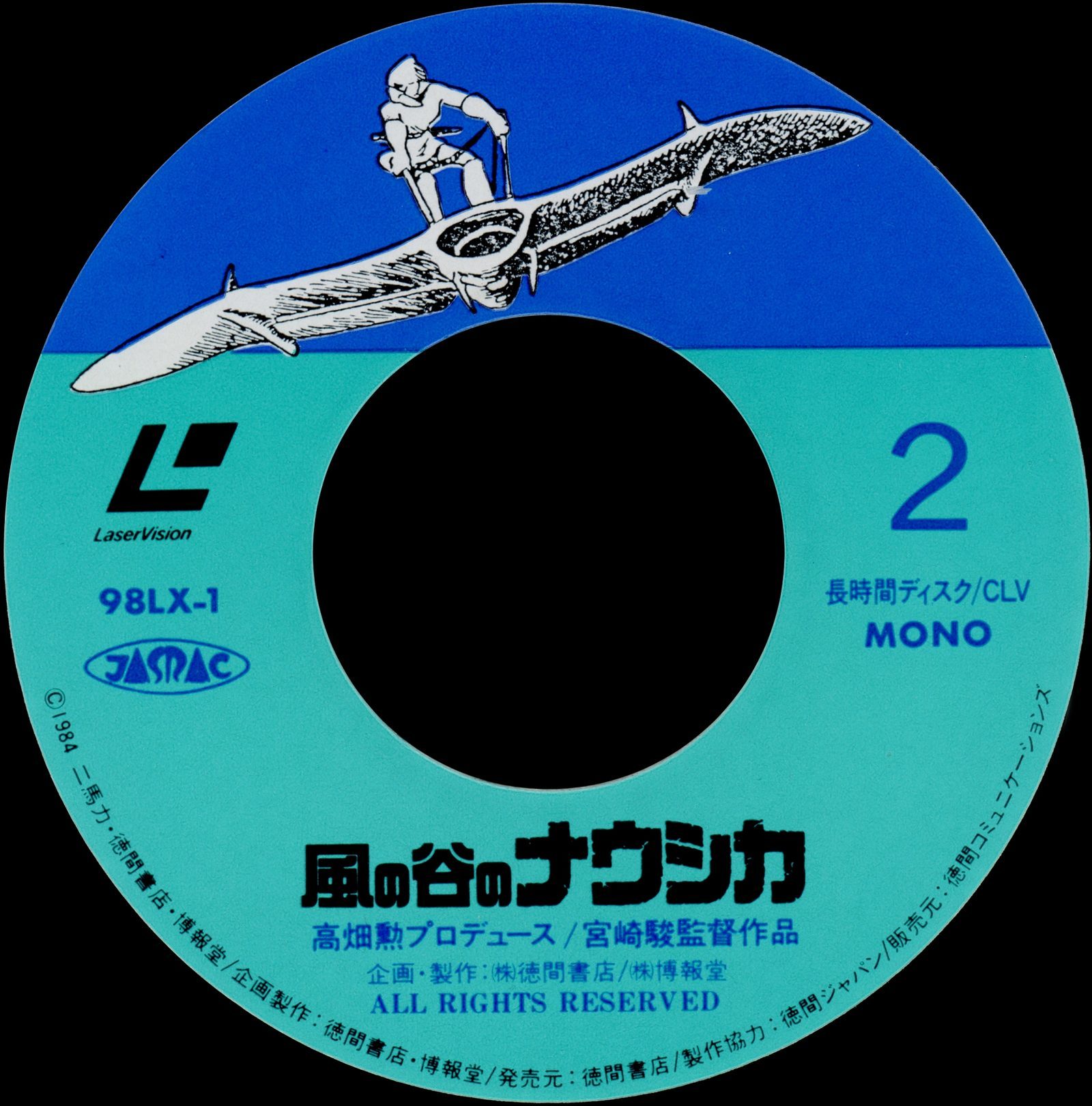 Disc label, Side 2 — 98LX-1. Identical design to Side 1: Nausicaä on the Mehve above, production credits below. CLV MONO.
The Ghibli ga Ippai box set (TKLO-50180, Tokuma, August 1996) issued a D-2 digital remaster of Nausicaä with AC-3 surround sound as part of a 13-disc ¥98,000 collection. The 1996 transfer improves on the original; the audio is in surround. The insert material from 98LX-1 — Miyazaki's essay on tragic feeling, the storyboard panel strip, the working production drawing used as back cover — was not reprinted in the reissue. The 1984 pressing was made six weeks after theatrical opening, for readers who had been following the Animage manga since 1982.
Loading...