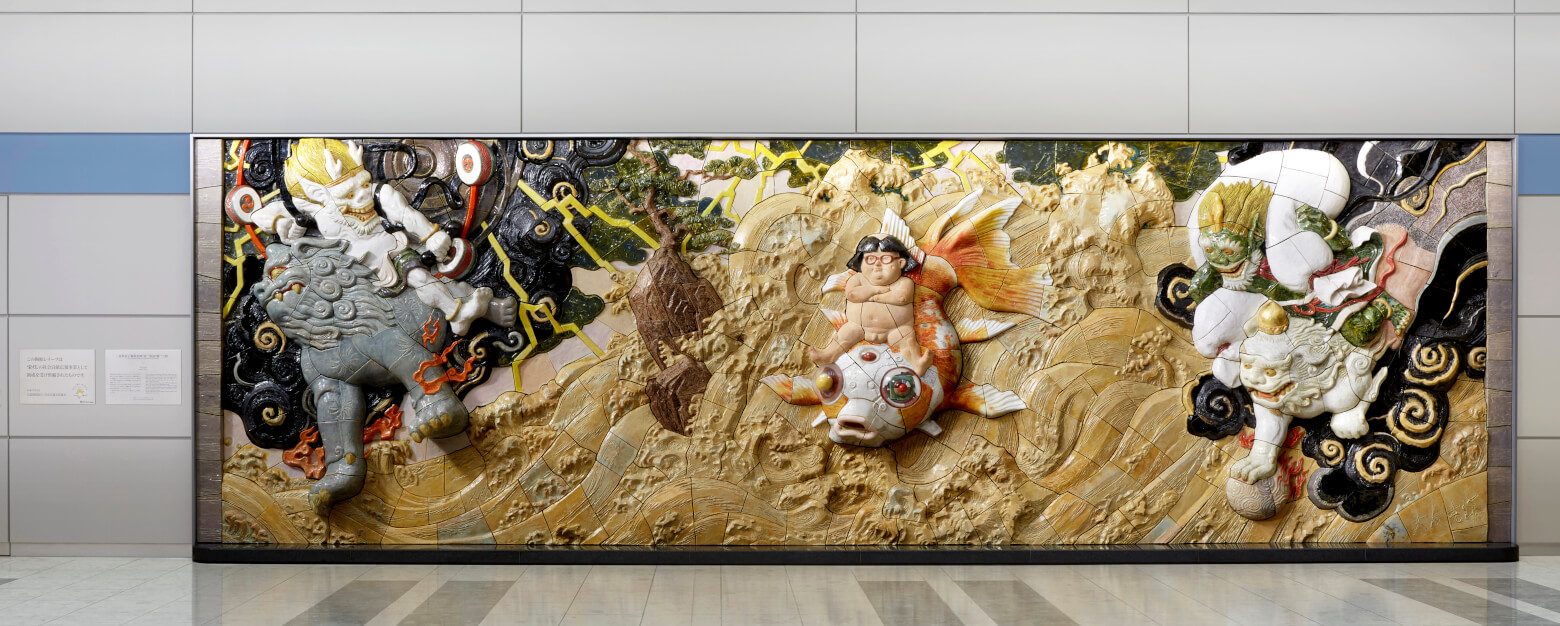
A ceramic relief by Katsuhiro Otomo occupies the international arrival lobby at Sendai Airport. Spanning 8.7 meters across the first-floor wall, the work appears without exhibition framing — encountered casually between luggage carousels and arrival gates, a dimensional composition of glazed clay and glass that greets international travelers as part of the building's permanent surface.
Guardianship, Not Memorial
Otomo approaches this composition through a 400-year visual tradition. Fūjin and Raijin — the wind god and thunder god — have been transmitted across Japanese art since Tawaraya Sōtatsu's gold-leaf screens at Kennin-ji, a National Treasure, carried forward by Kōrin and Hoitsu a century apart in the Rinpa school's most celebrated relay. The deities traditionally guard the entrance to sacred spaces, their simultaneous capacity for destruction and protection central to their meaning.
Between them rides Kinka Dōji, a figure drawing on the Buddhist tradition of dōji — child attendants who serve as intermediaries between human and divine. The boy is flanked, not subordinated: cresting waves atop a mechanical goldfish while the gods command their cloud-borne beasts on either side.
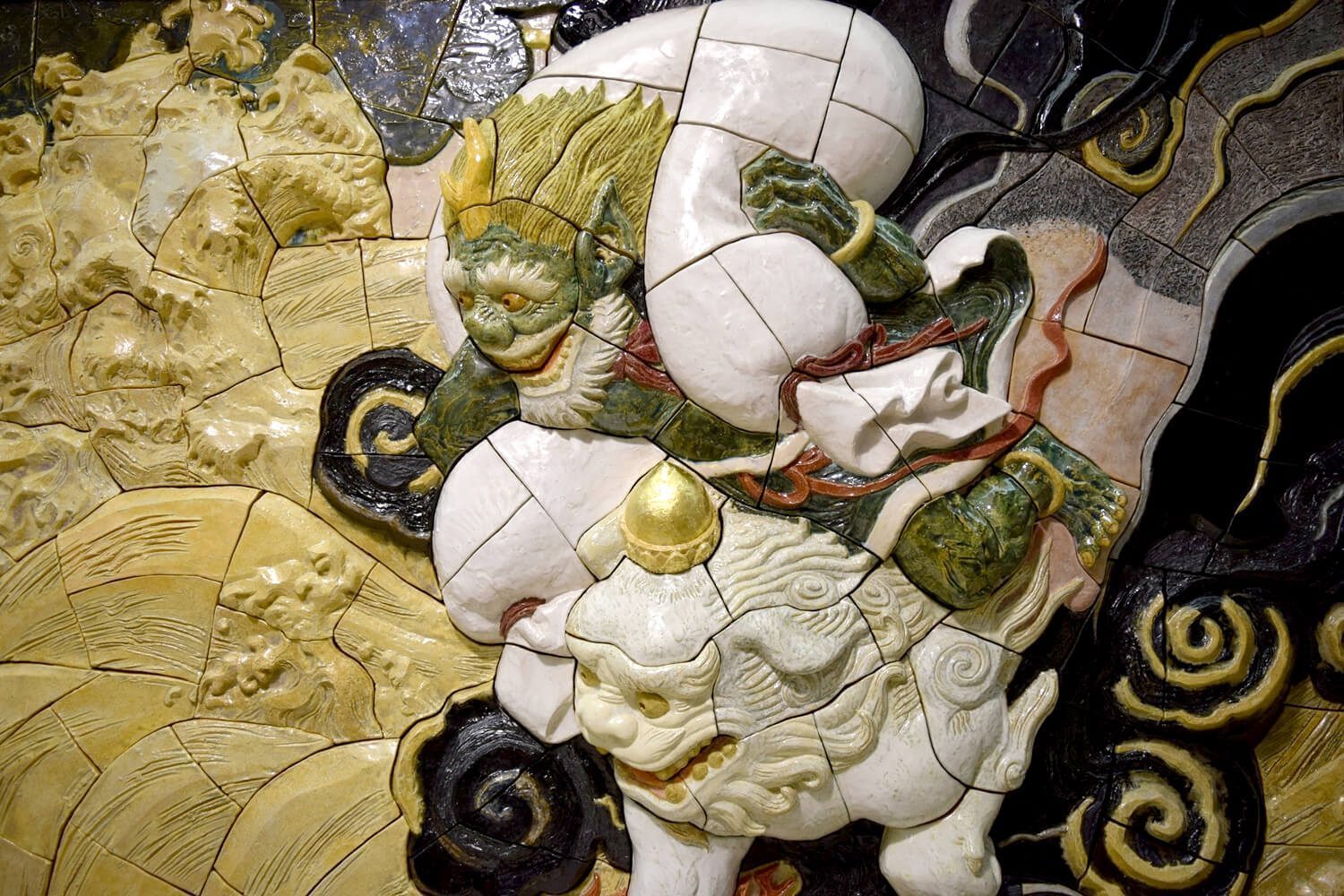
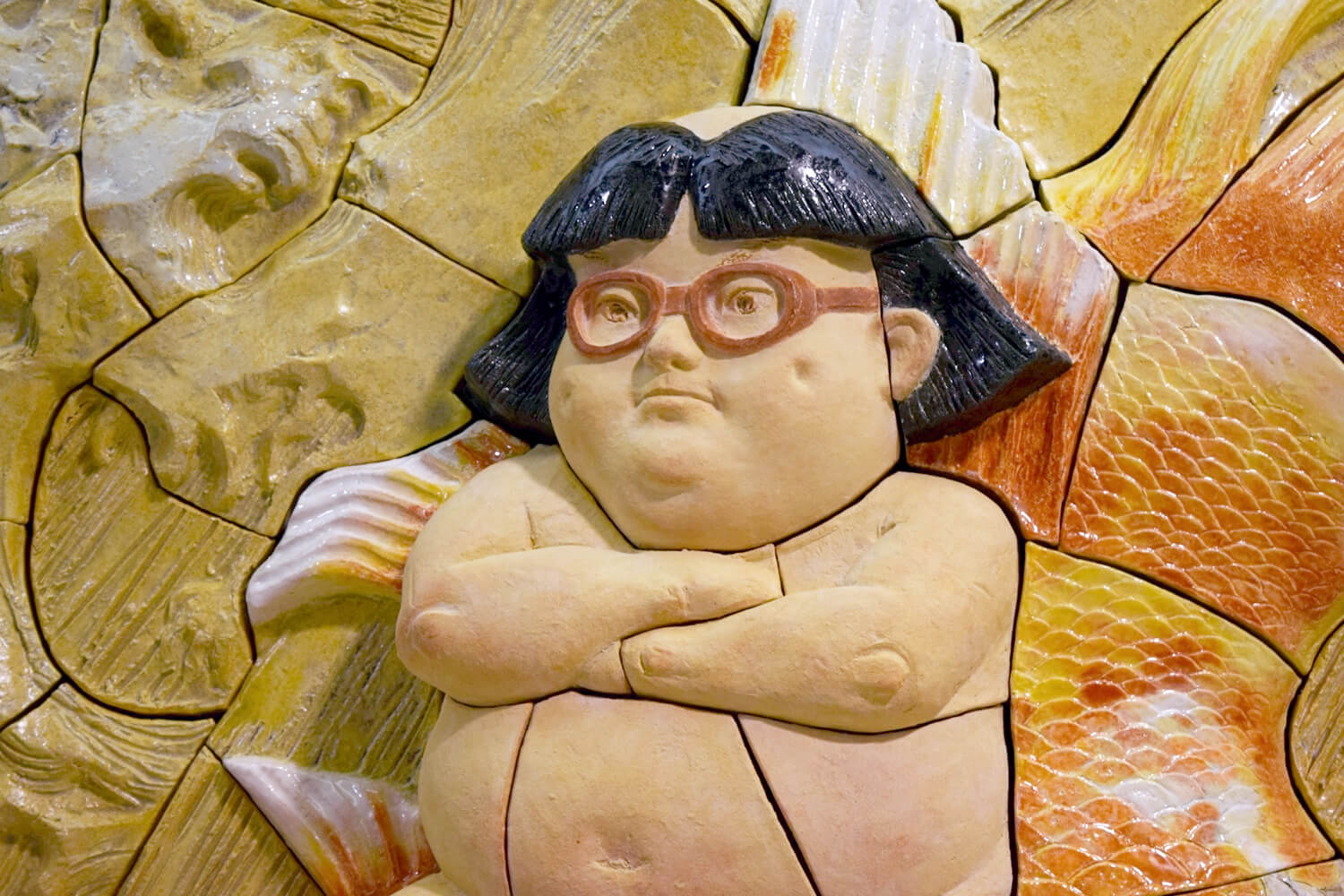
Shaped from twelve tons of clay at CREARE Atami-Yugawara Studio, the relief projects deeply from its wall — figures and waves carved in high dimension rather than painted flat, each tile cut from a continuous clay master and individually glazed. The surface varies from matte gold waves to glossy black storm clouds, from warm skin tones to the bone-white and moss-green of Raijin's form. The goldfish's eyes are fitted with glass to suggest the mechanical — Otomo's science-fiction vocabulary embedded in clay.
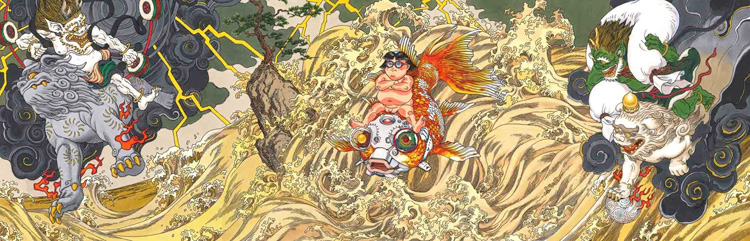 The full composition — Fūjin and Raijin flanking Kinka Dōji, designed specifically for the Sendai commission
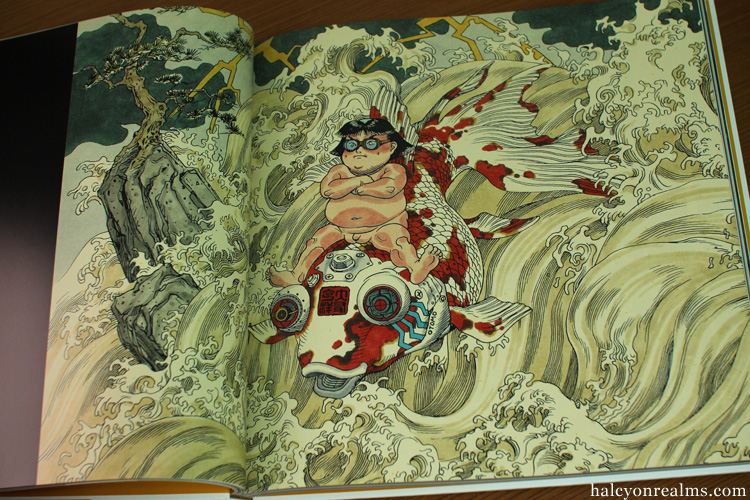 The center illustration from Kaba 2 — the original image before the guardian deities were added
“Because this was produced after the disaster, I carried a feeling of prayer and repose of souls. But to avoid being consumed by that feeling, I also wanted to make something with entertainment and story — something visitors from around the world could touch and enjoy. In the figure of a boy who brings Fūjin and Raijin across the waves toward the future, I put a feeling for people to confront difficulties with courage.”
— Katsuhiro Otomo
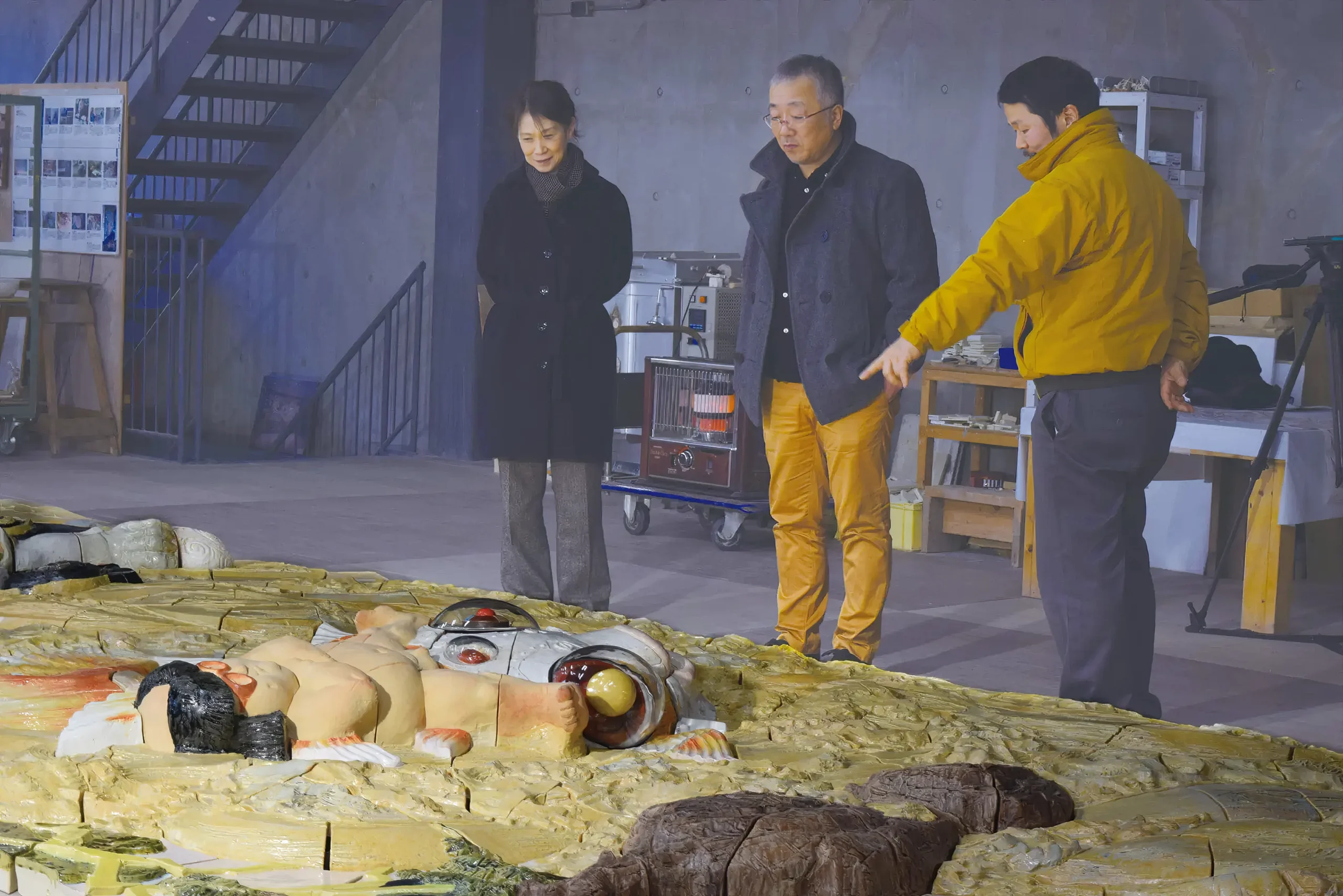
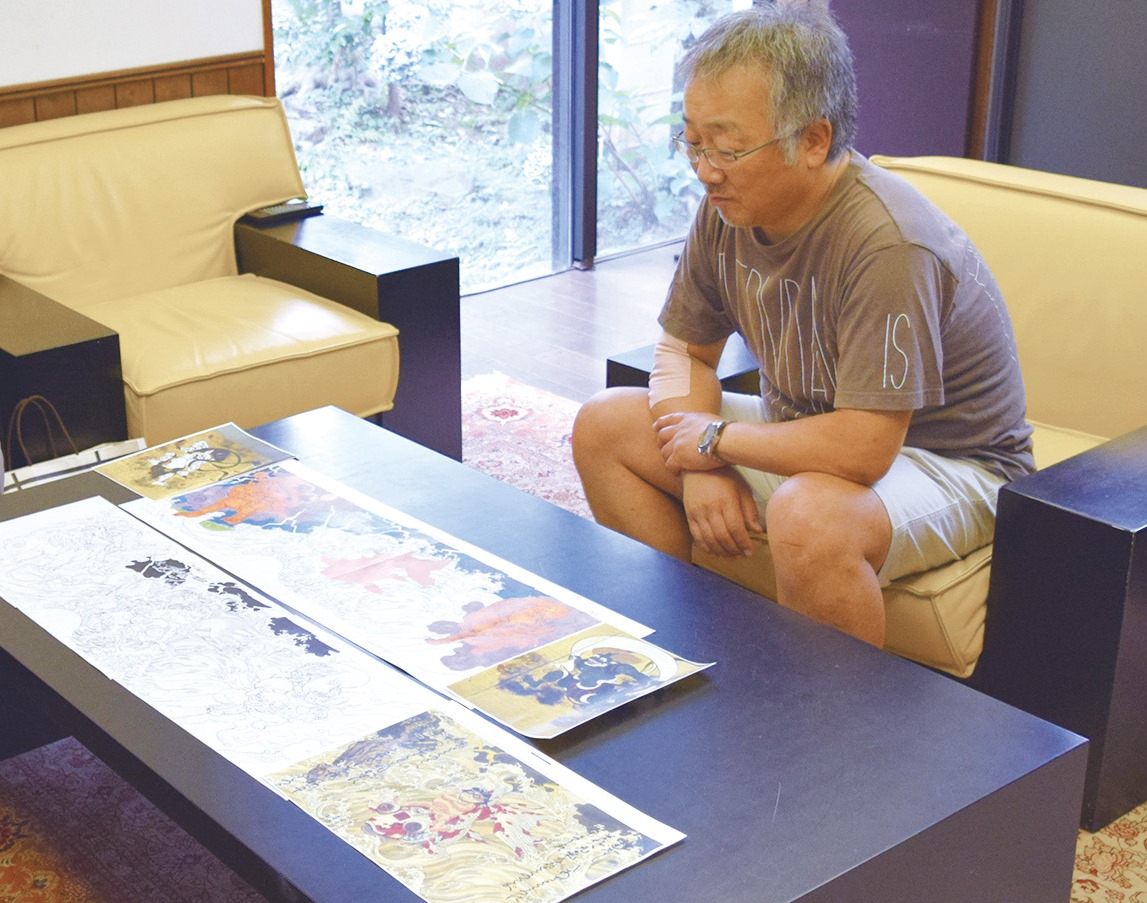 Otomo reviewing the clay maquette with CREARE artisans — reference photos and the Kaba 2 illustration spread across the table
The center composition — the boy astride a mechanized goldfish — originates from Otomo's illustration collection Kaba 2. For this commission, Fūjin and Raijin were added to flank the existing figure, widening a personal illustration into public guardianship. Ten artisans at CREARE translated the painting into ceramic over approximately a year, working through esquisse review, clay sculpting, sectioning, bisque firing, glaze testing, and final kiln work. The relief was installed on March 12, 2015 — one day after the fourth anniversary of the Tōhoku earthquake and tsunami that flooded this lobby to a depth of three meters.
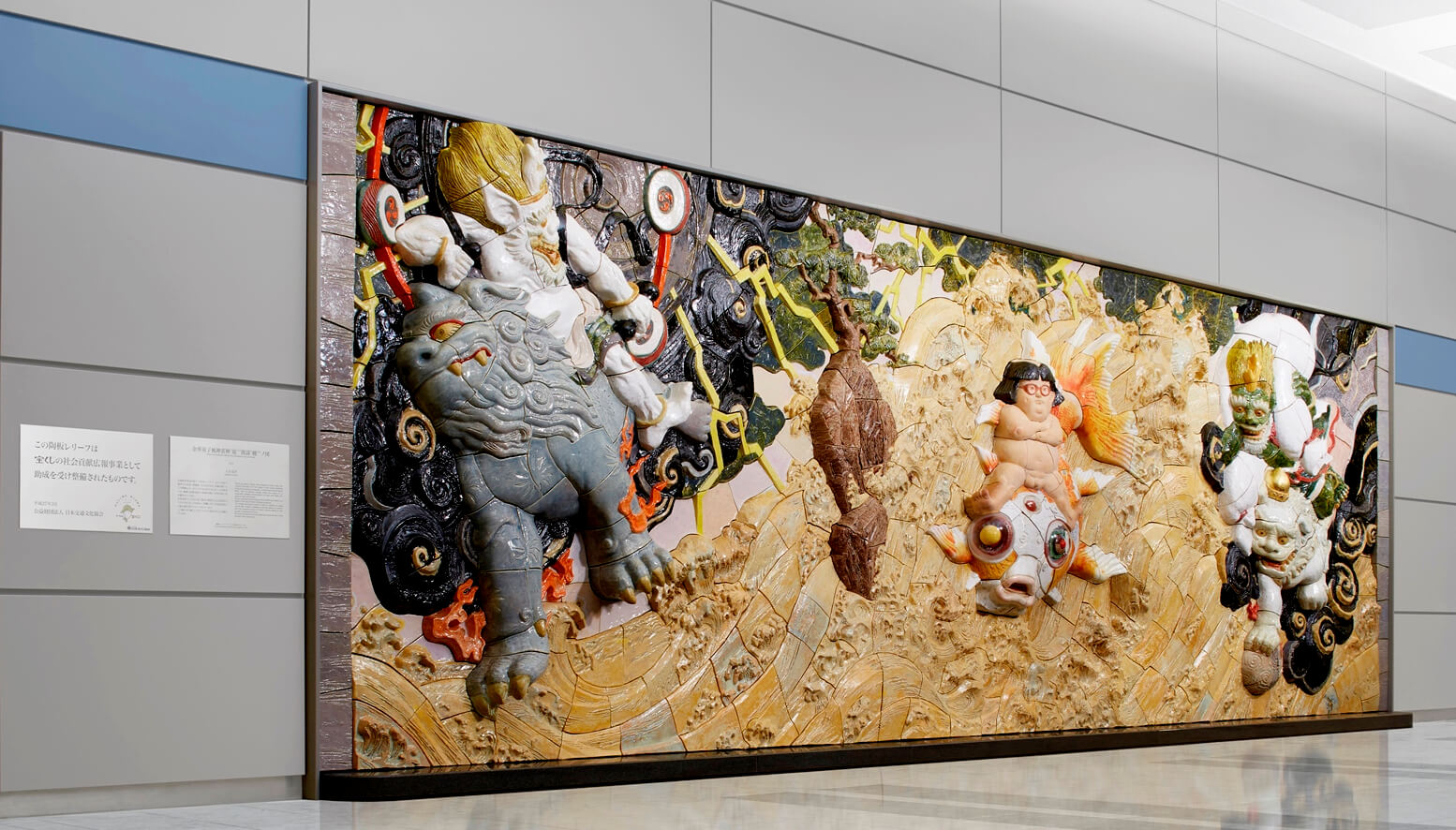 The relief in situ — information plaque visible at left, airport lobby architecture providing scale
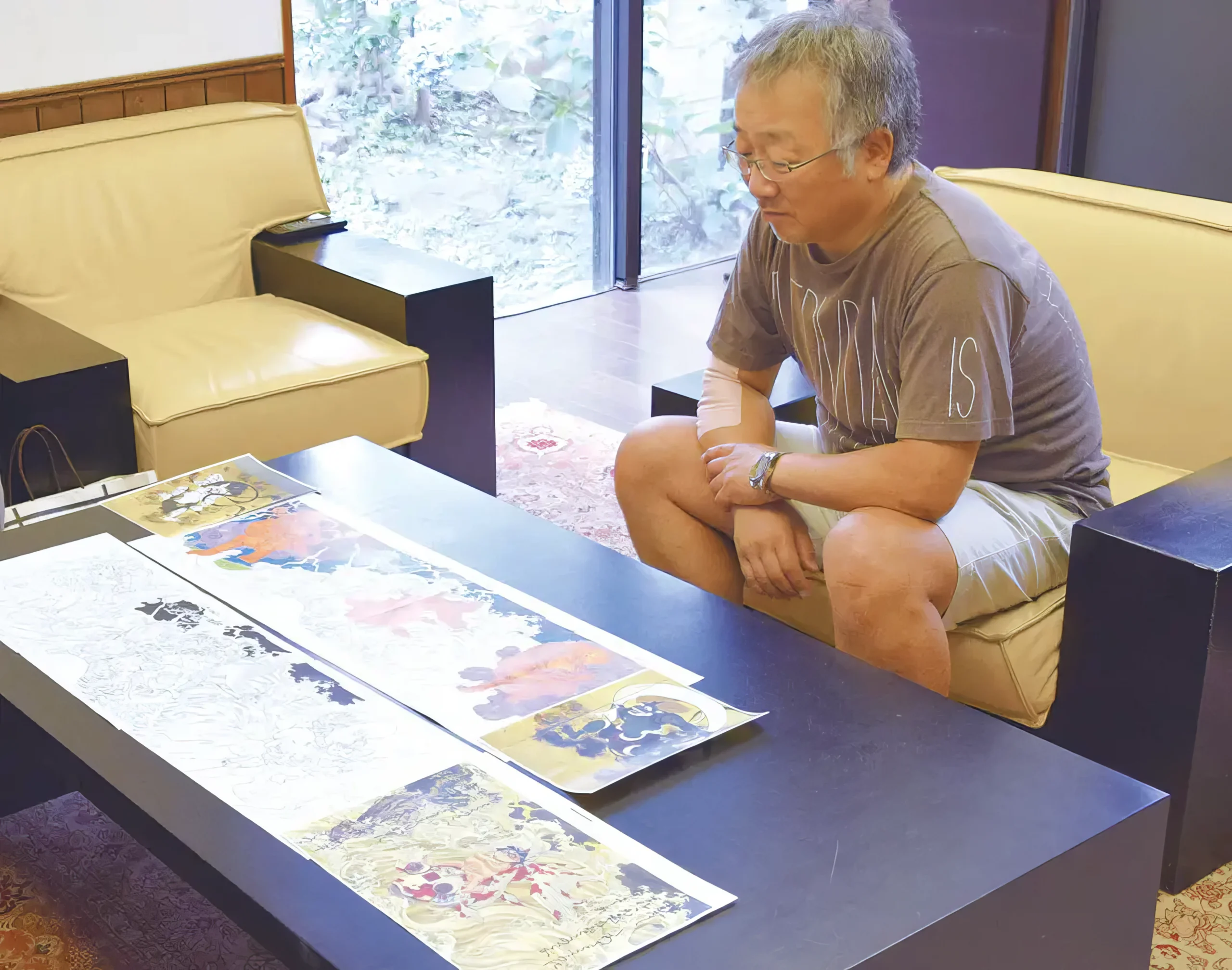 Otomo's preparatory sketch for the full composition
The lobby where the sea entered on March 11, 2011 now holds a boy riding forward through waves. Passengers arriving from overseas encounter the relief in the space that was submerged — guardianship where vulnerability once was. The work carries the name of Kinkasan, Miyagi's sacred golden mountain whose gold gilded the Great Buddha at Nara in the eighth century, and leaves the question of what comes next to the people passing through.
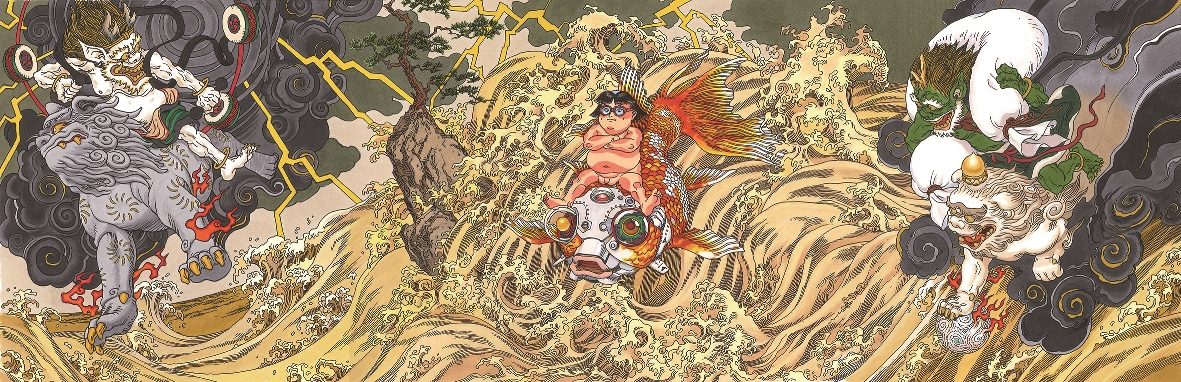 Otomo's original painting — the full-color design reference for the ceramic translation
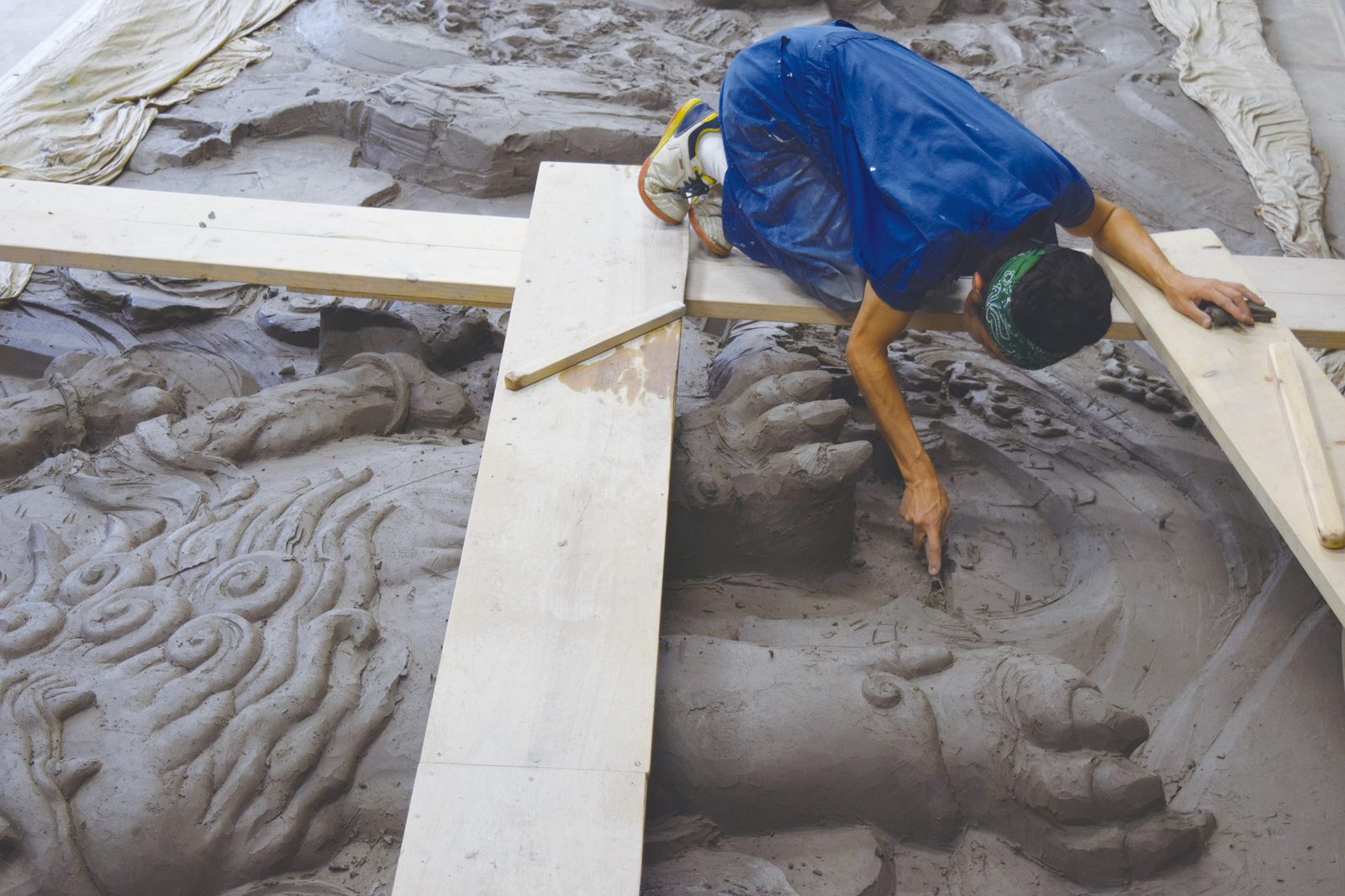 Hand-sculpting Raijin's form directly on the full-size clay master at CREARE studio
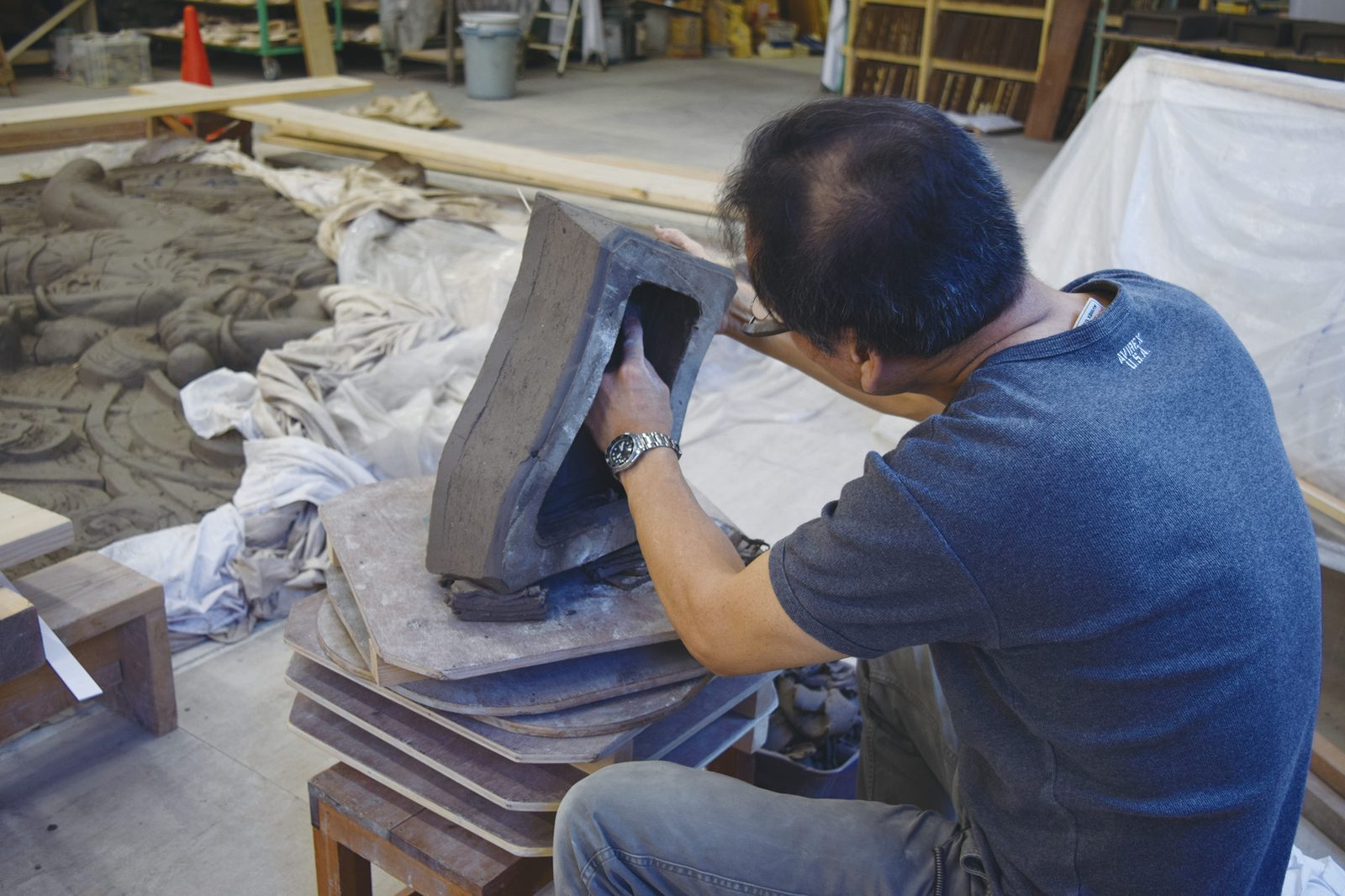 Hollowing the backside of a cut tile section — reducing weight while preserving relief depth
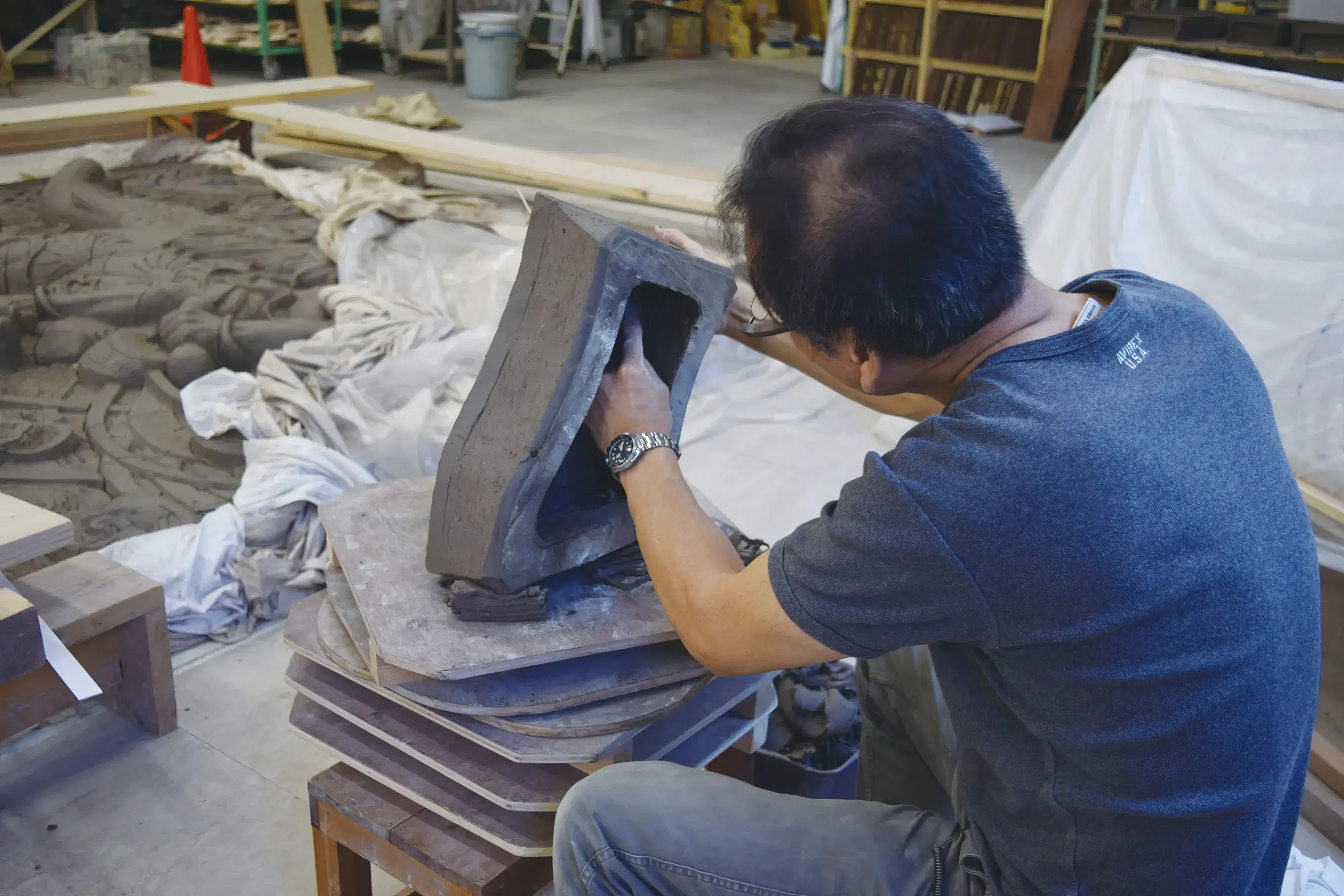 Cutting and shaping individual tile sections from the clay master
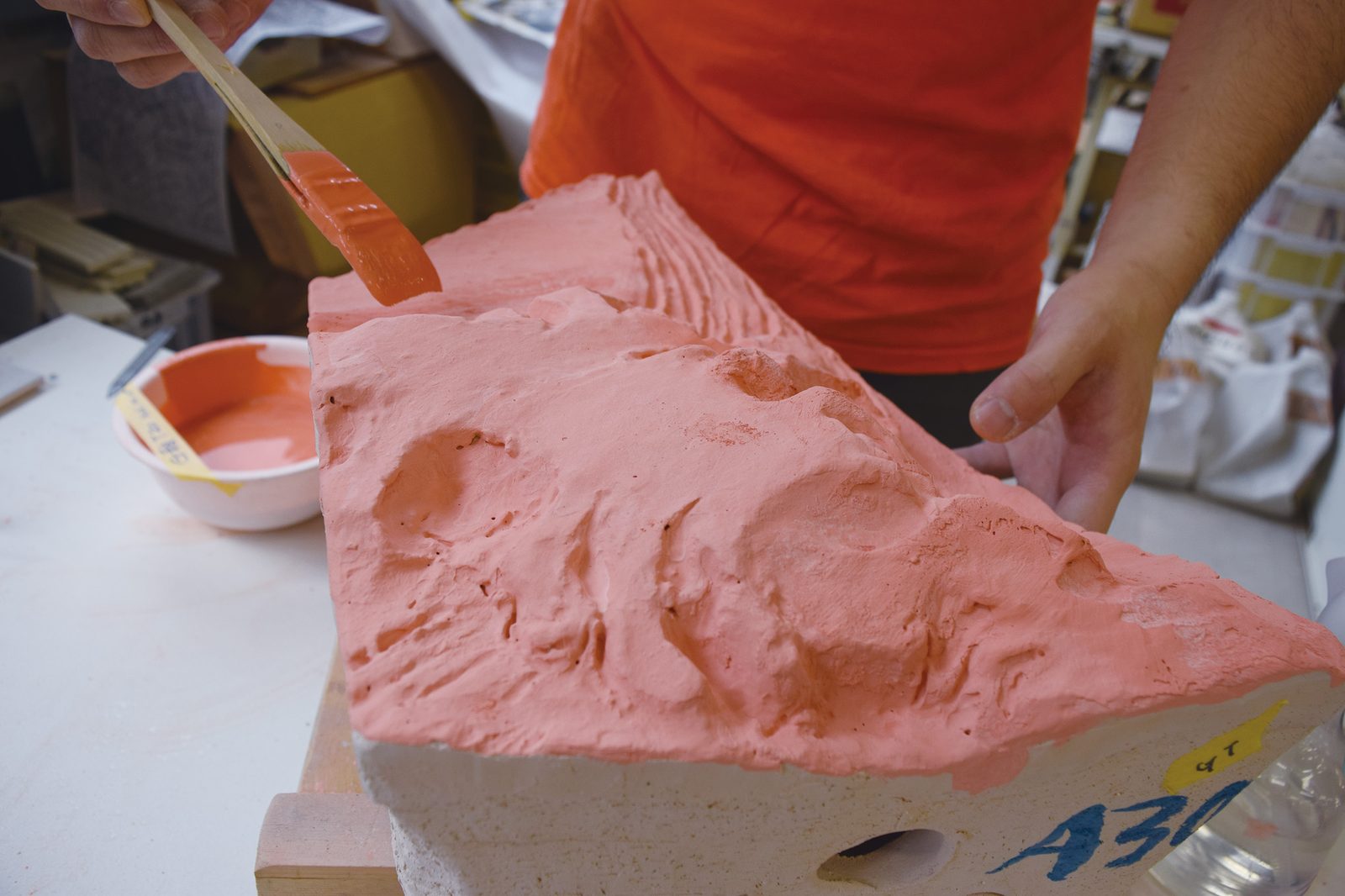 Hand-applying colored glaze to a wave section — tile A30 labeled for assembly
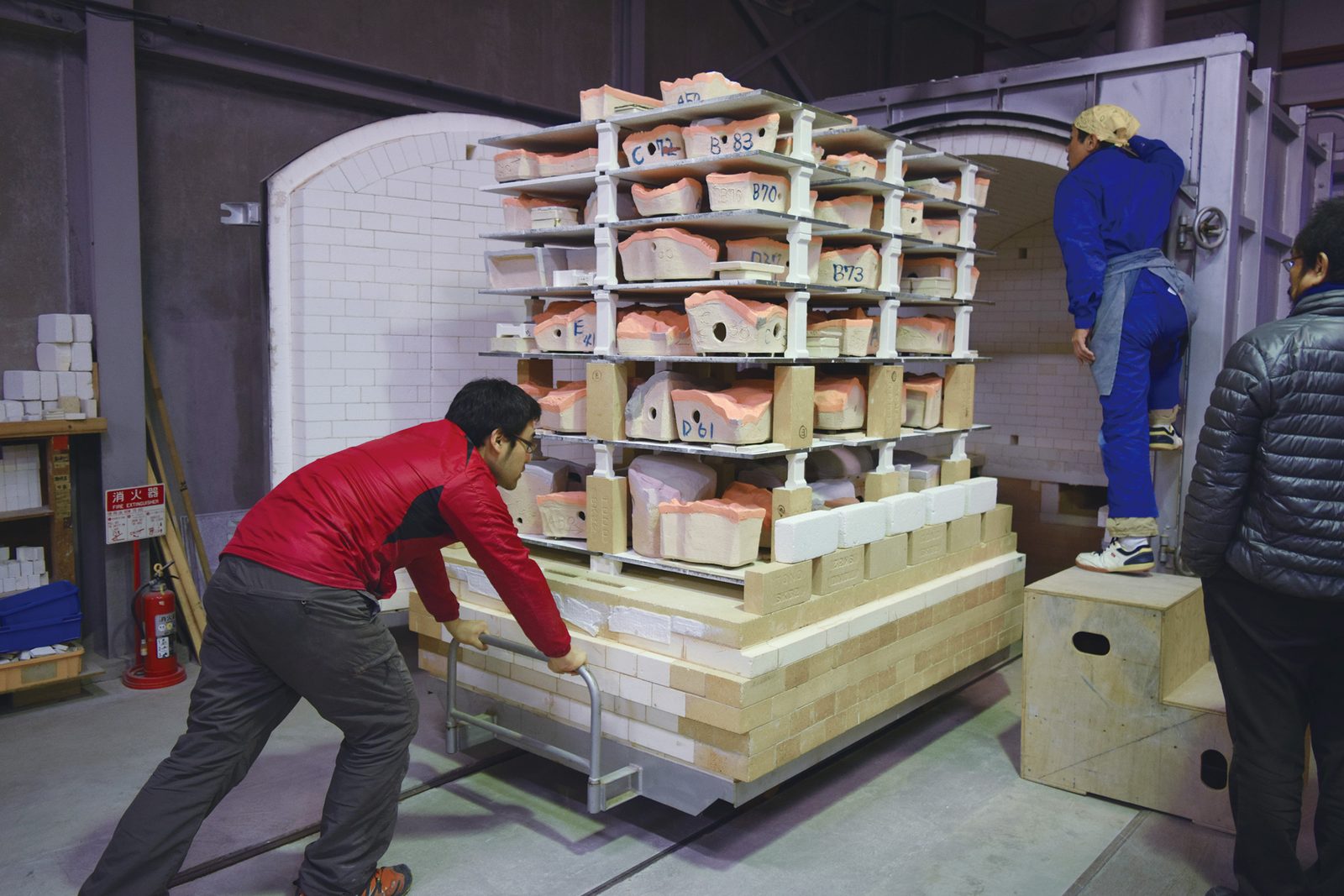 Loading glazed tiles into the kiln — each piece labeled by grid position
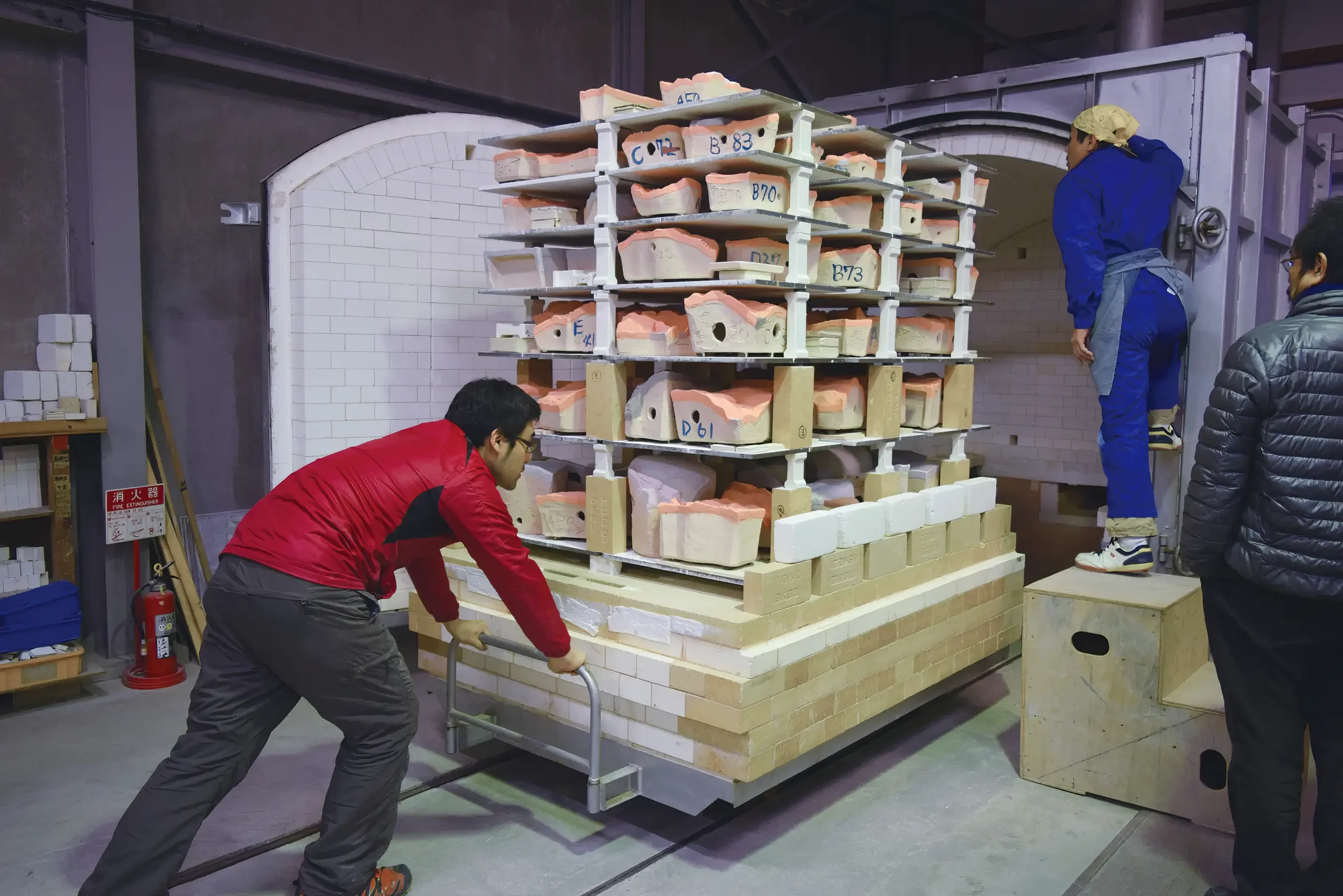 Final firing at CREARE Atami-Yugawara Studio
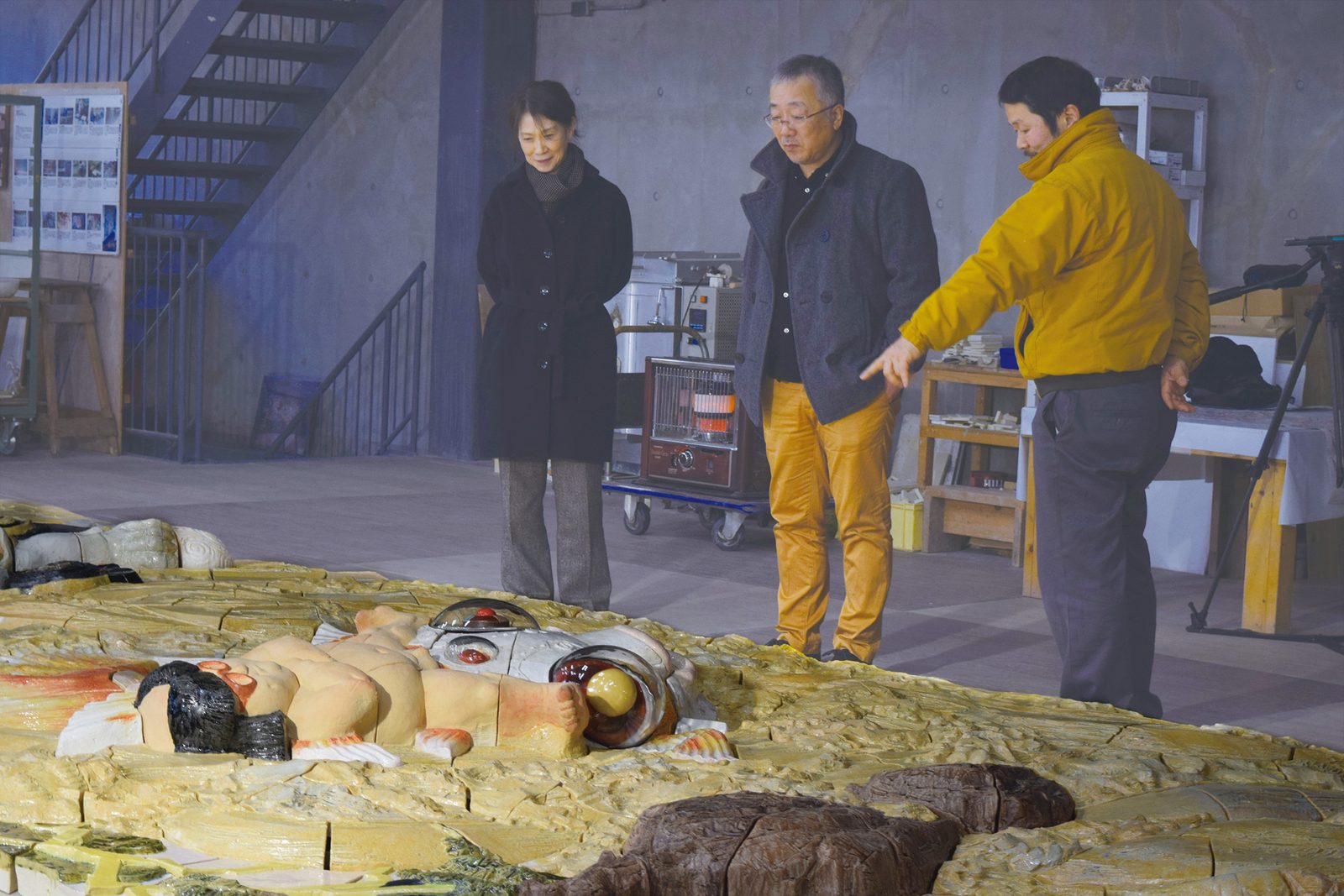 Otomo inspecting the glazed Kinka Dōji figure at the studio with CREARE artisans
 Preliminary assembly and installation at Sendai Airport, February 2015
- Japan Traffic Culture Association — publicart508 T1
- Japan Traffic Culture Association — Production Diary T1
- Public Delivery — Katsuhiro Otomo's mural at the Sendai Airport T2
- Halcyon Realms — Otomo Katsuhiro Wall Mural at Sendai Airport T2
- Anime News Network — Otomo Wall Relief Revealed T3
- SoraNews24 — Otomo to design huge mural for Sendai Airport T3
Loading...