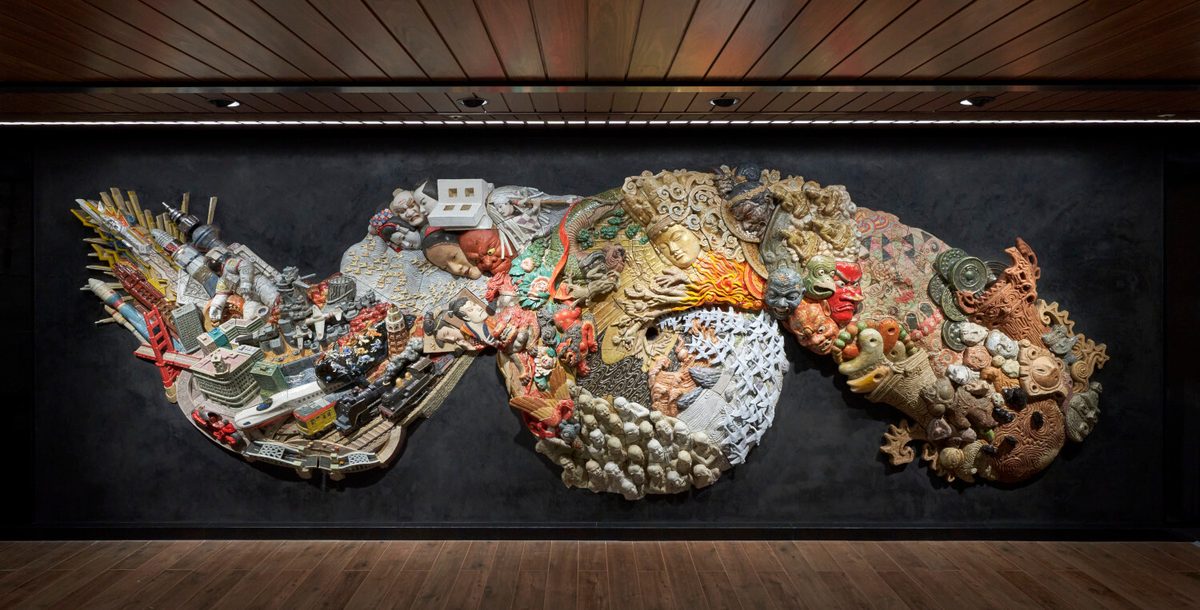
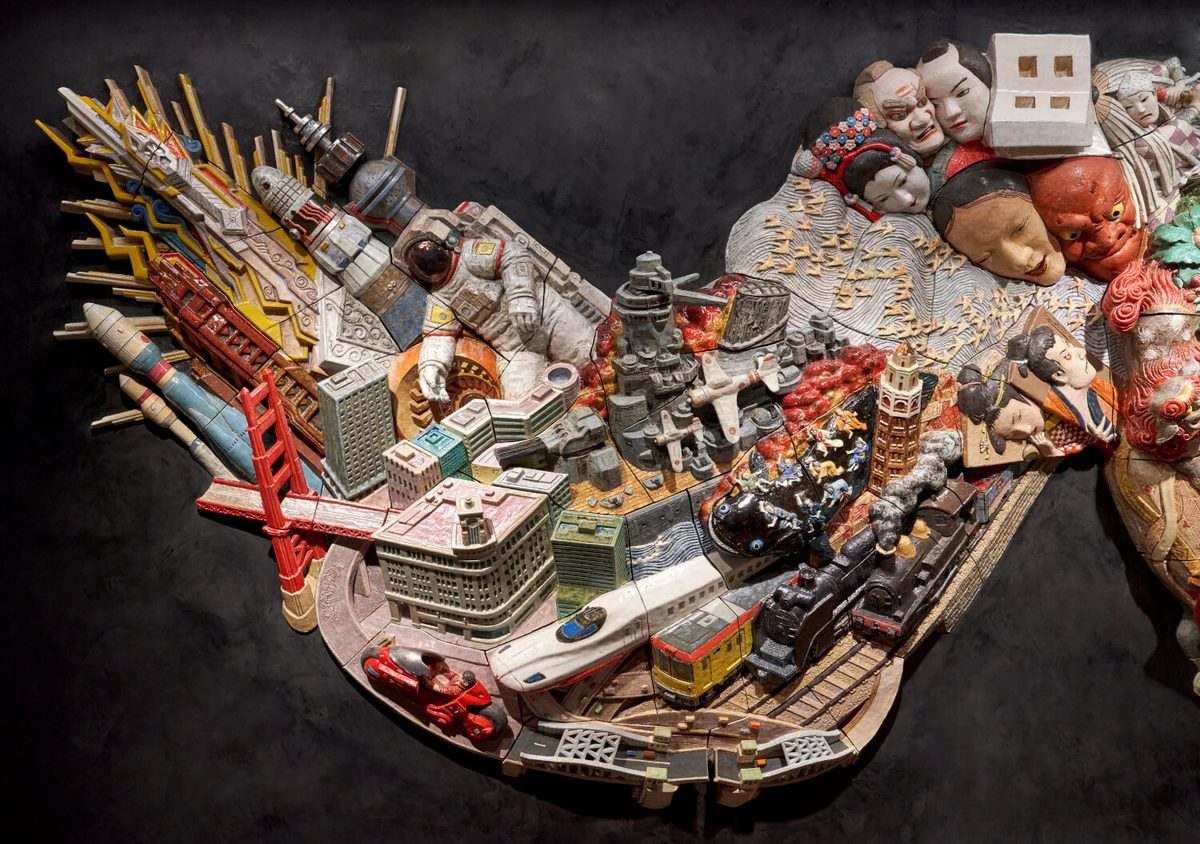
A large-scale public mural by Katsuhiro Otomo was installed quietly in Ginza, Tokyo, following a process that unfolded over several years. The work appears without exhibition framing or announcement, positioned as part of the city's everyday visual flow rather than a destination to be sought out.
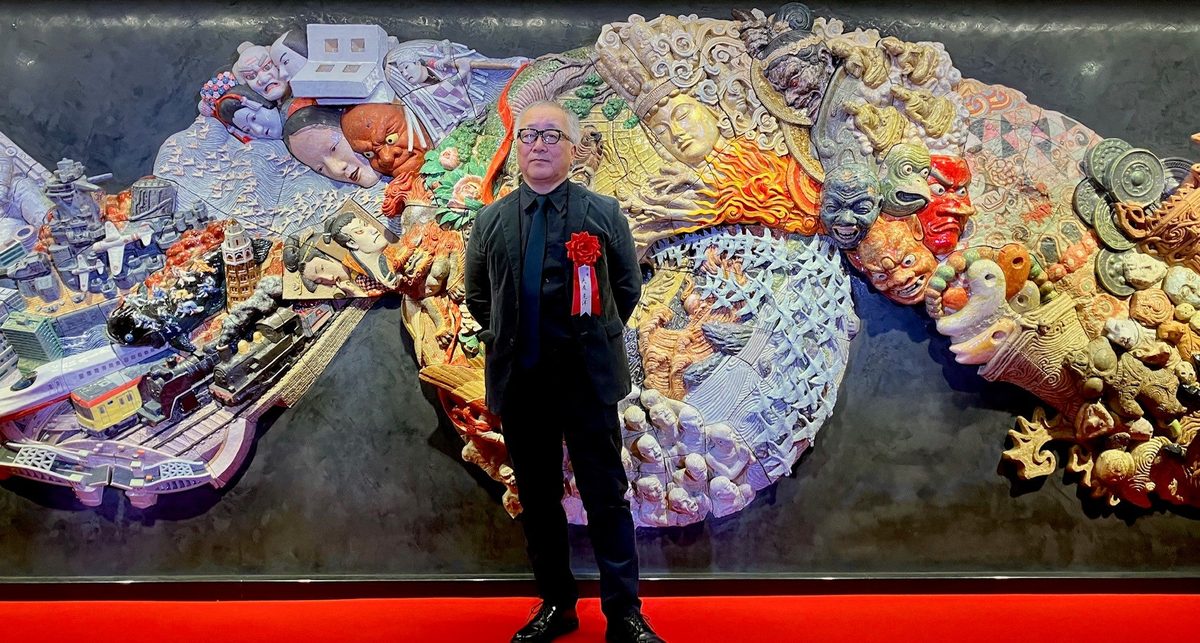 Otomo at the December 15, 2025 unveiling — four years from first site visit to completion
Rotation, Not Timeline
Otomo approaches the piece as public art closer to entertainment than declaration — something meant to be encountered casually, enjoyed without preparation, and absorbed through movement. Rather than presenting a single linear image, the mural is organized around rotation and procession. Forms circulate across the surface, allowing the composition to shift depending on distance, angle, and the pace of people passing by.
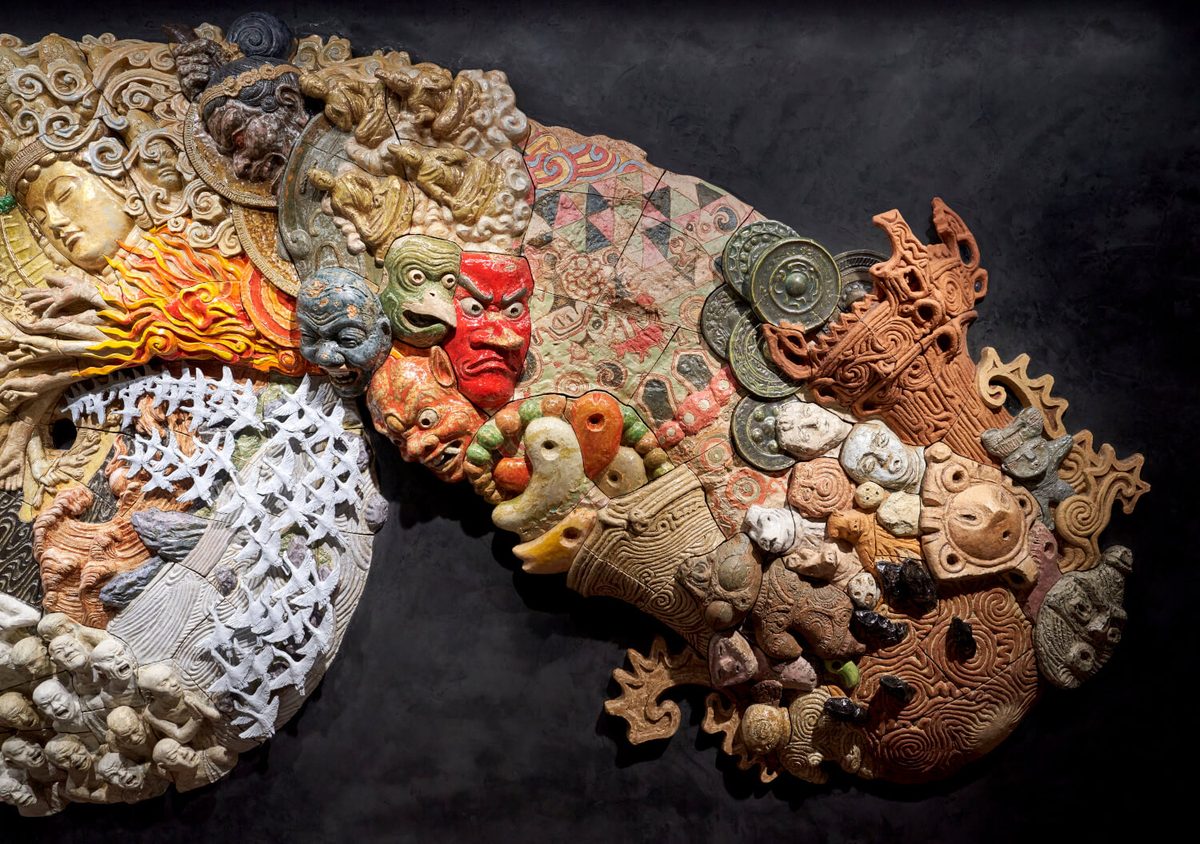
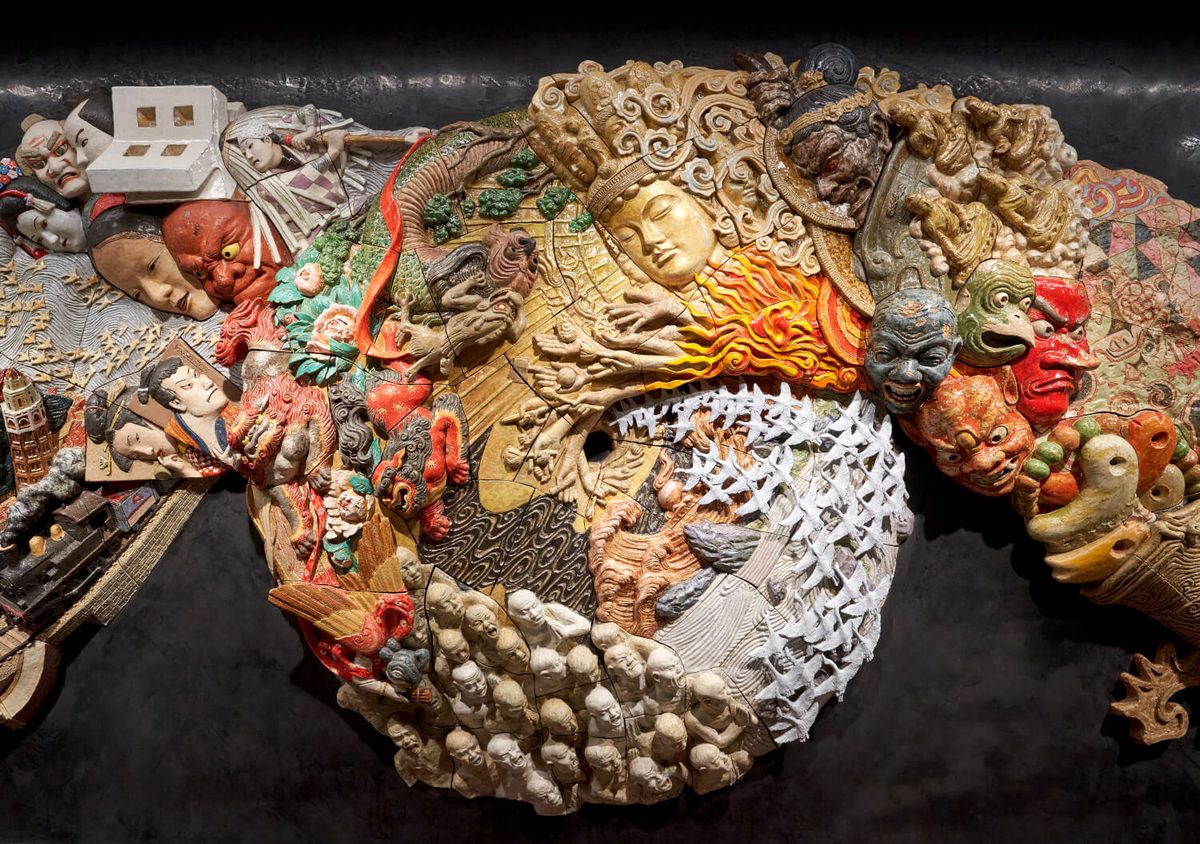
That sense of circulation is reinforced materially. Spanning roughly 7 meters wide and 2.4 meters high, the work is constructed from 164 ceramic tiles, four bronze elements, and nearly 290 distinct glazes. The density of surface variation resists a single reading, instead encouraging repeated encounters. Ancient and historical references — from early Japanese forms through later visual traditions — are not quoted directly but recomposed through collage, creating continuity across time rather than hierarchy.
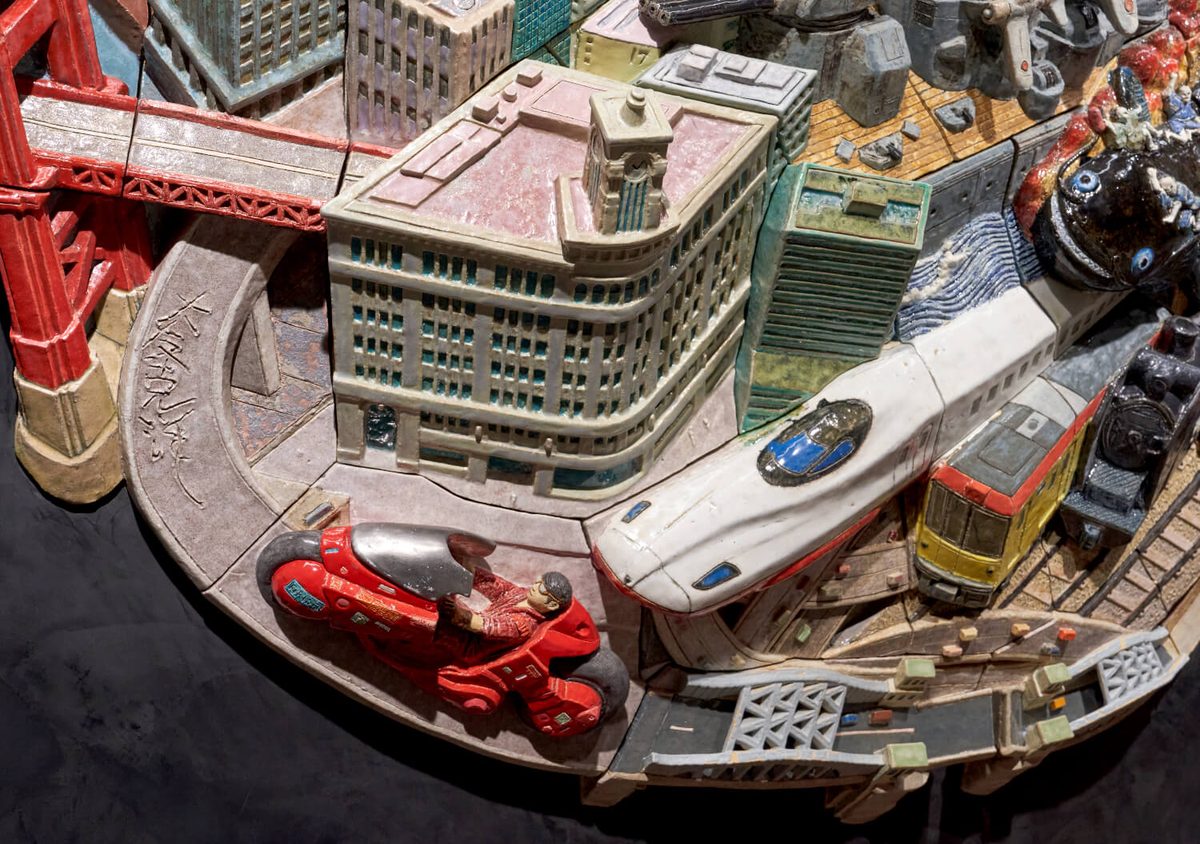 Kaneda's motorcycle, hand-colored by Otomo — his signature etched into the ceramic below
“I've shaped the flow of art — from the Jōmon period to the present and beyond — into a single form. The thoughts and prayers people wished to express by era are passing down while changing form. From that sequence, I'm lining up the fragments that have drawn me in and remain in my heart. Many hands have worked on, the colors emerge, it gradually rose up as a three-dimensional form.
From here on, the work belongs to the viewer. When you happen to stop by, approach and retreat as you please, I would be happy if something resonates within you.”
— Katsuhiro Otomo
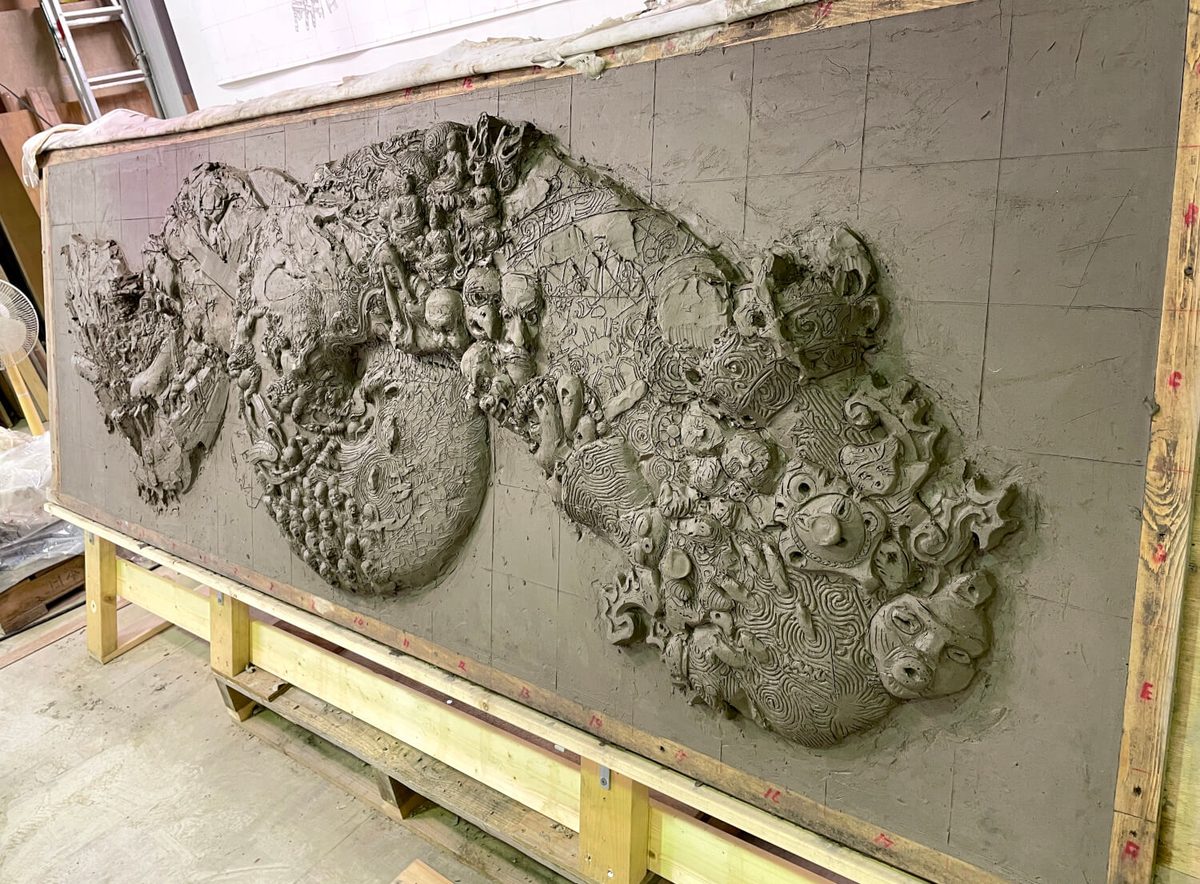 The full composition in unfired Shigaraki clay — before cutting into 164 individual tiles
The production itself reflects this long view. Realized over multiple years in collaboration with seven artisans from CREARE Atami-Yugawara Studio, under the Japan Traffic Culture Association with support from Tokyo Metro, the mural treats clay, glaze, and bronze as carriers of accumulated experience — reference gathered through animation, film, and historical art, then reassembled through lived practice rather than concept alone.
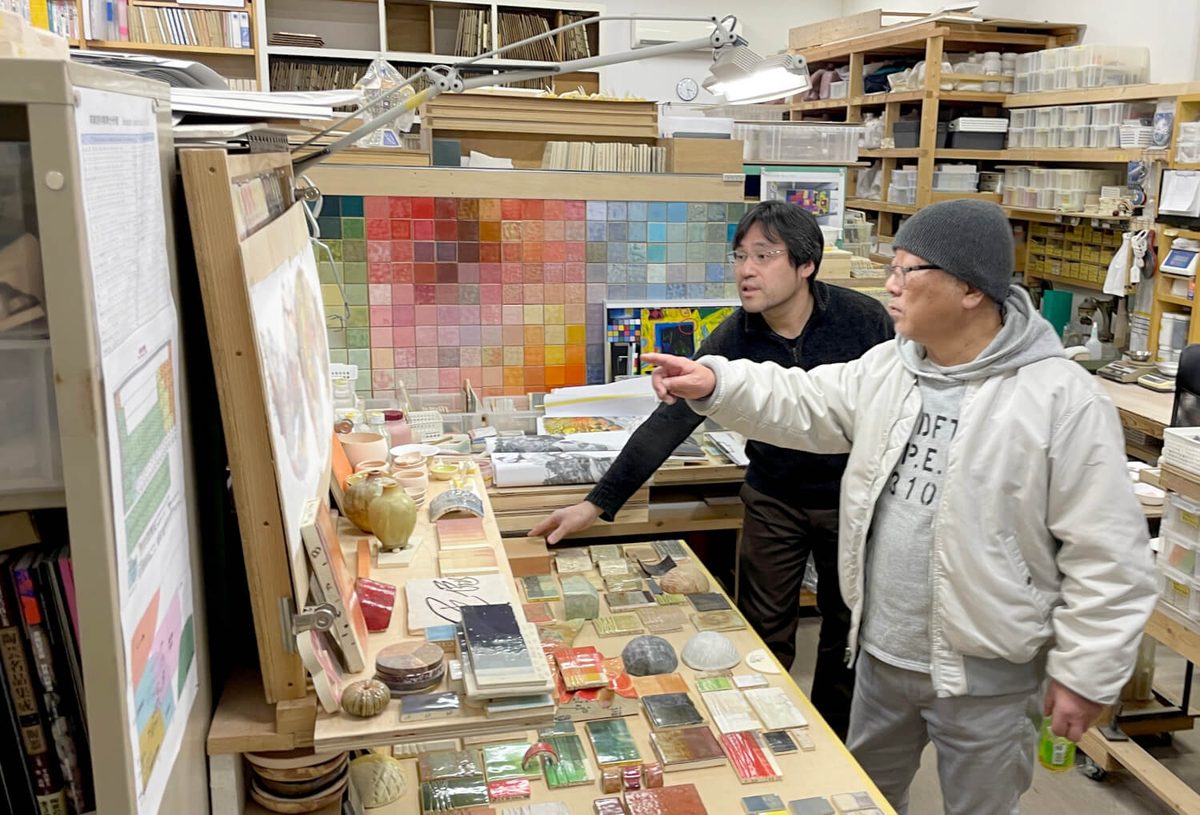 The glaze sample wall — nearly 290 distinct colors selected for the final work
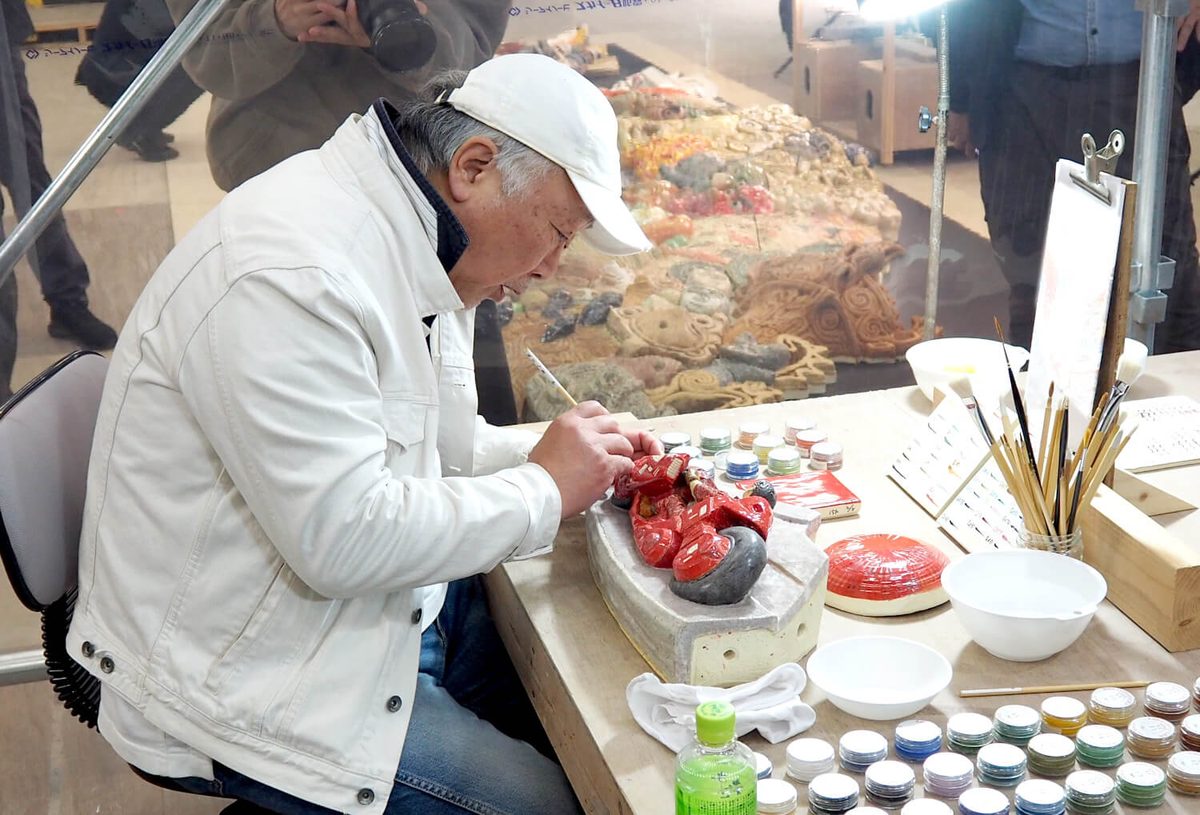 Otomo hand-painting Kaneda's motorcycle onto the ceramic at the December unveiling
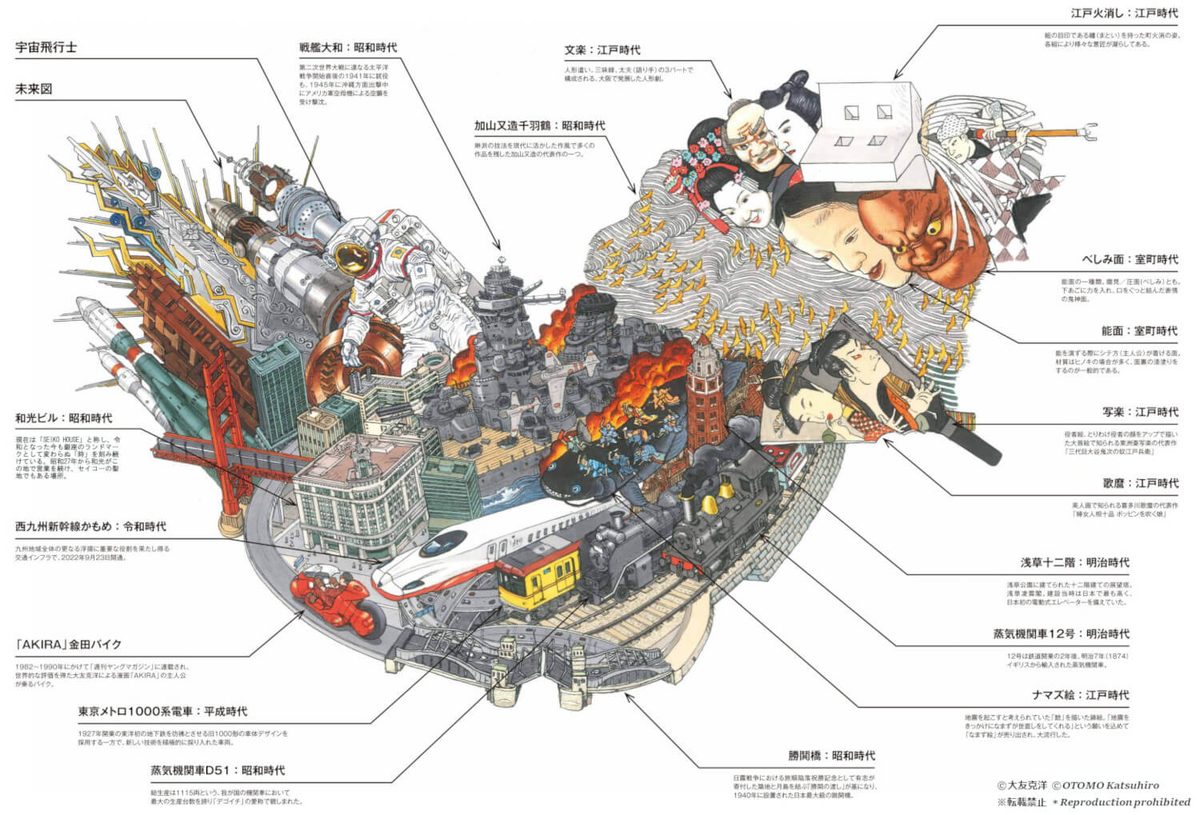 Design drawing — modern half: 宇宙飛行士 (astronaut), 戦艦大和 (Yamato), 和光ビル (Wako Building), AKIRA金田バイク
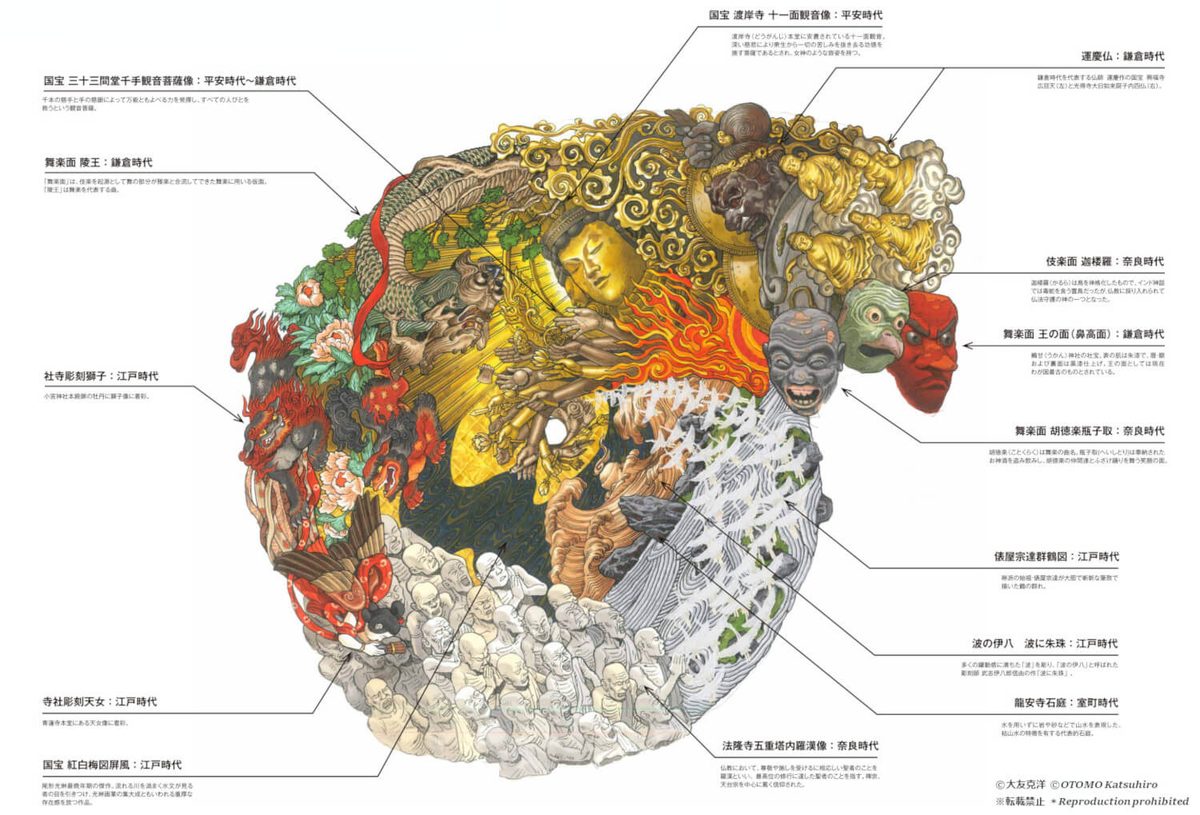 Design drawing — center: 国宝 渡岸寺 十一面観音像 (National Treasure Kannon), 舞楽面 (bugaku masks), 法隆寺
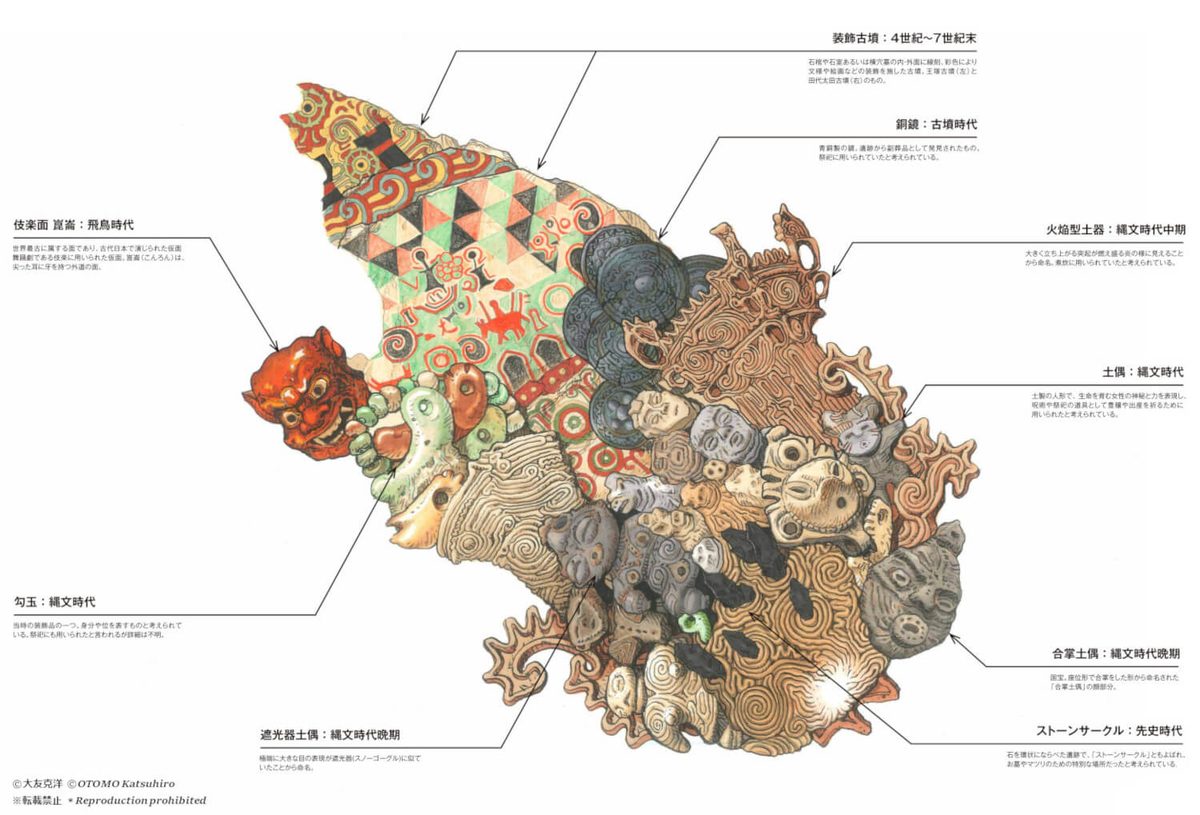 Design drawing — Jōmon half: 火焔型土器 (fire-flame pottery), 土偶 (dogū), ストーンサークル (stone circles)
Installed near Ginza Station's Hibiya Line Exit B1, the mural exists as an object of place. It is encountered between daily rhythms, not as spectacle but as surface — a layered procession whose meaning shifts subtly with light, movement, and repetition. Its presence suggests continuity rather than conclusion, leaving space for what comes next.
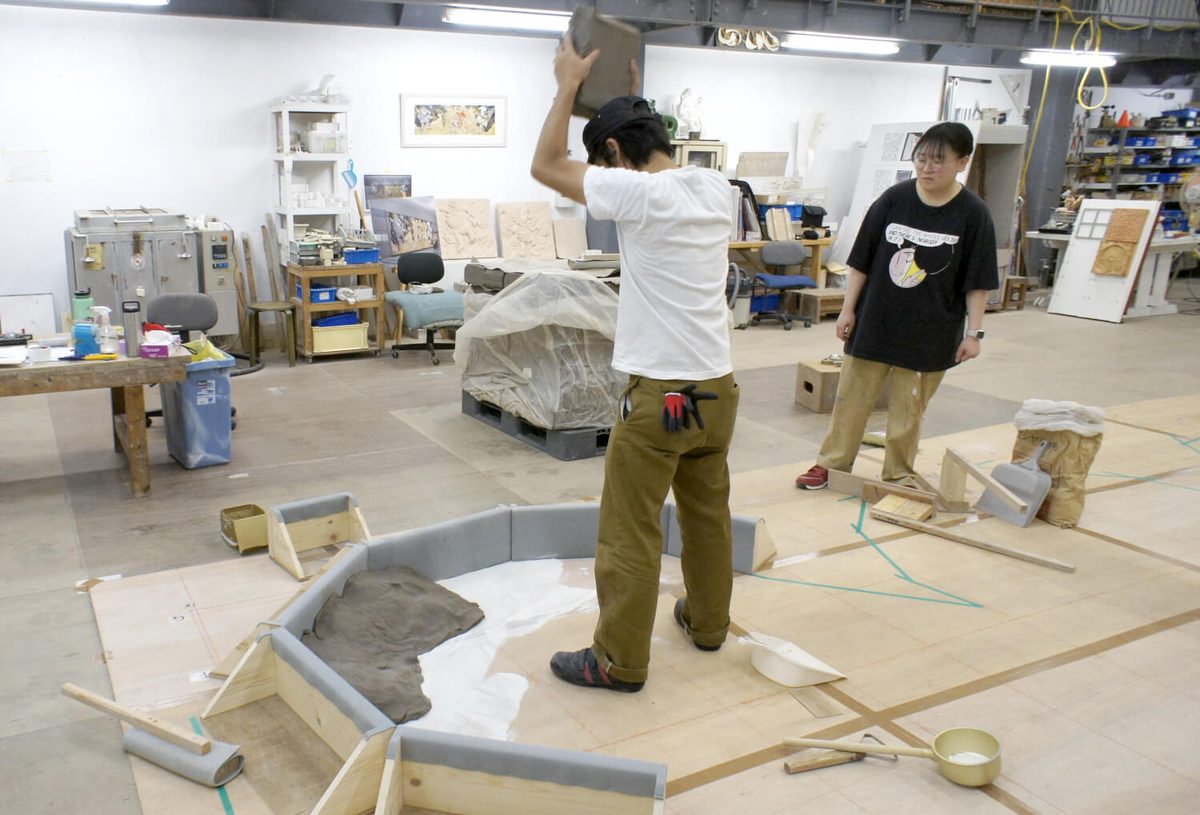 CREARE Atami-Yugawara Studio — seven artisans collaborated over multiple years
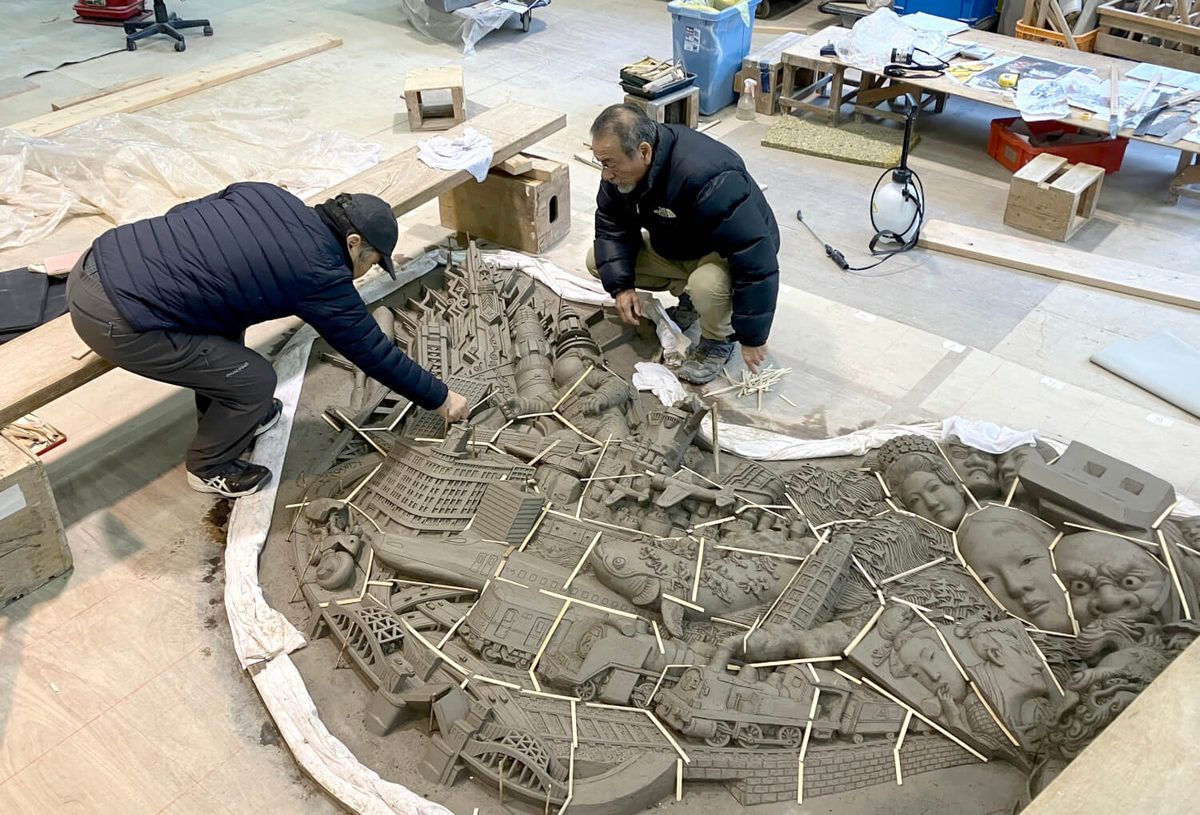 Cutting tile sections from the clay master
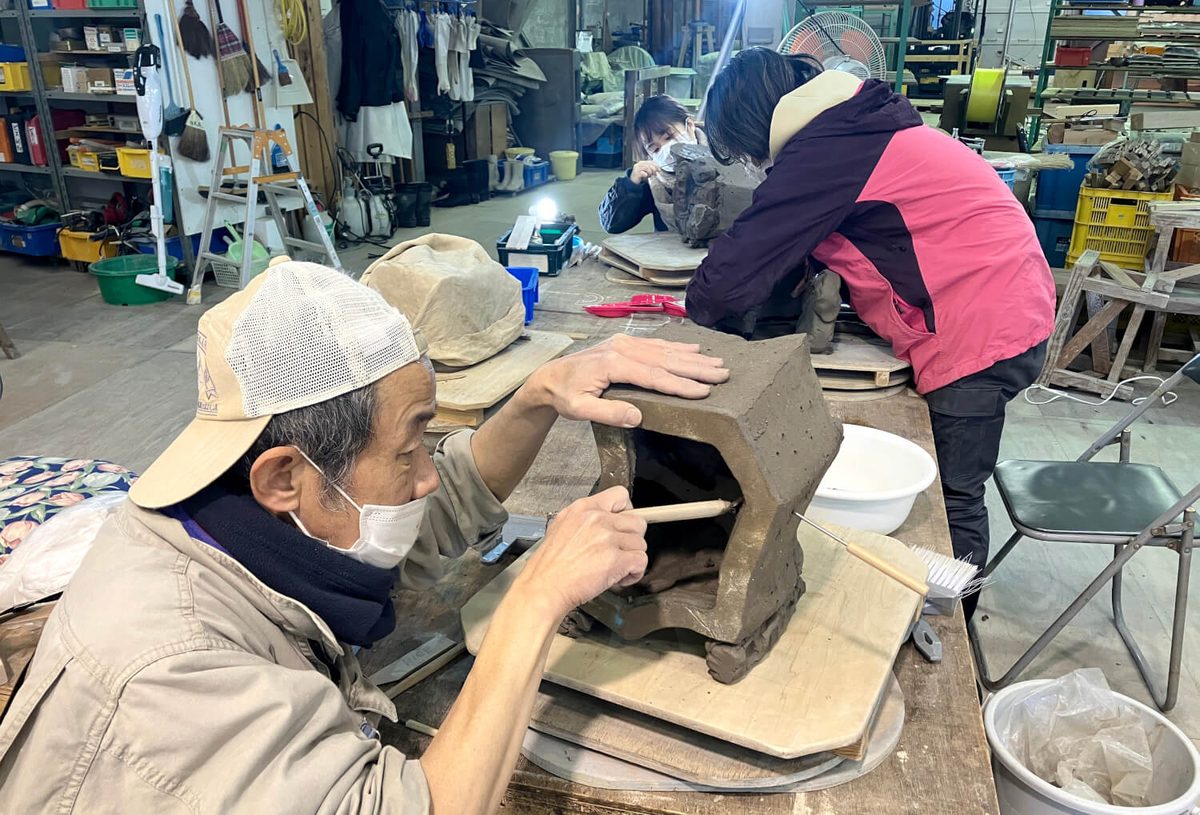 Hand-sculpting detail on an individual tile
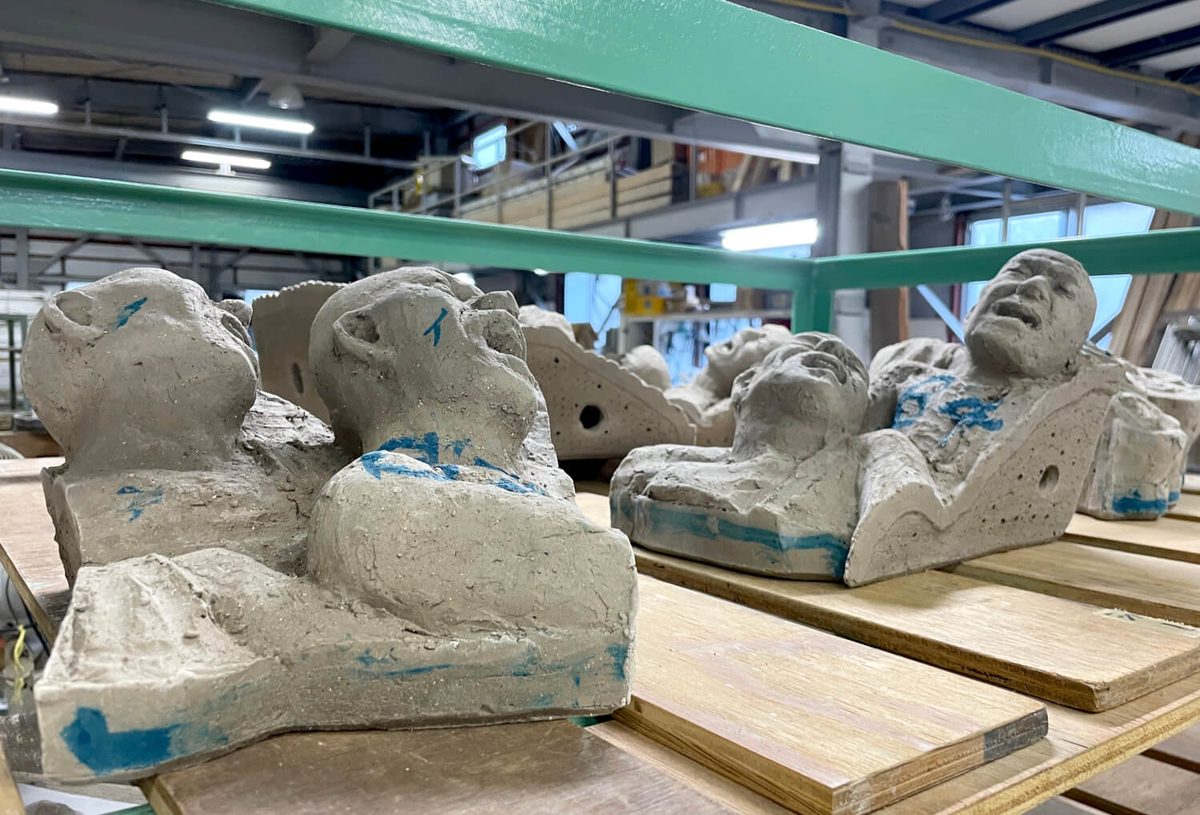 Unfired ceramic faces and figures awaiting the kiln
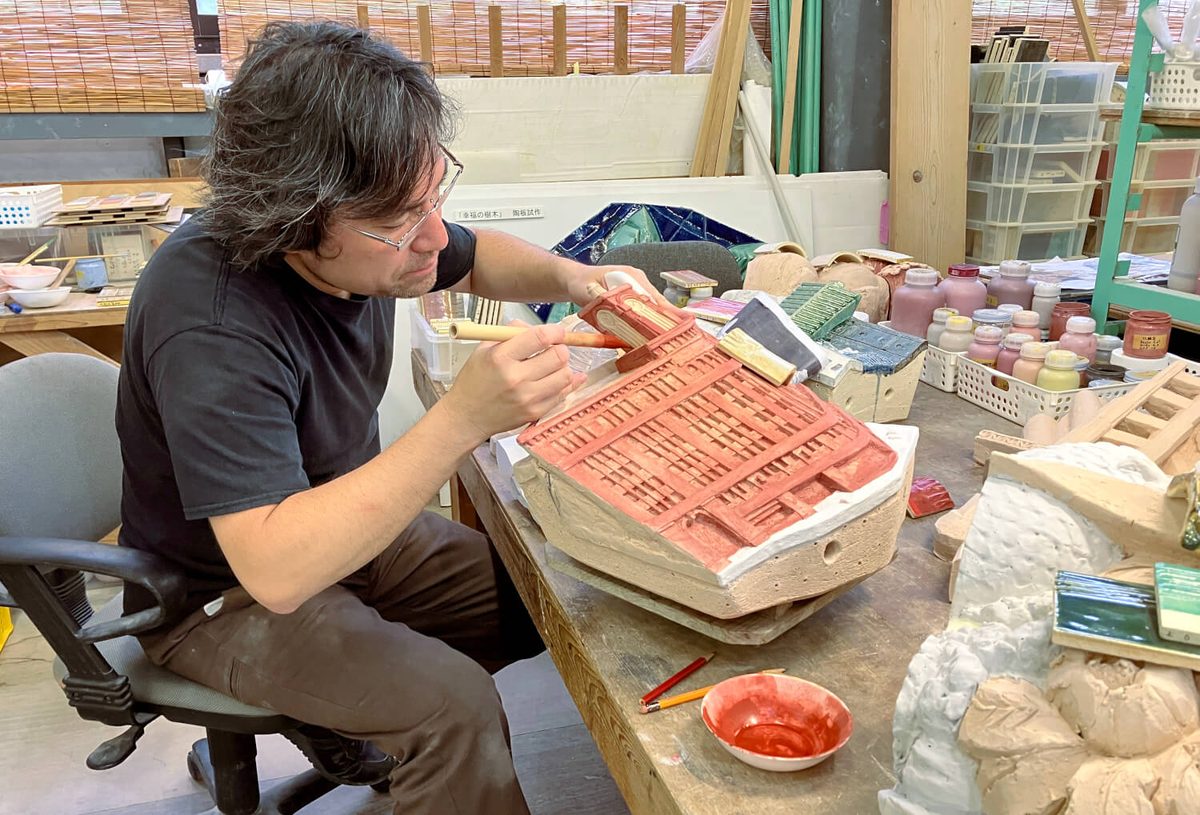 Hand-applying colored glaze to a building tile
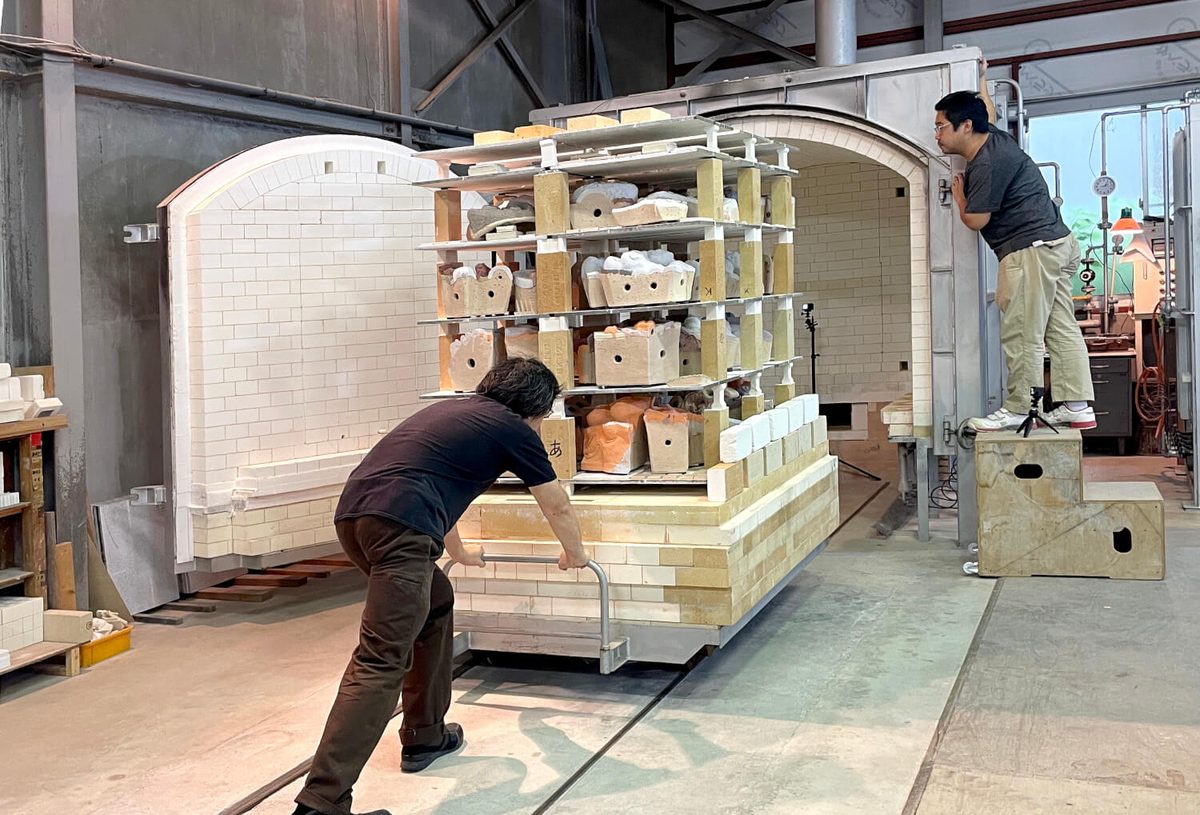 Loading tiles into the kiln at CREARE studio
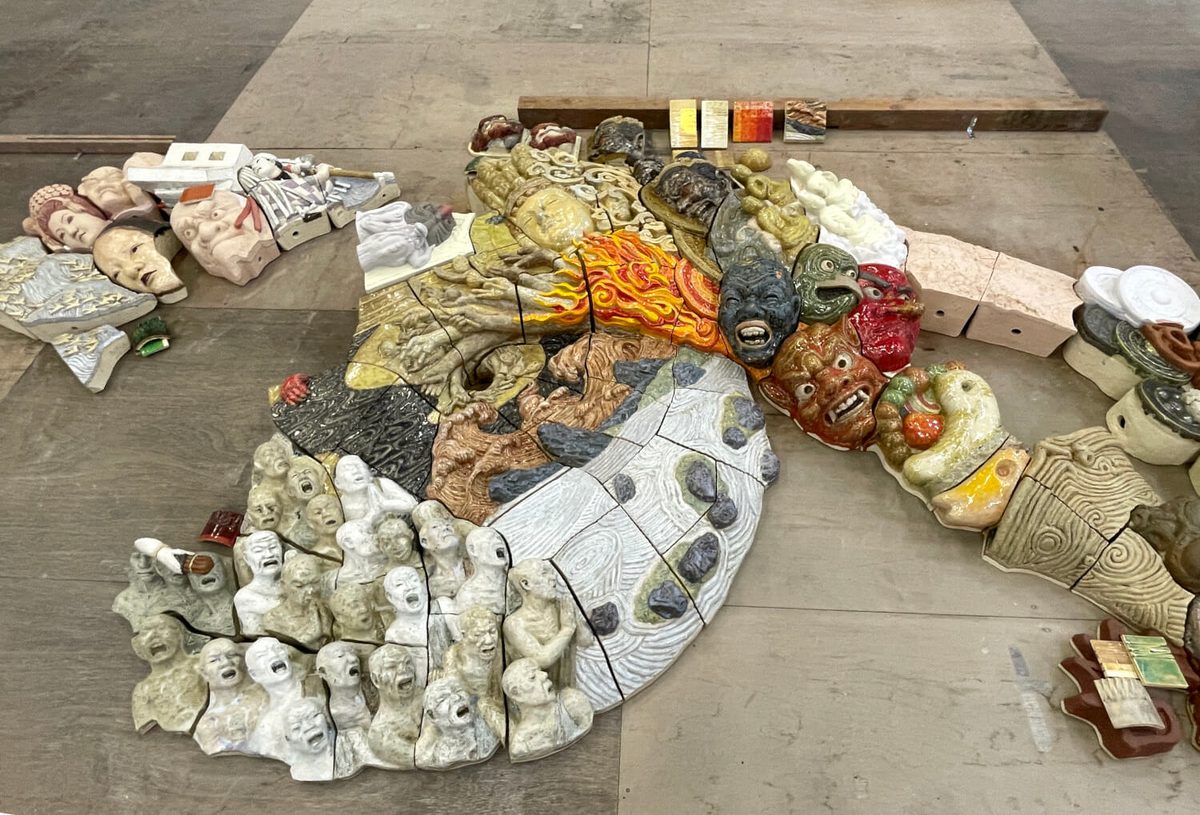 All 164 fired tiles assembled on the studio floor before installation
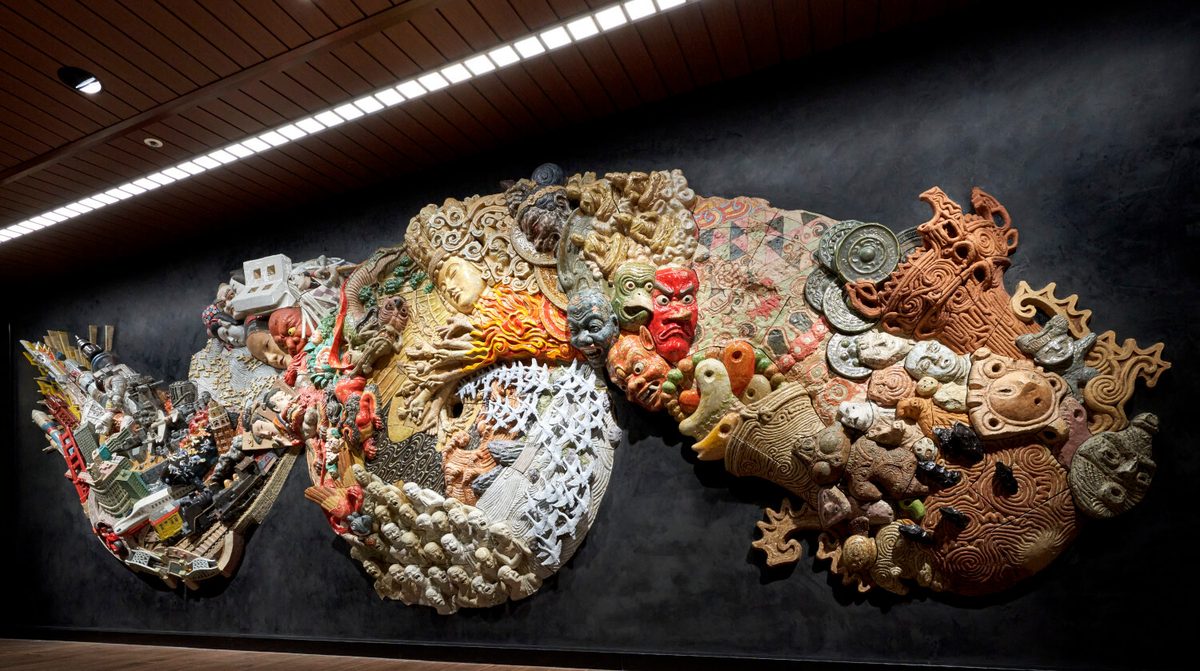 The completed mural viewed at an angle — ceiling and station context visible
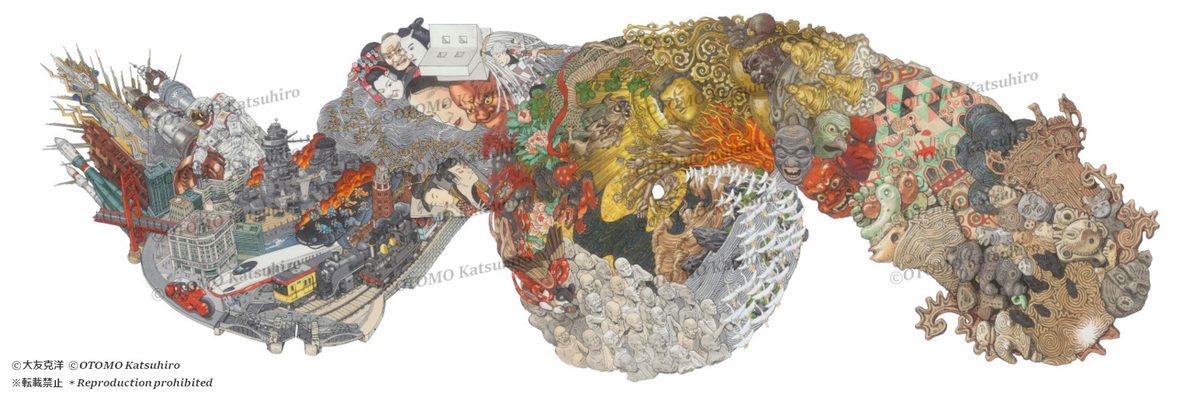 Otomo's original colored design drawing for the full composition
Loading...