The Manga Difference
Game Kirby inhales enemies and gains powers. Manga Kirby — specifically Hirokazu Hikawa's twelve-year CoroCoro Comic run — gets drunk, threatens people, impersonates robots to mess with Dedede, and makes facial expressions that would get flagged in a Nintendo character guide. Same character. Different rules.
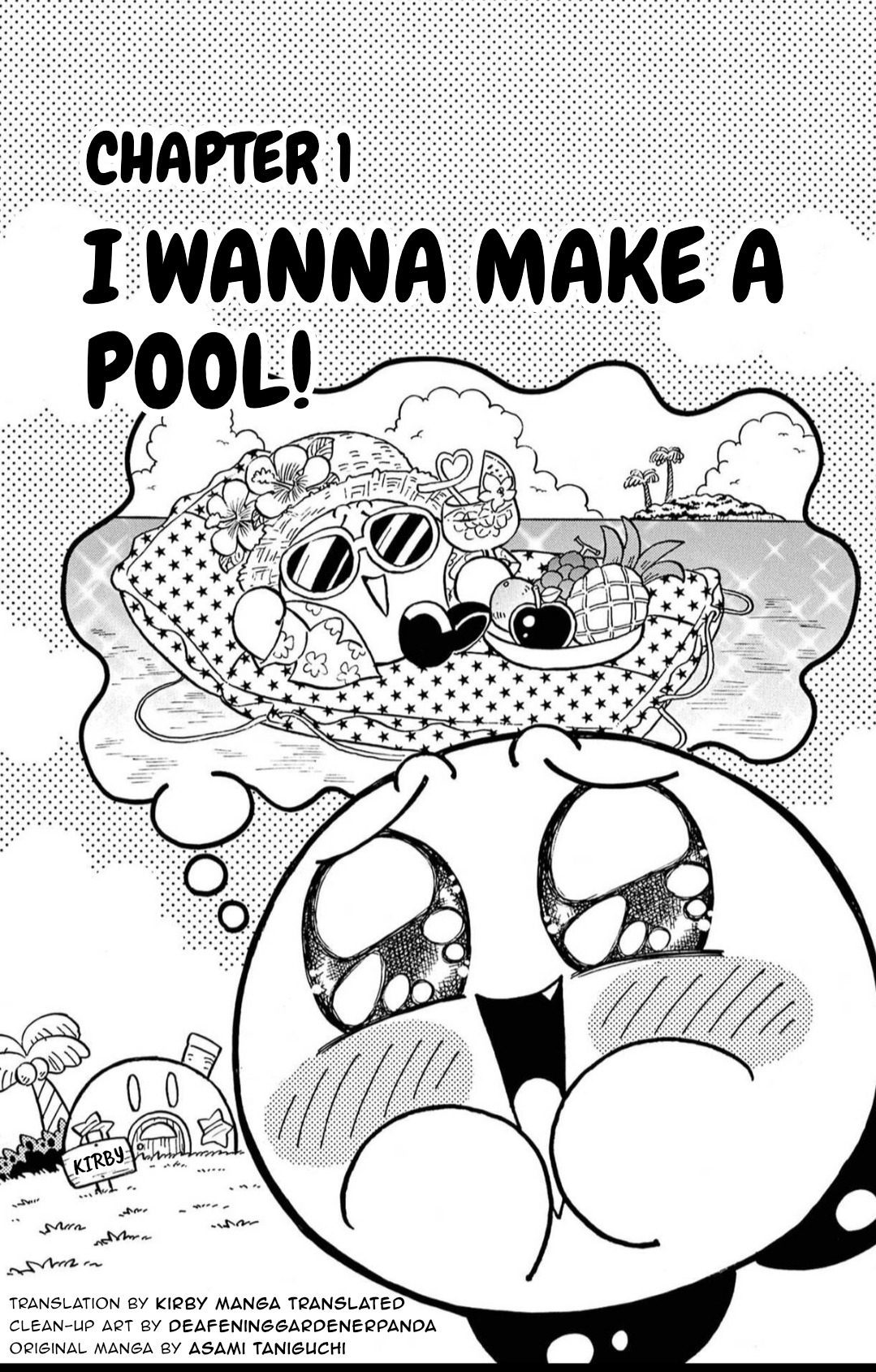
'I wanna make a pool!' — Chapter 1 from a Kirby manga by Asami Taniguchi. Kirby daydreams about lounging in a pool with sunglasses and a cocktail. Manga Kirby talks in full sentences, has desires, and is explicitly selfish. Game Kirby does not speak
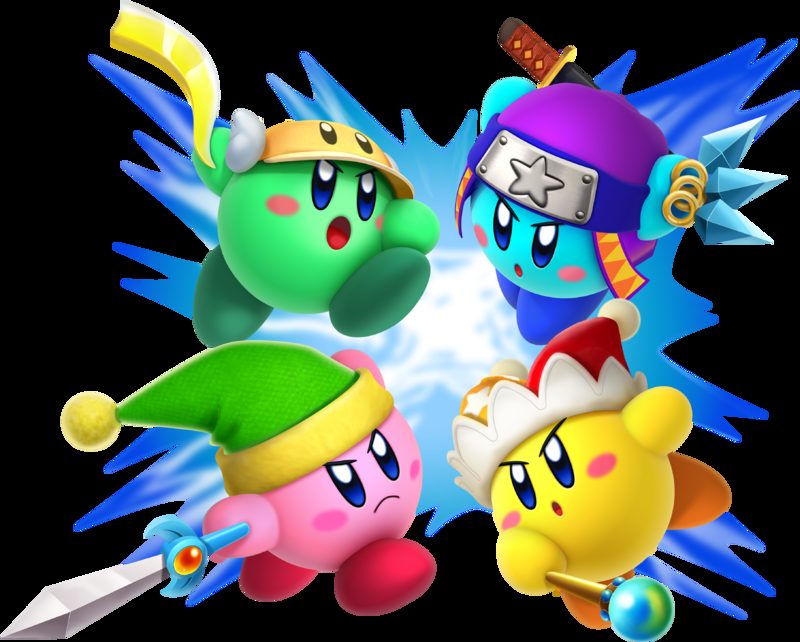 The copy ability mechanic in the games — Sword, Ninja, Cutter, Beam. Each consumed enemy rewrites Kirby's body. The games keep this cheerful. The manga makes it explicit
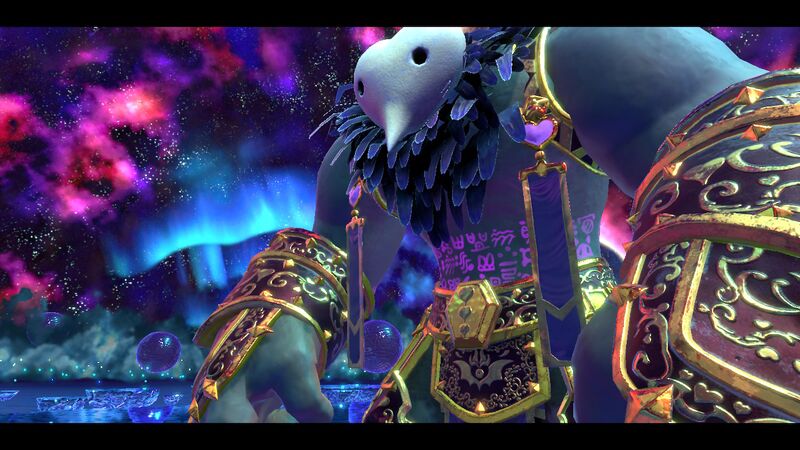 Void Termina from Kirby Star Allies — the cosmic horror hidden at the end of pastel platformers. The games bury the nightmare behind doors. The manga puts it in Chapter 1
Hikawa's manga sold over 10 million copies across 25 volumes. It ran in CoroCoro Comic from 1994 to 2006, then returned in 2017 for CoroCoro Aniki. Bandai makes gashapon of these characters. San-ei Boeki makes plush. The weird version became product.
In the first chapter of Hirokazu Hikawa's Hoshi no Kirby: Dedede de Pupu Pu na Monogatari (星のカービィ デデデでプププなものがたり), King Dedede throws a bottle of sake at Kirby. The bottle hits him in the mouth. Kirby drinks it.
He gets drunk.
The manga, which ran in Monthly CoroCoro Comic from 1994 to 2006, shows Kirby with his arm slung around Dedede's shoulder, speech slurred, threatening to eat him. He sings bad karaoke. He gets existential. He repeats the phrase "Lemme tell you about life." Then he inhales the entire picnic party and unleashes ten different copy ability attacks on the King.
This is Chapter 1. For children.
VIZ Media licensed the manga in English as Kirby Manga Mania and changed the sake to "Loopy Juice." The original Japanese panels still show the kanji for alcohol (酒). The bottle is sake. Kirby is drunk. CoroCoro Comic ran this for twelve years and nobody stopped it.
That's not the weird part. The weird part is what comes after.
The Toy, The Faces, The Chaos
Chapter 2: A wizard curses King Dedede for being rude. Dedede transforms into a wind-up toy. Not a beast, not a statue — a toy, with cymbals for hands and a key on his back. The wizard winds the key. Dedede claps the cymbals involuntarily. The manga describes his personality in this form as "noticeably more cheerful than his game counterpart."
Body horror played for comedy. Physical transformation as humiliation. This is still for children.
Then there are the faces. Hikawa draws Kirby with expressions that do not exist in HAL Laboratory's games. Angry Kirby. Violent Kirby. Menacing Kirby. Kirby with teeth. The games keep him round, soft, expressively limited. The manga gives him a face that can snarl.
Throughout the series, Kirby destroys things. Not as a hero fighting evil — as a pest. He crashes picnics. He eats everything in sight. He demolishes a town's typhoon preparations by accident and walks away. In one chapter, he breaks King Dedede's robot duplicate and impersonates it just to mess with him. No reason. Just chaos.
The manga doesn't frame this as villainy. It frames it as Kirby being Kirby.
The Inhale, Made Visible
The copy ability mechanic — Kirby inhales an enemy, absorbs their powers, transforms into them — exists in the games as a cheerful gameplay loop. Sword enemy goes in, Sword Kirby comes out. Clean. Quick. Cute.
Hikawa draws it differently. His art style makes the process visible. The inhale becomes grotesque. The transformation mid-frame. The enemy ceasing to exist. It's the same mechanic the games use, but the manga doesn't hide what's happening. Kirby eats a sentient being and wears its abilities like a costume. The body changes. The victim vanishes.
It's not subtle. It's explicit. And it ran in a kids' magazine for over a decade.
This Sits Next to the Plush
Walk into any Japanese toy store and you'll find Kirby merchandise in three aisles. Nursery-safe plush from San-ei Boeki. Bandai gashapon of copy ability transformations. Kirby wagashi — traditional Japanese sweets shaped like the pink sphere.
Some of that merchandise is based on Hikawa's manga. The expressions, the transformations, the chaotic energy. The weird version became product.
Kirby Manga Mania sold over 10 million copies across 25 volumes. VIZ Media has released nine English volumes so far, with a tenth coming. The manga returned in 2017 for CoroCoro Aniki, a magazine aimed at nostalgic adults. Hikawa is still drawing it.
The drunk chapter. The toy curse. The violent faces. The explicit body horror. It all stayed. Nobody softened it. Nobody asked Hikawa to make Kirby nicer, cleaner, more consistent with HAL Laboratory's vision.
Japan looked at a pink sphere designed for children and said: This can also be a menace.
And that version — the careless, destructive, drunk, chaotic version — sold 10 million copies.
What the Games Hide, the Manga Says Out Loud
The games do contain strangeness. Final bosses are cosmic horrors. Zero, a bleeding eyeball. Void Termina, a dimensional destroyer. Eldritch nightmares at the end of pastel platformers.
But the games bury that strangeness under doors. You finish the main campaign — cute, cheerful, baby-safe. Then you unlock the real final boss. The nightmare. The thing that doesn't fit.
The manga doesn't bury it. Kirby drinks in Chapter 1. The weird is immediate, constant, front-facing. It doesn't wait for you to finish the game. It's what the manga is.
Hikawa's Kirby talks. Game Kirby does not. Manga Kirby is selfish, rude, destructive. Game Kirby is a silent hero. They are technically the same character, operating under the same IP, marketed to overlapping audiences.
But they are not the same character.
The Face of Cute Chaos
Kirby merchandise exists on a spectrum. At one end: infant-safe plush, pastels, round shapes, embroidered eyes. At the other: Kirby Pupupu Heritage gashapon, where Kirby characters are reimagined as classical art and antiques. Kirby as a ceramic vase. Waddle Dee as a museum piece.
Hikawa's manga sits at neither end. It sits in the middle — cute and chaotic, soft and violent, for children and somehow not. It doesn't resolve the contradiction. It is the contradiction.
CoroCoro Comic published it. Shogakukan compiled it. Bandai licensed it. VIZ brought it to America. At every stage, someone could have said: This is too weird. Clean it up. Make Kirby nicer.
Nobody did.
Kirby drank sake in 1994. He's still drinking it in 2026. The only thing that changed is the translation.
If you want to know what Kirby is allowed to be, read the manga. Not for what it explains. For what it simply does, without asking permission first.
Loading...