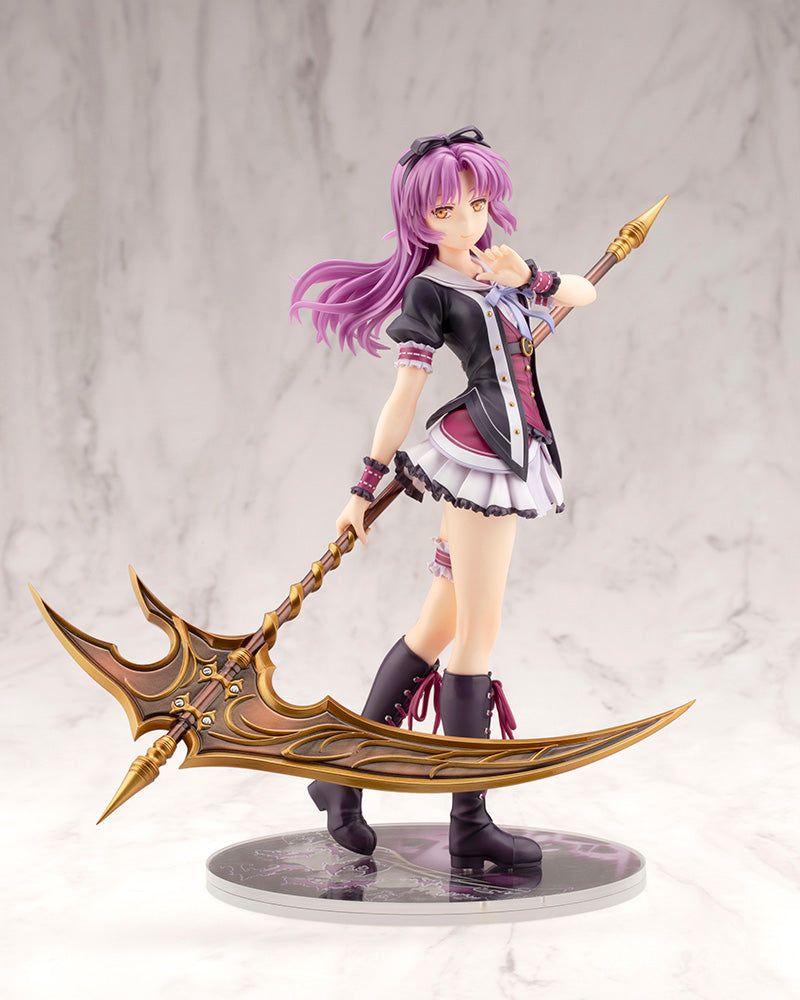
Character-Driven Design
Kotobukiya understands these characters. Renne's outfit requires careful proportioning. Rixia's 1920s-influenced design demands paintwork precision. You're buying specific characters designed by people who understand their narrative function.
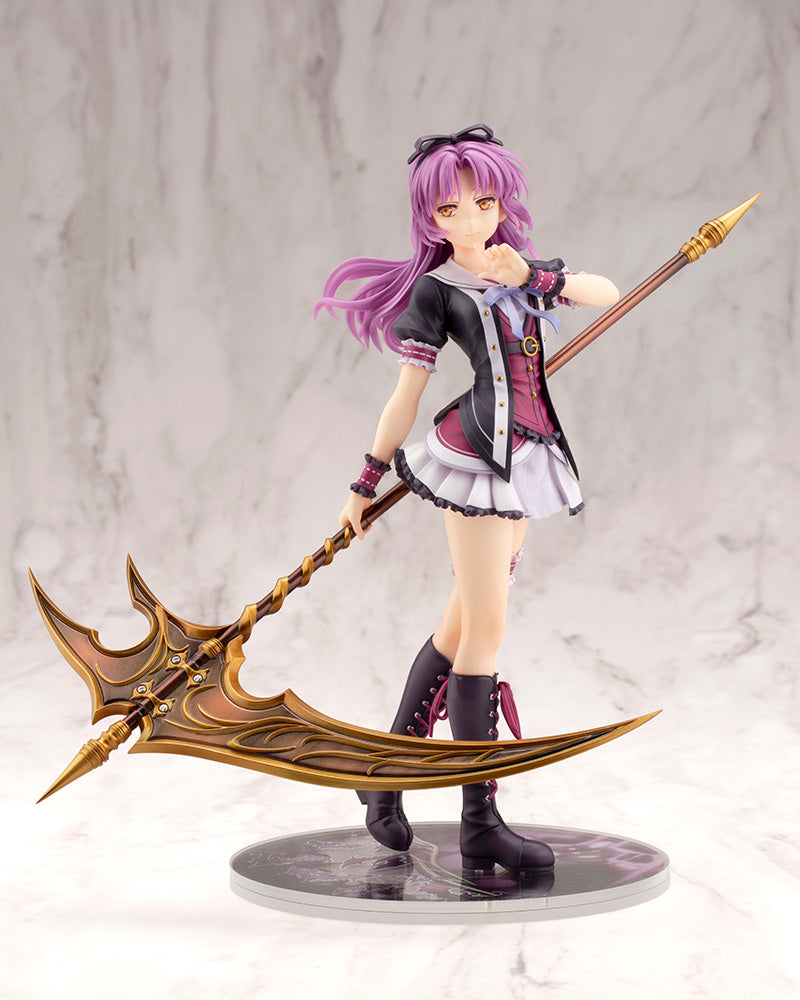 Renne Bright 1/8 scale — former Enforcer No. XV rendered in PVC
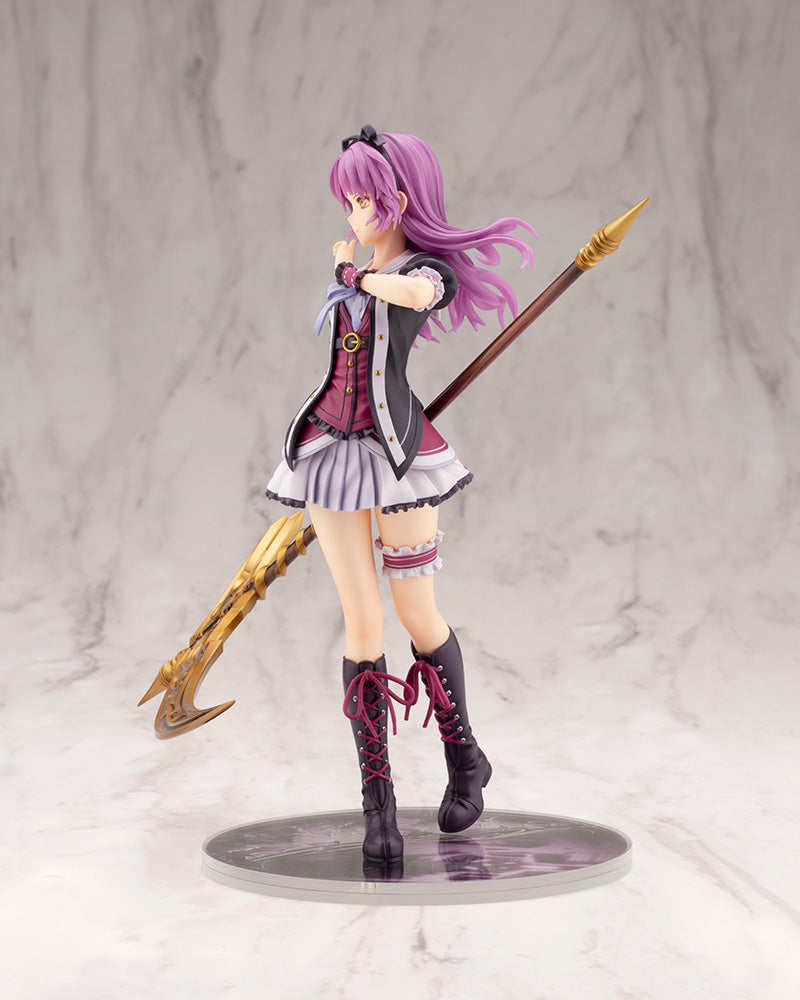 Renne detail — costume design communicating narrative significance
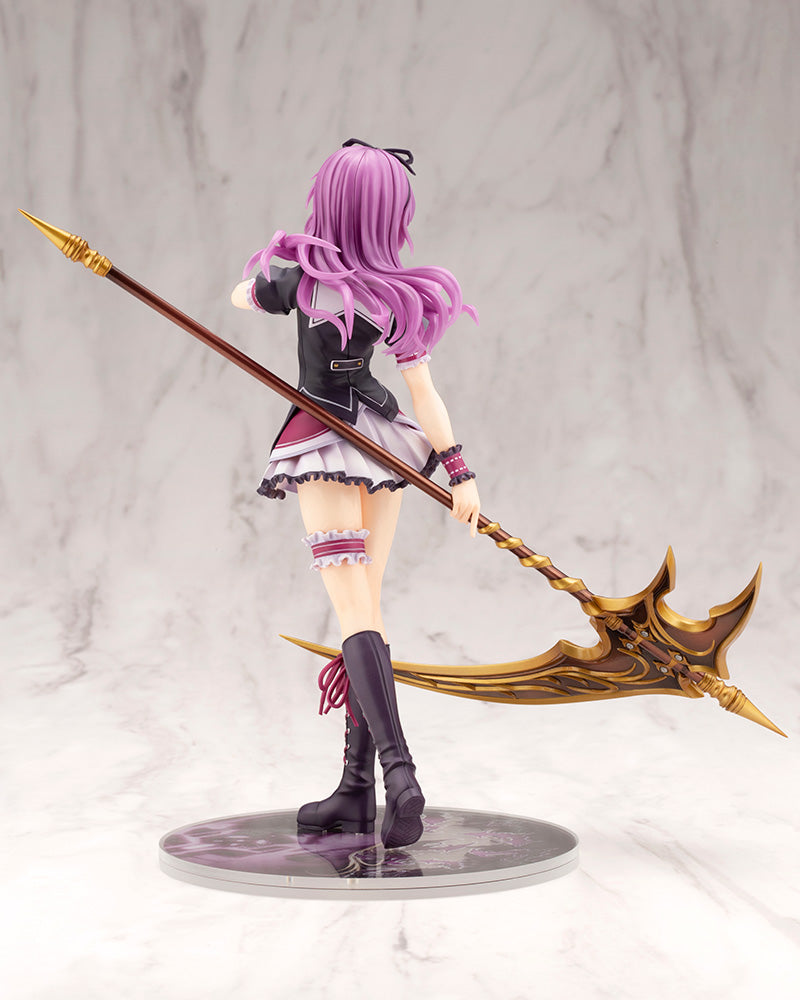 Renne side profile — ¥19,250, arriving May 2026
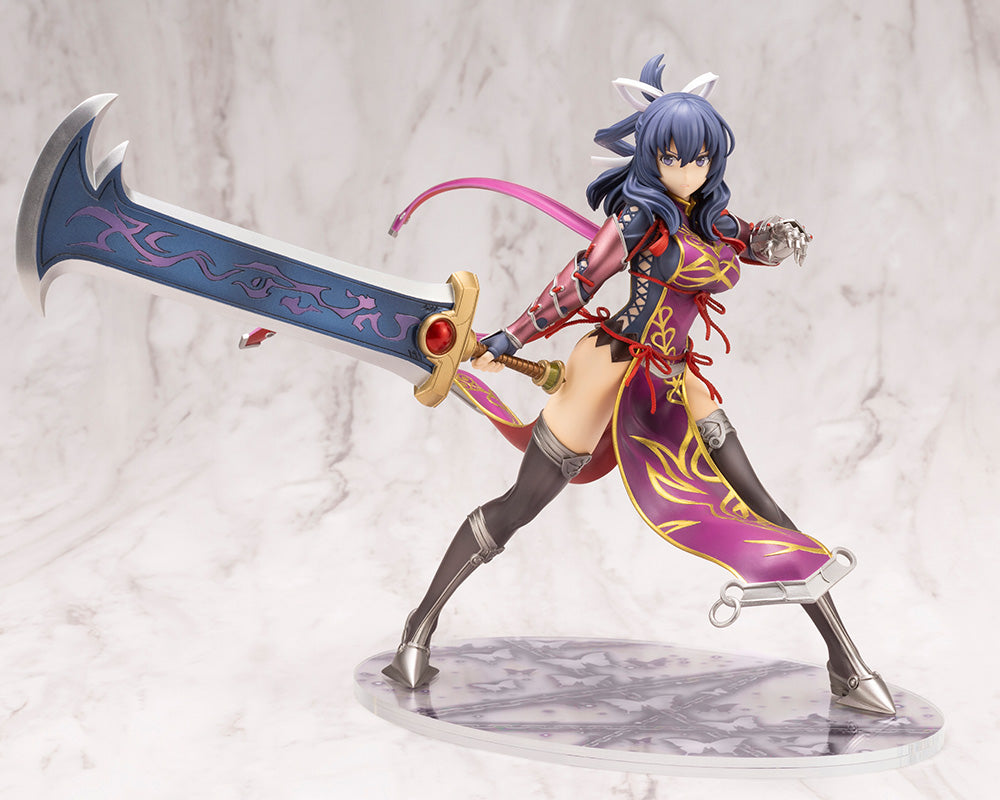 Rixia Mao 1/8 scale — Arc en Ciel performer and legendary assassin
The Trails fanbase skews older, educated, and detail-oriented. They will notice if a figure gets a costume detail wrong. This is low-volume, high-satisfaction collecting.
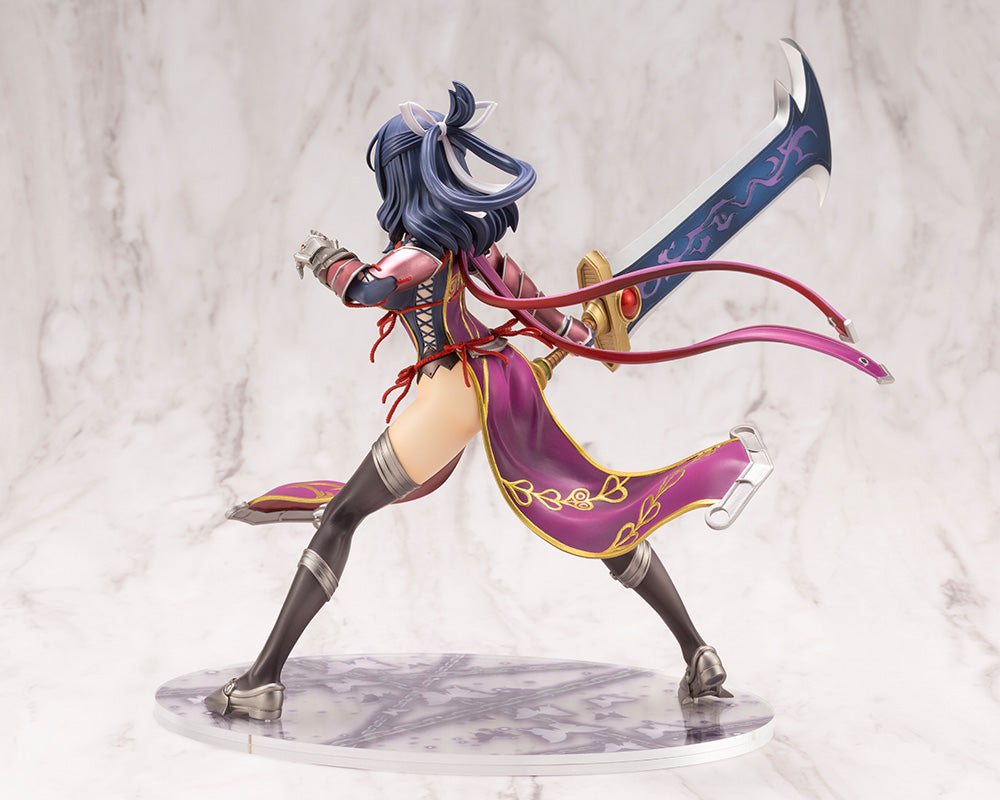 Rixia detail — Eastern-inspired design with combat functionality
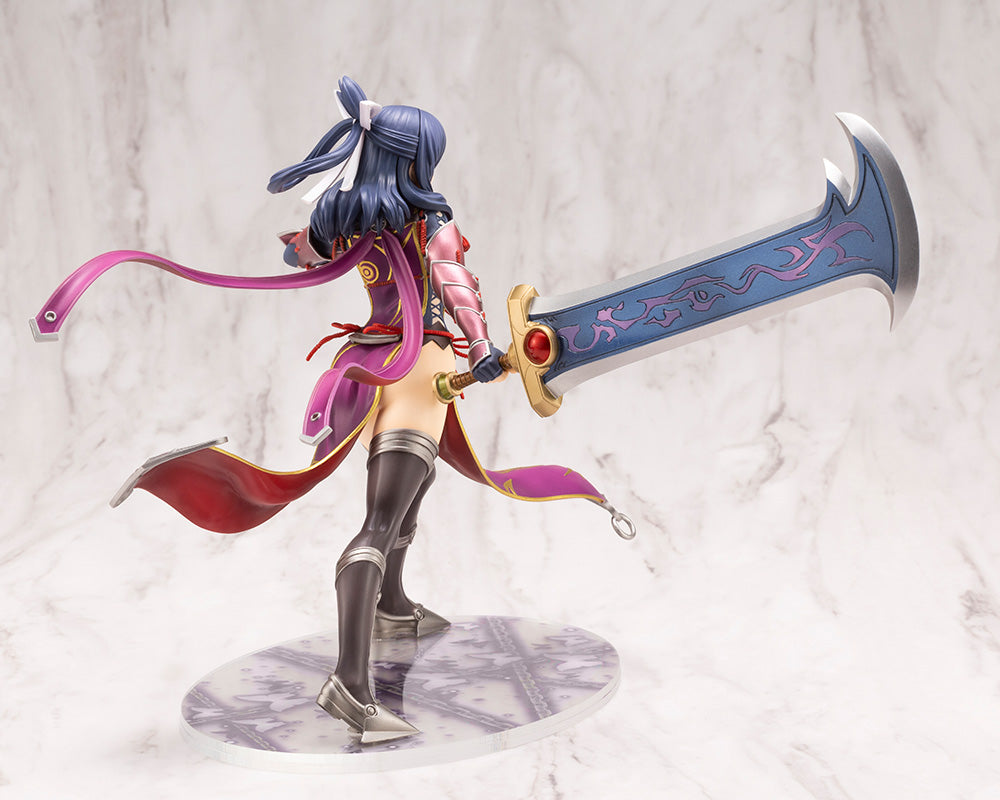 Rixia side view — ¥20,900, arriving June 2026
The Trails Phenomenon
Trails (Kiseki) is a JRPG franchise that should have died after the first arc. Instead, it has sustained multiple generations of devoted players through meticulous world-building and character design that treats narrative depth as non-negotiable. The series spans multiple sub-arcs (Sky, Crossbell, Erebonia, Calvard) across 12+ titles, each building outward from a core philosophy: characters matter more than plot mechanics.
Kotobukiya's decision to produce premium 1/8 scale figures of Trails characters (starting with Renne Bright and Rixia Mao) signals something important: this franchise has collector presence. Not casual merchandise presence—collector presence. The kind that justifies dedicated figure production with careful costume detail work.
The 1/8 Scale Commitment
Kotobukiya specializes in this scale for anime/game IP figures. 1/8 scale (typically 20-28cm tall) hits a specific sweet spot: large enough for detail work, affordable enough ($80-150) to enable collecting, small enough to display in normal spaces. This is the Goldilocks zone of figure collecting.
Renne Bright (¥19,250 / ~$131) and Rixia Mao (¥20,900 / ~$142) arrive May/June 2026. Both characters are beloved in collector circles—Renne for narrative significance across Crossbell arc, Rixia for her design work in Erebonia II. These aren't generic secondary characters. Kotobukiya is betting on collector knowledge.
Character Design as Physical Object
What makes these figures collectible isn't just that they exist. It's that Kotobukiya understands the characters. Renne's outfit—casual modern-day aesthetics mixed with functional adventure gear—requires careful proportioning to avoid looking cheap. Rixia's design (influenced by 1920s fashion with combat functionality) demands paintwork precision.
The Trails series has always invested in character costumes as character communication. The figures perpetuate that language. You're not buying a generic "anime girl figure." You're buying a specific character designed by people who understand her narrative function.
The Trails Collector Economy
Trails fans are historically early adopters for premium figures. The fanbase skews older (players from Sky arc in 2004 are now in their 30s-40s with disposal income), educated, and detail-oriented. They read wikis. They track lore across 12 games. They will notice if a figure gets a costume detail wrong.
This is low-volume, high-satisfaction collecting. Kotobukiya isn't expecting mass market appeal. They're betting on a passionate 400-500 person community per character who will buy carefully crafted figures and appreciate the detail work.
Why This Matters for Monozuki
The Trails figure releases represent something deeper than collectible culture: they're physical evidence that niche narrative-driven JRPGs maintain collector infrastructure. In 2026, when game discourse gravitates toward battle royales and live service, Kotobukiya is betting that character-focused, story-driven games still have cultural resonance.
This is exactly Monozuki's editorial territory. Not the game itself—the physical culture around games worth enough to merit premium figure treatment.
- Kotobukiya US T1
- Solaris Japan T1
Loading...