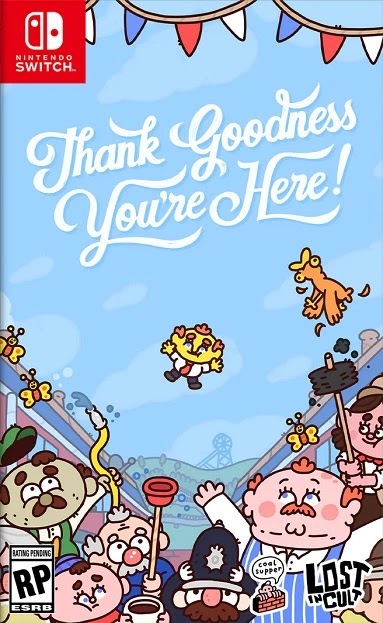
Archival Intent
Lost In Cult EDITIONS inverts the limited release model. Edition sizes are reasonable, pricing transparent, and packaging emphasizes the game as cultural artifact worth preserving.
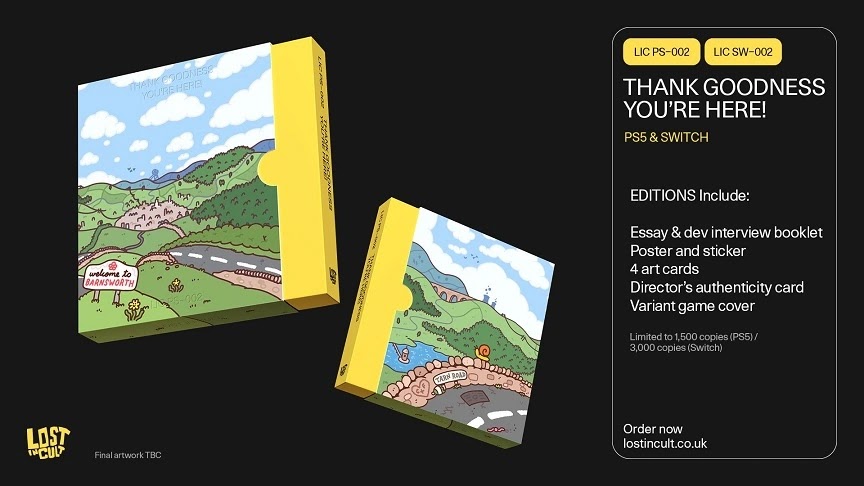 EDITIONS packaging — archival-grade materials with commissioned artwork
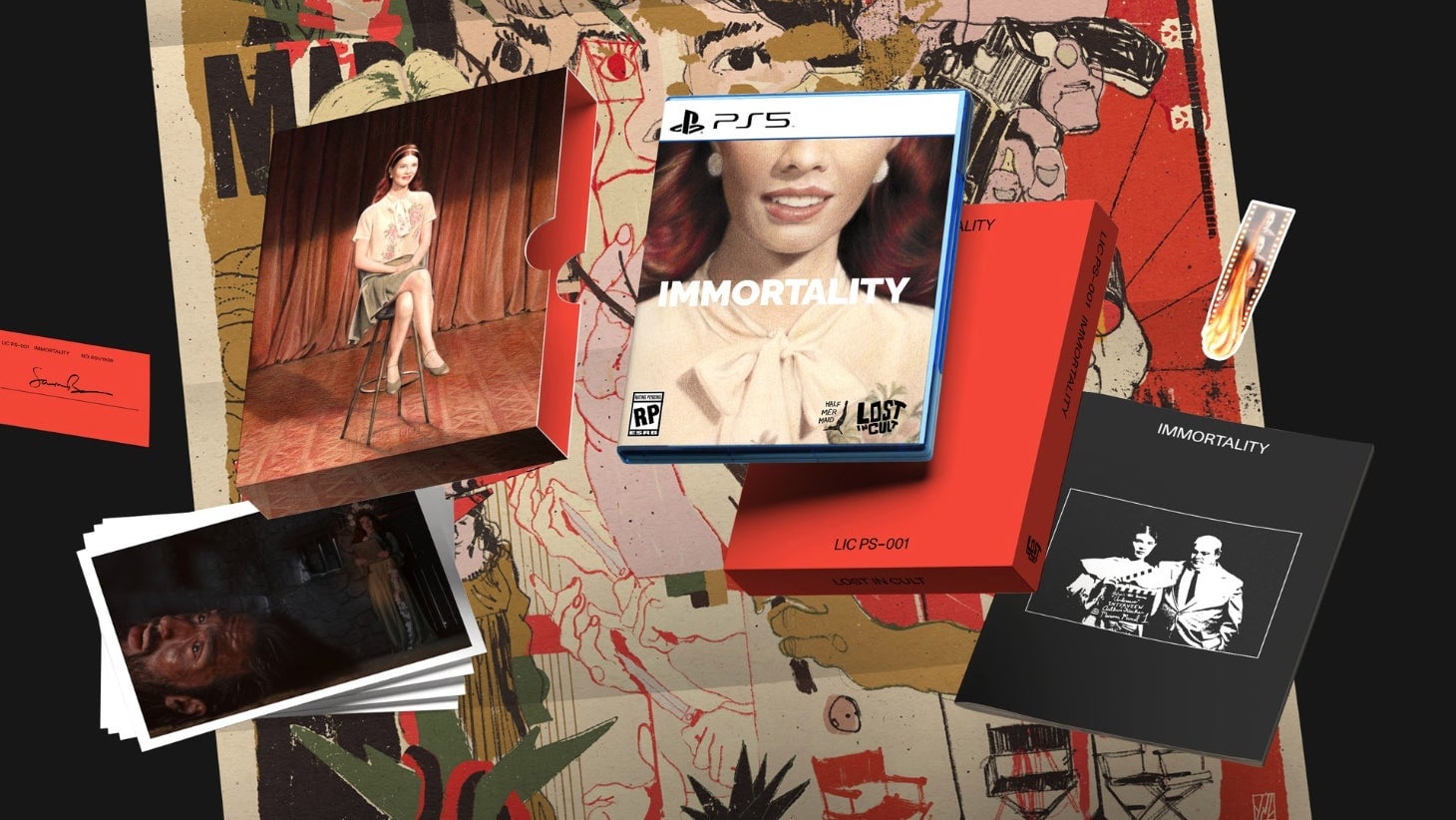 The Lost In Cult EDITIONS format — physical preservation as design philosophy
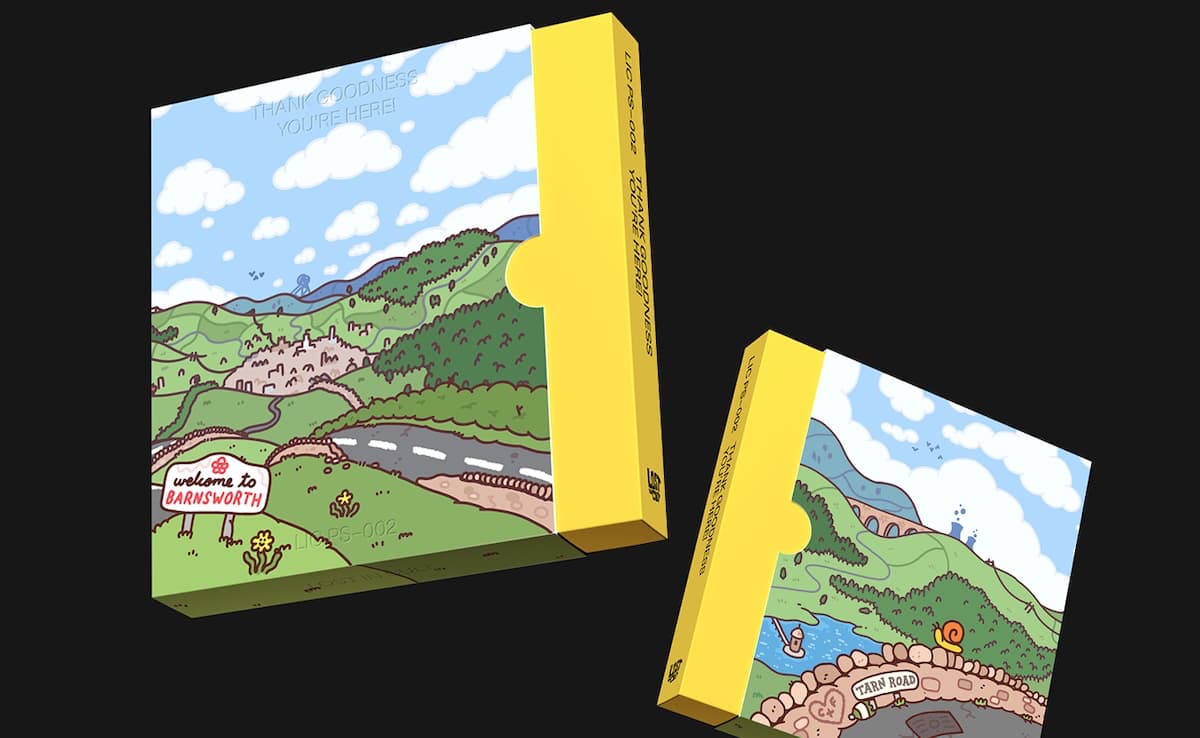 Premium physical release — essay booklet, art cards, numbered certificate
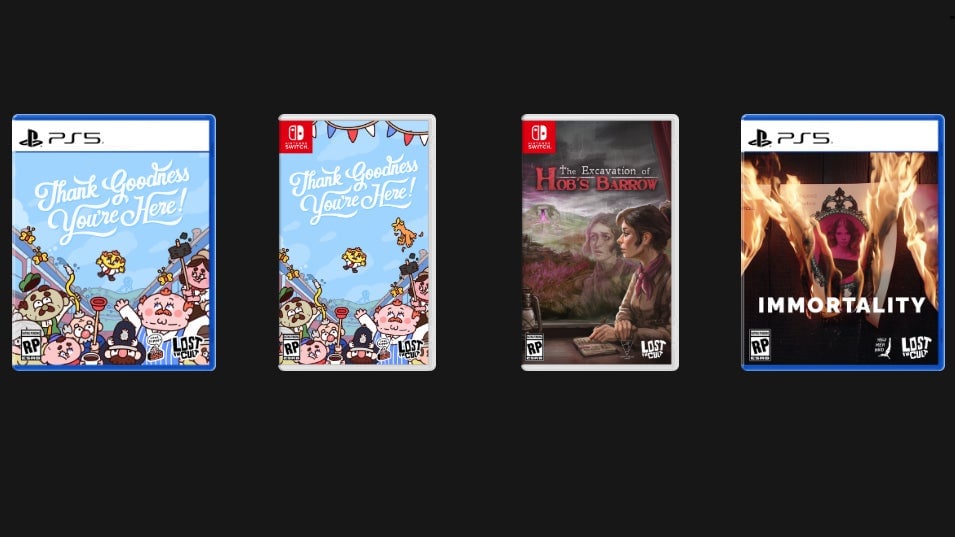 Inner packaging detail — every component curated for archival quality
The 40-page critical essay is the key component. Lost In Cult commissions written analysis of each game — this game is worth understanding, not just owning.
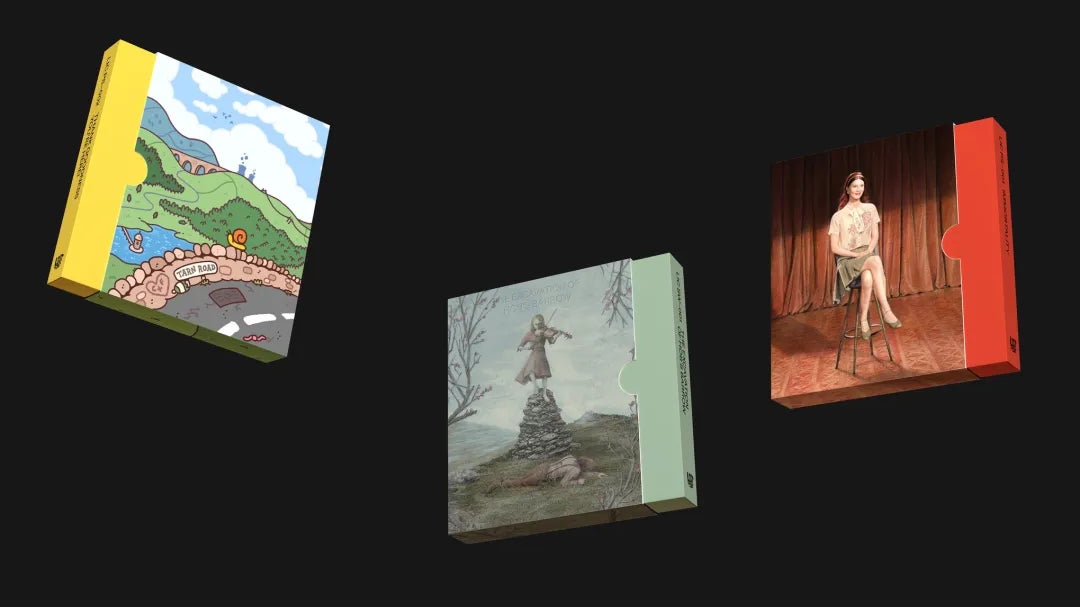 EDITIONS collection — consistent design language across the preservation line
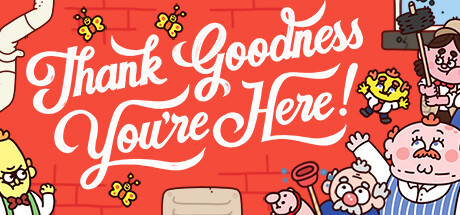 Thank Goodness You're Here! — the game that earned archival treatment
The Preservation Paradigm Shift
Lost In Cult EDITIONS operates on a principle different from Limited Run Games or First Press Games: archival intent instead of commodity scarcity. The distinction matters.
Traditional limited releases (LRG, FPG) use edition size as value proposition: scarcity drives demand. Lost In Cult inverts this. Edition sizes are reasonable (1,500 PS5, 3,000 Switch for Thank Goodness You're Here!), pricing is transparent (~£59.99), and packaging emphasizes game as cultural artifact worth preserving.
This is a philosophical shift in how collectors think about physical games.
What's In The Box
Thank Goodness You're Here! physical release includes:
- Game cartridge/disc (obvious component)
- 40-page critical essay exploring game design philosophy
- 4 art cards (key visual moments from the game)
- Numbered authenticity certificate (proof of edition membership)
- Premium packaging (archival-grade materials)
The essay is the key component. Lost In Cult commissions written critical analysis of each game, packaging it with the game. This says: this game is worth understanding, not just owning.
The Game Context
Thank Goodness You're Here! is a puzzle-platformer from Simogo (Danish indie studio). The game received critical acclaim for creative level design that respects player intelligence. It's niche—not AAA, not roguelike, not narrative-driven adventure. Just carefully crafted puzzle design.
Lost In Cult's decision to preserve this game physically signals that design excellence justifies archival treatment. Not commercial success. Not franchise potential. Design quality.
The Collector Psychology Shift
Traditional limited release buyers are motivated by scarcity. "Own this before it's gone." Lost In Cult buyers are motivated by preservation. "Help document this game as significant cultural work."
This appeals to a different collector mentality: curators rather than hoarders, archivists rather than investors. The psychology attracts collectors with deeper engagement and design literacy.
2026 as Preservation Inflection Point
Physical game releases are declining industry-wide. In this context, boutique preservation publishers like Lost In Cult represent a specific belief: games worth preserving deserve physical form. Not all games. Games with design significance.
For Monozuki, this represents a major editorial opportunity: interview Lost In Cult about their curation philosophy, cover emerging games they select, explore how indie game design warrants archival treatment.
The Business Model Question
Lost In Cult operates on preorder-only model with reasonable print runs. This avoids overproduction waste while ensuring sufficient copies for genuine fans. Pricing ($60-80 range) reflects cost-plus philosophy, not artificial scarcity markup.
This is sustainable collecting culture. Not flip-driven secondary market, not artificial FOMO. Just books worth keeping and games worth preserving.
- Lost In Cult EDITIONS T1
- Simogo T1
Loading...