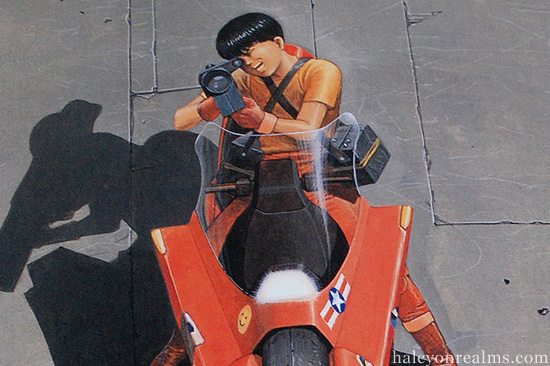
Forty years is long enough for most manga to fade into nostalgia. AKIRA hasn't faded. It's calcified into something harder — a foundation stone that everything built after it still leans against.
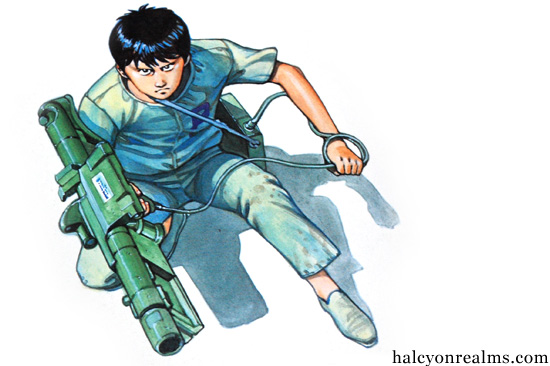
Kodansha's ongoing Complete Works project continues to reaffirm what anyone who's held a volume already knows: Otomo's linework operates at a resolution that most artists never approach. Every rivet on Kaneda's bike. Every crack in Neo-Tokyo's pavement. Every strand of Tetsuo's unraveling form. This is draftsmanship that treats the page like an engineering document for a world that doesn't exist yet.
 AKIRA ART OF WALL key visual — Kosuke Kawamura's collage treatment of Otomo's iconic imagery, created for the PARCO Gallery X exhibition
Why the Artbooks Matter
What makes the AKIRA artbooks essential — and there are several worth owning — is that they isolate the drawing from the narrative. Without the plot propelling you forward, you're forced to sit with individual panels. And when you sit with an Otomo panel, you start to see how obsessive the construction is. The vanishing points are correct. The rubble falls with physical conviction. The explosions have structure. This is a man who draws destruction the way an architect draws buildings.
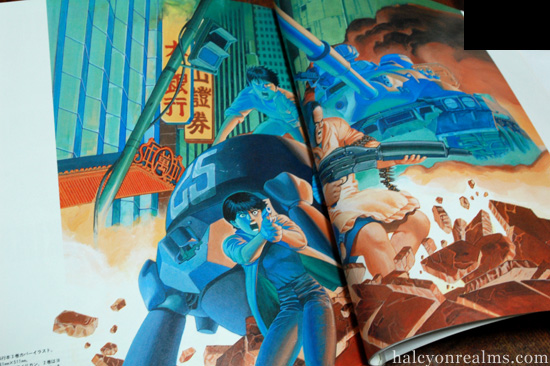
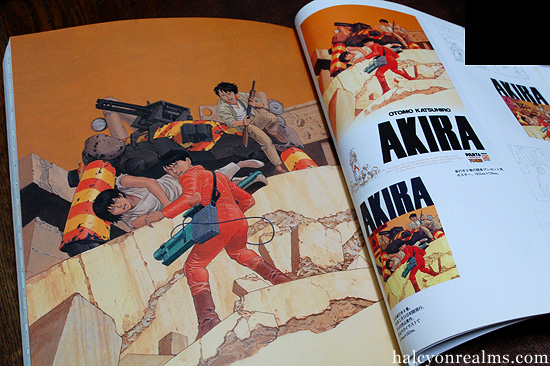
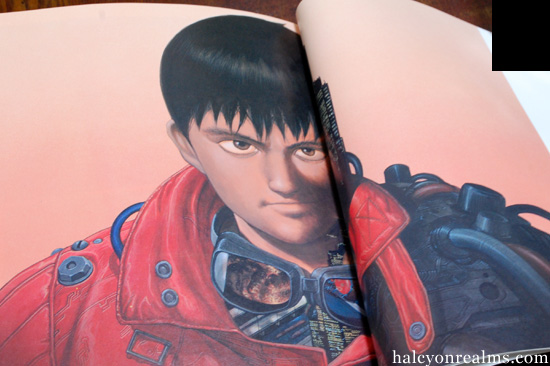
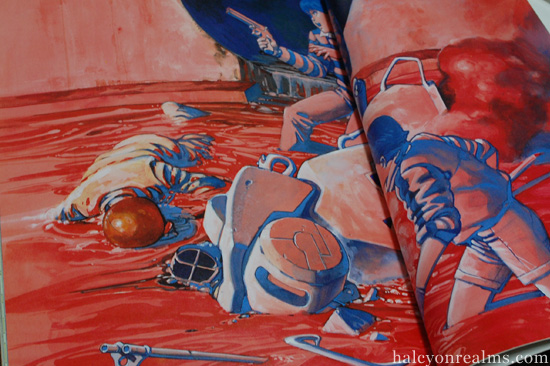 Color illustration from AKIRA Club — Otomo's painted work reveals a palette as controlled as his linework, with Neo-Tokyo rendered in cold blues and emergency reds
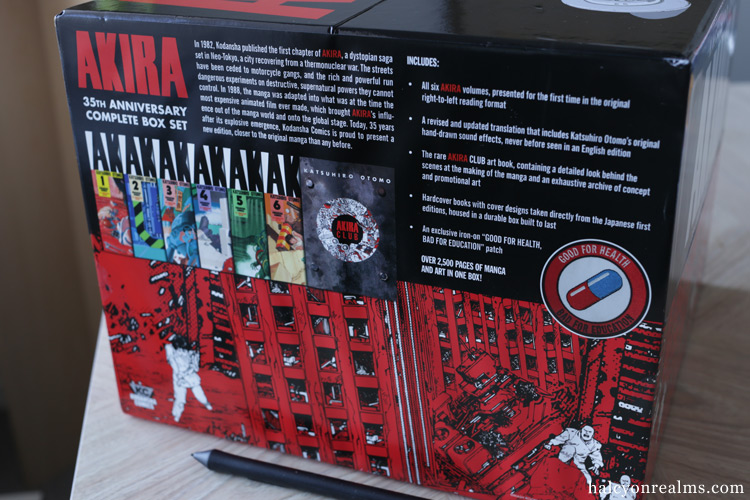
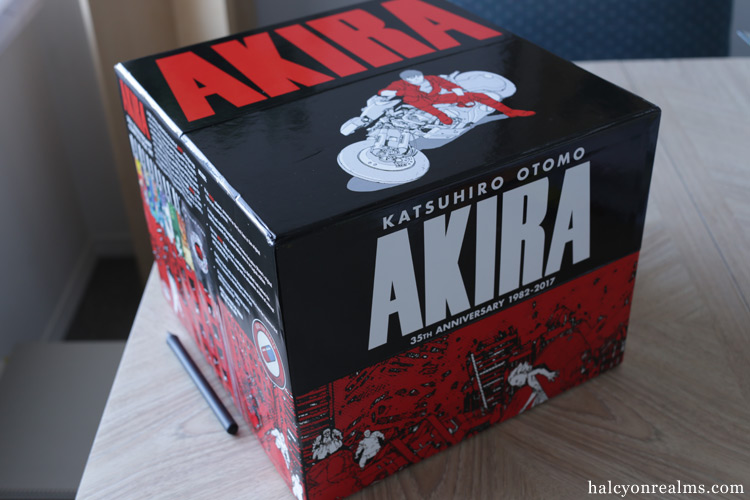 The 35th anniversary Kodansha box set — six oversized hardcover volumes with color pages restored to Otomo's original specifications. Two Eisner Awards for archival project and product design
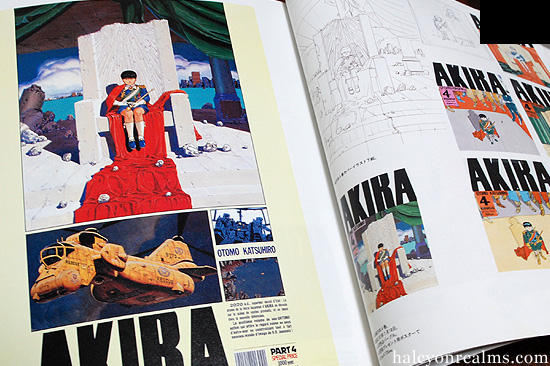
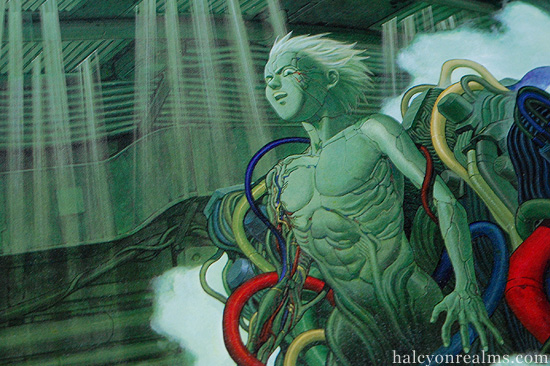 AKIRA Club (1995) — the essential companion artbook compiling color illustrations, posters, and production artwork from the manga and film. Long out of print in English
The Definitive Editions
The 35th anniversary Kodansha box set remains the canonical format — six volumes, oversized, with color pages restored to Otomo's original specifications. At the larger trim size, you can see brush strokes. You can see where he used a ruler and where he didn't. You can see where the ink pooled at the edge of a crowd scene containing two hundred individually rendered faces.
For the artbook collector, the essential companion is AKIRA Club (1995), which compiles the color illustrations, posters, and production artwork. Out of print in English for years. Japanese copies are more findable, and the art transcends language anyway.
 Original manga pages displayed at the 2012 Genga exhibition — Otomo's linework at actual size reveals construction detail invisible in printed editions
 Neo-Tokyo in full architectural detail — Otomo draws cityscapes with the precision of an engineering blueprint, every building individually designed
The precision is almost unsettling. Seeing Otomo's originals behind glass is a different experience from reading them in print. The blacks are blacker. The whites are whiter. Every crowd scene reveals two hundred individually rendered faces that you never noticed in the paperback.
 The 2012 Genga exhibition at 3331 Arts Chiyoda in Tokyo — 3,000 original art pieces spanning three decades, displayed on thin wires like pages from a giant cutaway diagram
 Original AKIRA manuscript pages behind glass — the exhibition revealed details invisible in print, including where ink pooled at panel edges and where white-out was applied
 AKIRA ART OF WALL installation at PARCO Gallery X — large-scale collage murals by Kosuke Kawamura recontextualize Otomo's panels as contemporary art
The Exhibition Question
The rumored 40th anniversary exhibition — still unconfirmed but increasingly likely given the Natalie.mu reports — would be the first major Otomo retrospective since the 2012 "Genga" exhibition in Tokyo. That show displayed original manga pages at their actual size, with about 3,000 original art pieces spanning over three decades on display at 3331 Arts Chiyoda. Anyone who attended will tell you: seeing Otomo's originals behind glass is a different experience from reading them in print.
If the exhibition materializes and produces a catalog, it will immediately become one of the most important JP art publications of the year. Otomo doesn't overproduce. When something comes out of his archive, it matters.
We'll update this post when venue and date are confirmed.
- Kodansha T1
- Natalie.mu T2
Loading...