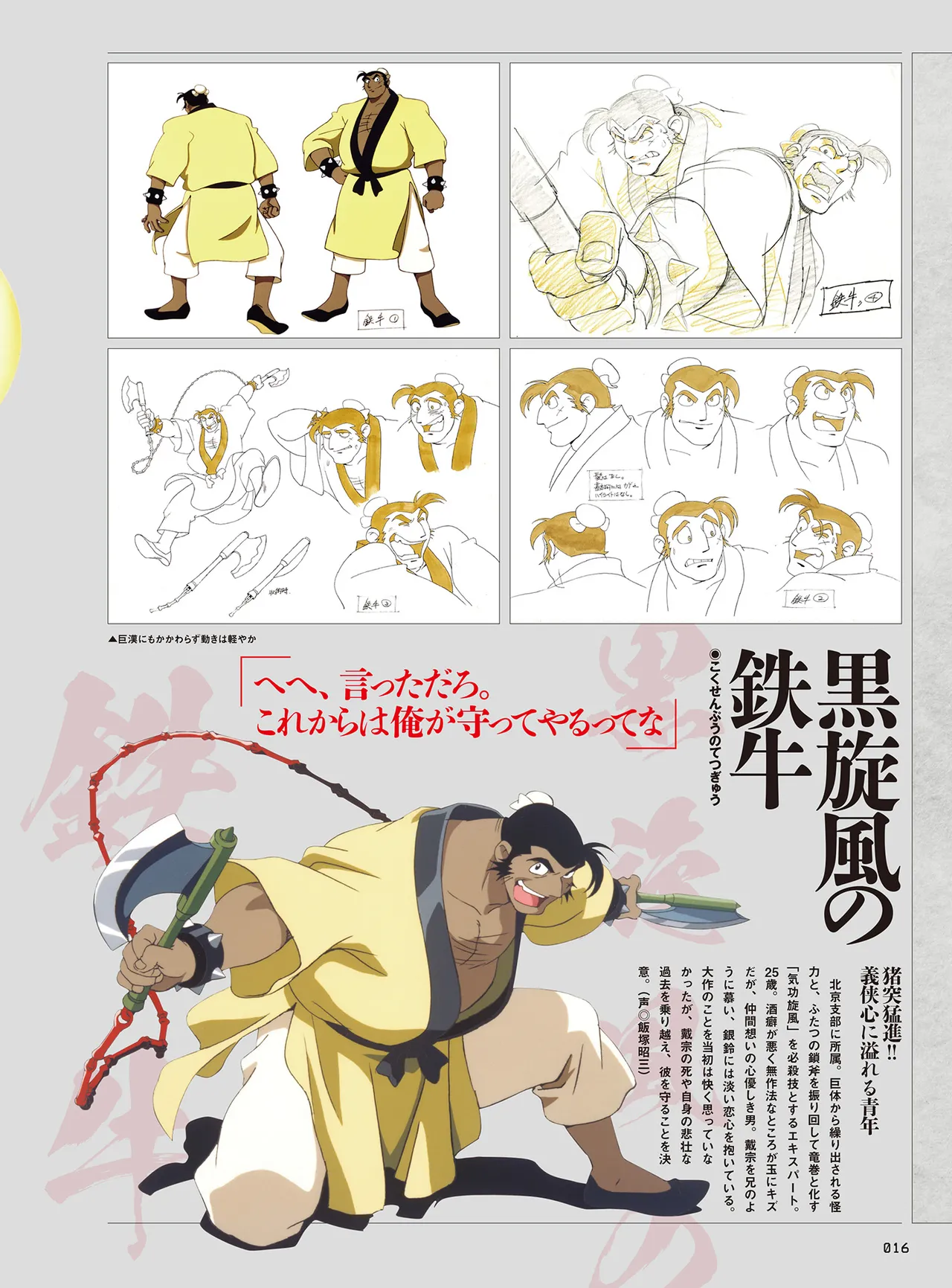
Tetsugyu is drawn from Li Kui (李逵), one of the most recognizable figures in Yokoyama's Suikoden adaptation — the Black Whirlwind, the 108 outlaws' most violent member, a fighter who operates on fury rather than strategy. Imagawa kept the physicality and the directness. He added something the original Li Kui never had: a boy to protect, and the emotional weight of choosing to do so.
The Ten Magnificent draws heavily from Yokoyama's Suikoden cast — at least four of the nine adult members are Water Margin outlaws transplanted into the future. Tetsugyu is the most legible because he requires the least translation: Li Kui was a berserker with absolute loyalty, and Imagawa made Tetsugyu a berserker with absolute loyalty. The context around that loyalty changed. The direction of it changed. The character's core didn't.
This is what Imagawa understood about Yokoyama's characters: they don't need to be explained. They arrive with their history already visible. A Japanese audience reading 黒旋風 (Black Whirlwind) in Tetsugyu's title already knows who he is. Imagawa built on that recognition rather than replacing it.
- Yokoyama's Suikoden ran as a manga in the 1960s, adapting the classic Chinese novel Water Margin. Li Kui was already famous from the source text — the most feared of the Liangshan outlaws, prone to rampage, loyal to Song Jiang absolutely. Imagawa took that loyalty and redirected it. In Giant Robo, Tetsugyu's absolute commitment belongs to Daisaku.
- His quote: 'Hey, told you — from now on I'll protect you.' Said to a twelve-year-old boy carrying a dead father's watch. It is not a complex line. It is exactly as direct as the character is. The show's emotional clarity lives in moments like this.
- The settei sheets show his design logic: wrapped fist, wide fighting stance, a chain as his signature weapon. Yamashita Akihiko built him large enough to register immediately in the ensemble jacket art — always in the background, always the largest figure in any group composition. The visual hierarchy codes his function before he speaks.
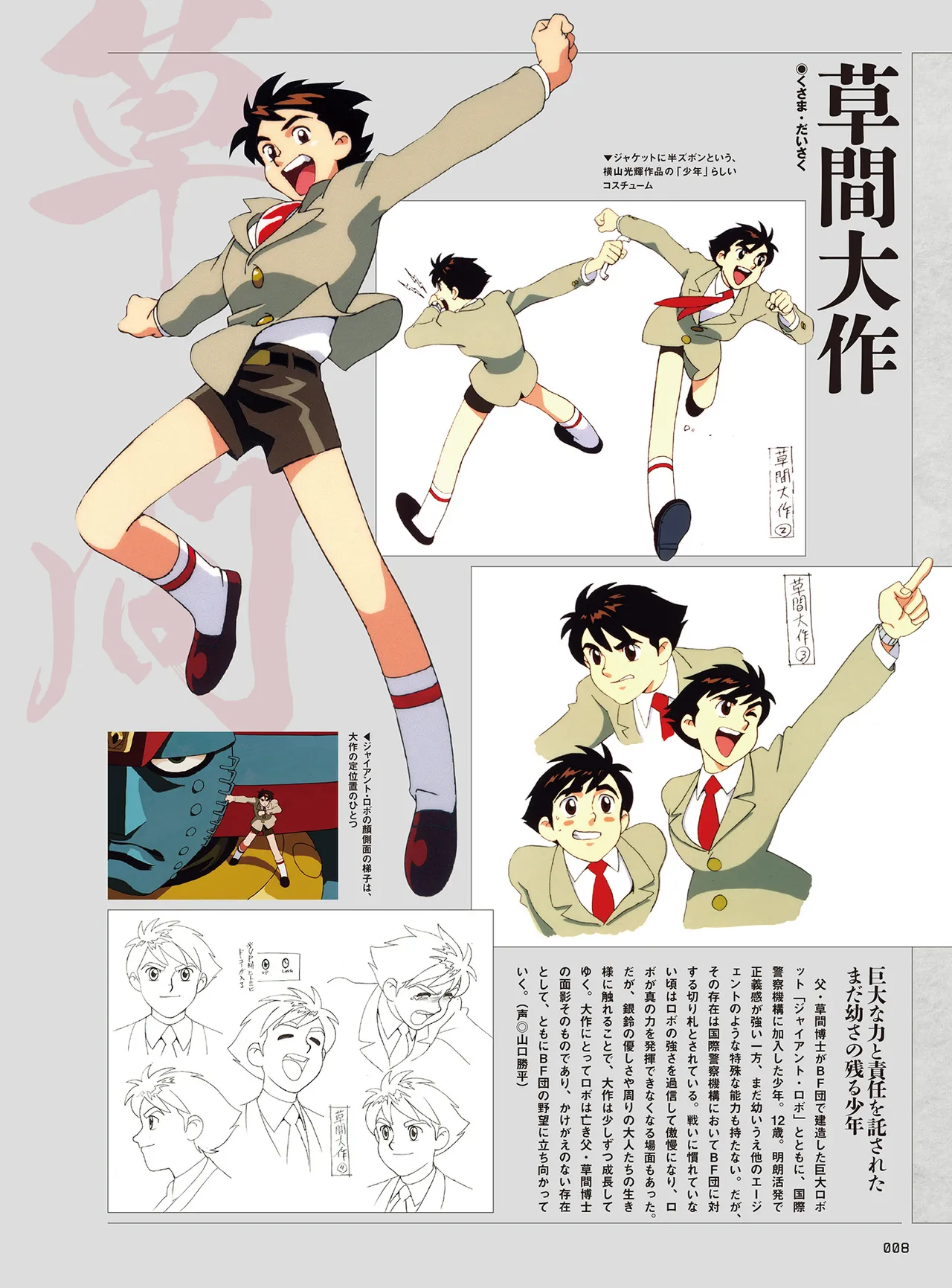
- 草間大作 — the boy he commits to protecting
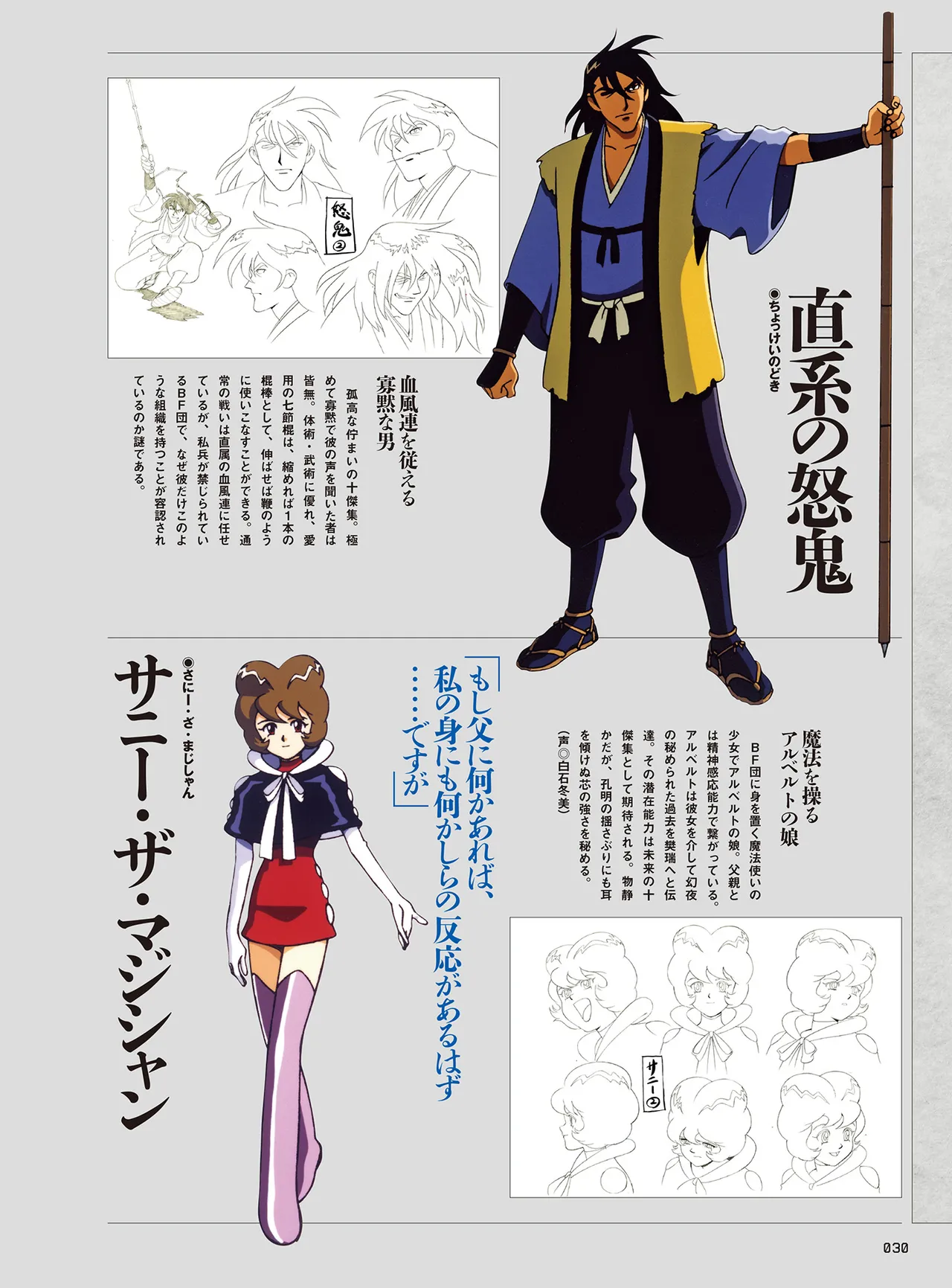
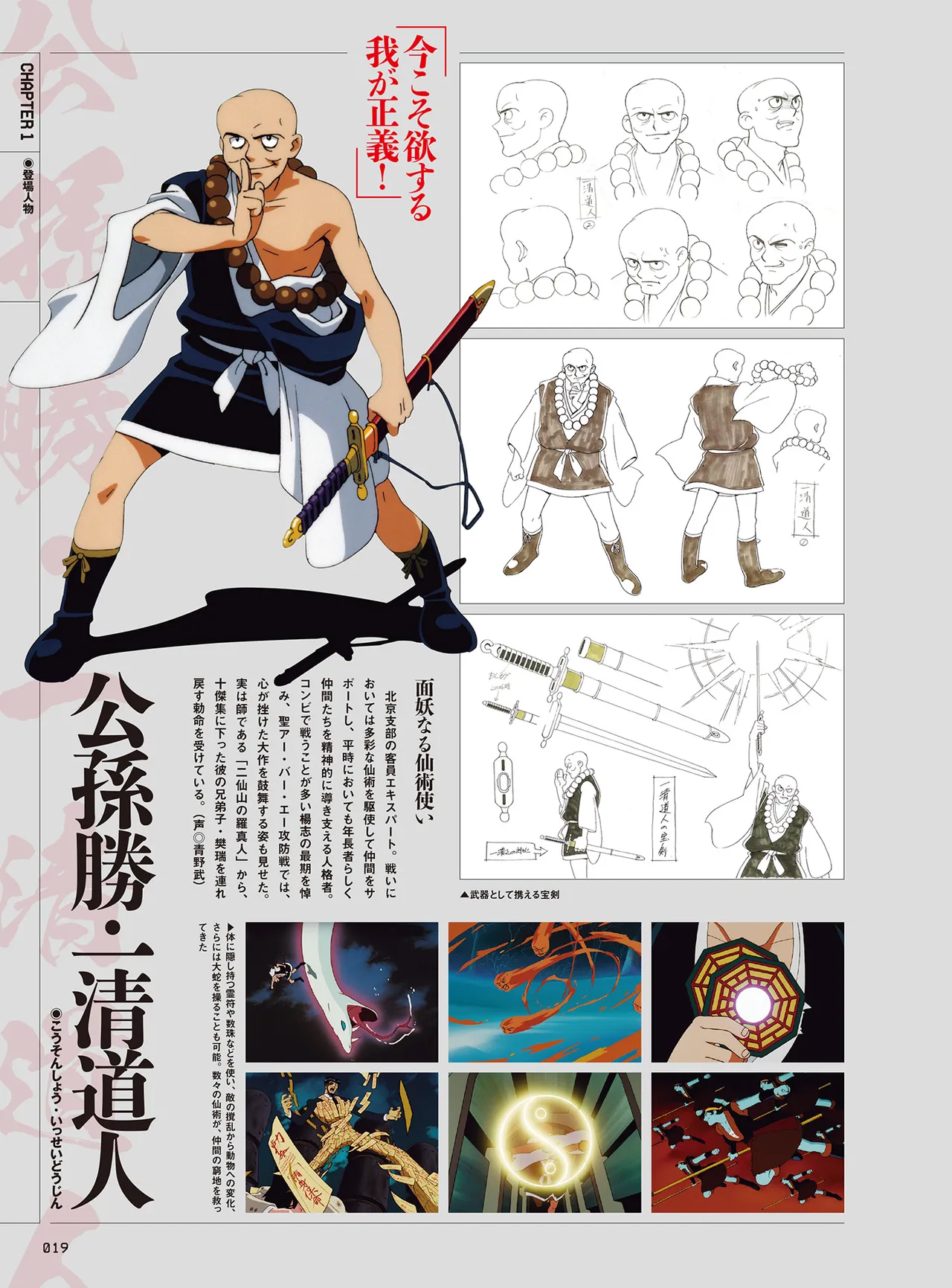
- 公孫勝・清道人 — another Water Margin character in the Ten Magnificent
- An Animated Opera: What Imagawa Built
Loading...