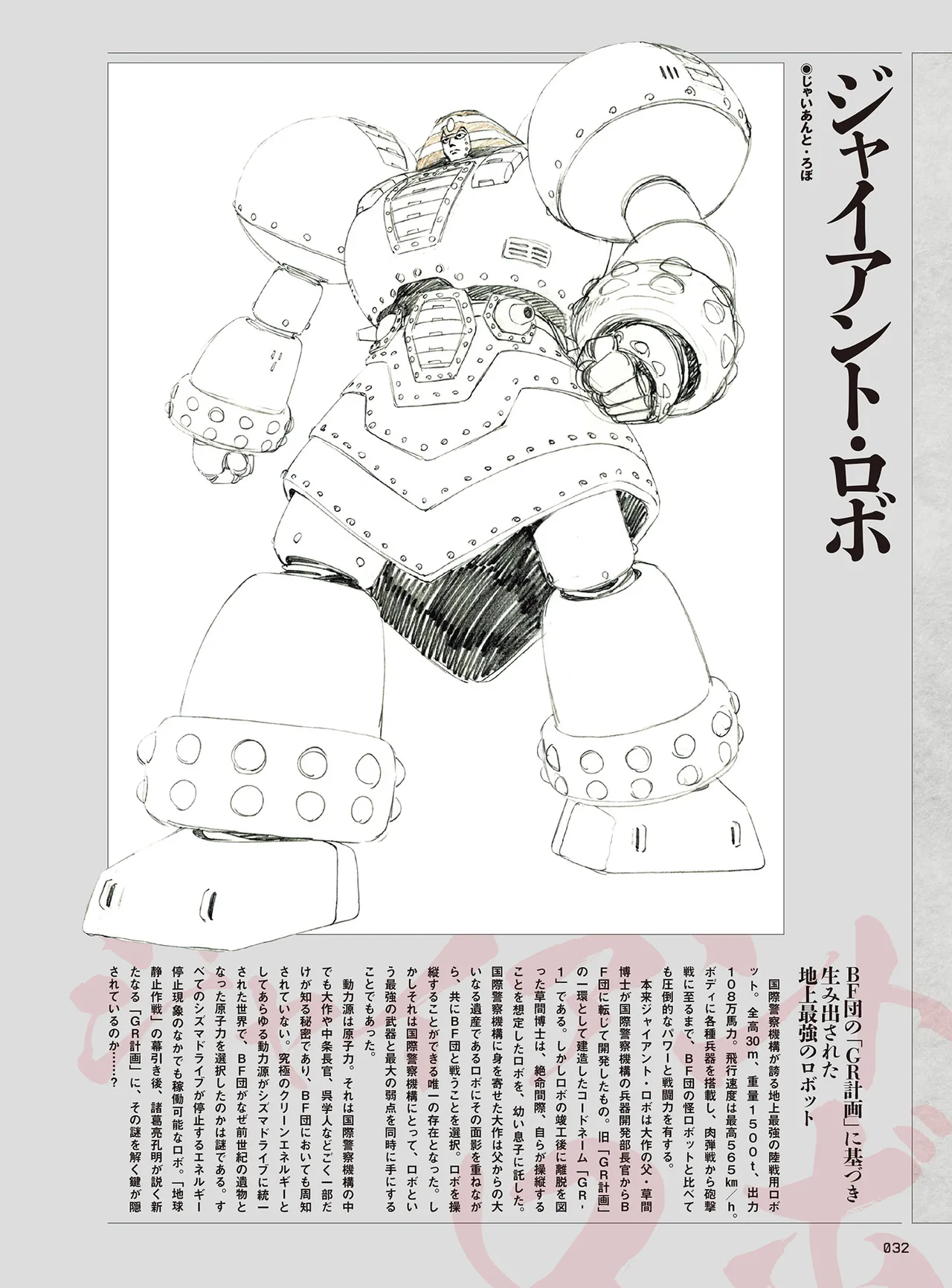
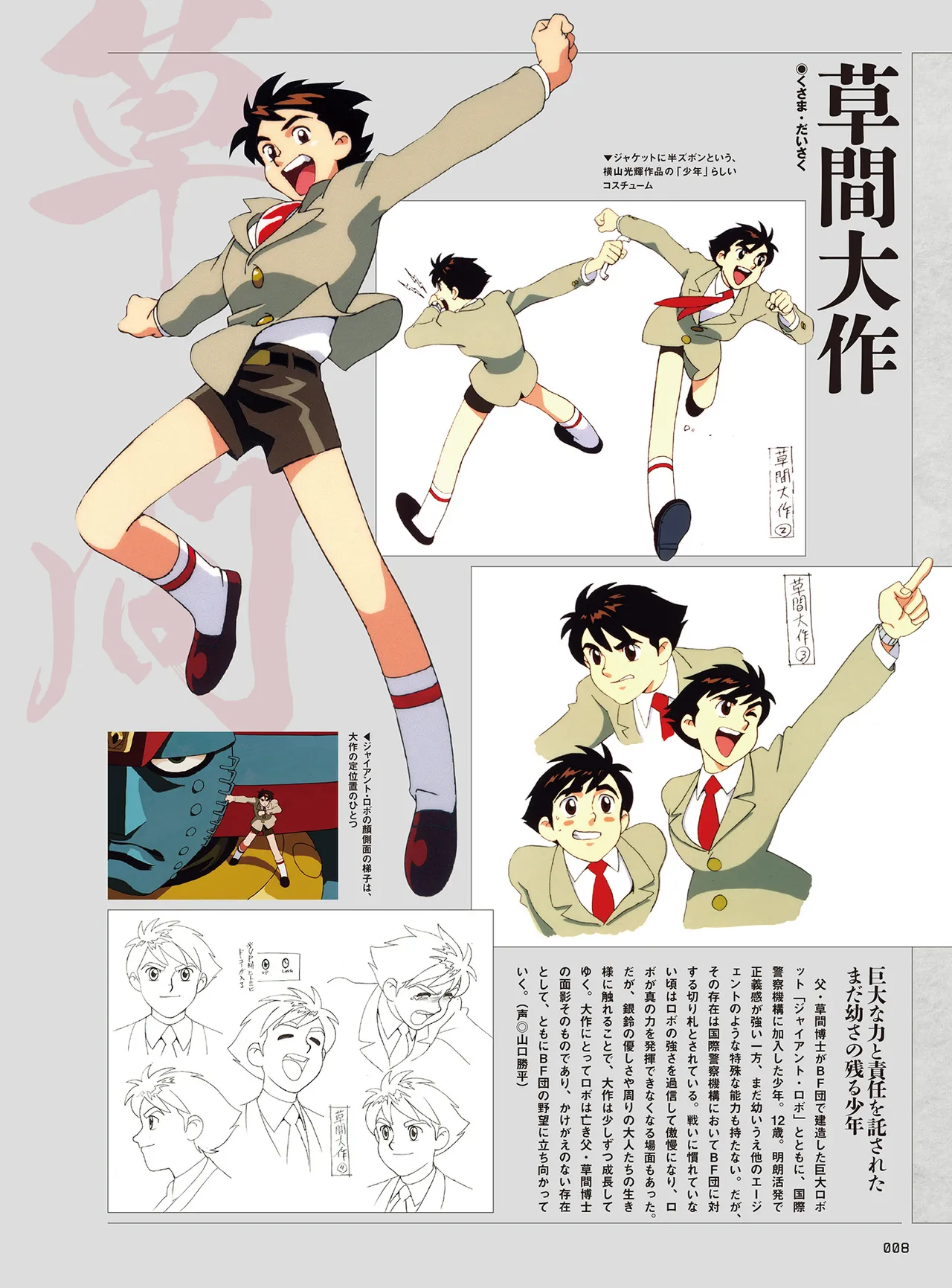
Giant Robo is not a vehicle and not a tool. It is a character with one constraint: it will obey Daisaku and no one else. The constraint is absolute. The design is massive, heavily armored, industrial — no elegance, no graceful superhero lines. Izubuchi Yutaka's 1992 redesign for the animation doubled down on bulk and weight. The robot looks like something that should be feared. The person who commands it looks like someone who should be in school.
The robot's visual function in the jacket artworks tells the story of the production's shift. Episode 1: Giant Robo fills the upper half of the frame, Daisaku and Ginrei small against its bulk. Episode 2: it looms behind the full ensemble. By Episode 6, it has receded — the humans are what fill the frame now. The Last Episode jacket: the robot is not present at all.
The series doesn't end with a robot battle. It ends with people bearing what people have to bear. Giant Robo is there throughout, the physical fact of Daisaku's inheritance — the machine his father built, the weapon he carries without choosing to. By the end the series has moved past it, into the purely human cost. The robot retreats from the covers as the weight of the story shifts to the people.
- Yokoyama's 1967 Giant Robo manga established the premise: scientist Daisaku Kusama's father built a robot controlled by a wristwatch device and, dying, passed the watch to his son. Any enemy who captures Daisaku can potentially control the robot; any enemy who needs to stop the robot must go through the boy. Imagawa kept this structural vulnerability and made it the series' emotional engine rather than just a plot device.
- Izubuchi Yutaka designed the 1992 animation version. The anniversary book documents the mecha development: front and back views, scale references, head construction studies. The robot is wider at the shoulder than most mecha of the era, lower to the ground, with a face that reads as ancient rather than technological — mask-like, with the fixed expression of something that doesn't have moods. It has no interiority. What it has is loyalty.
- The series uses the robot's scale against the characters. In most mecha anime the robot's size is triumphant. In Giant Robo it registers as weight — when the robot moves, things break. When it is damaged, the repair is visible and prolonged. The robot is not effortless. Daisaku commands something that carries its own gravity.
- 草間大作 — the only voice it obeys
- ジャイアントロボ 30th ANNIVERSARY BOOK — the mecha design documentation in Chapter 4
- An Animated Opera: What Imagawa Built
Loading...