Why was a manga that makes fun of JRPGs animated three times and serialized for thirty-three years?
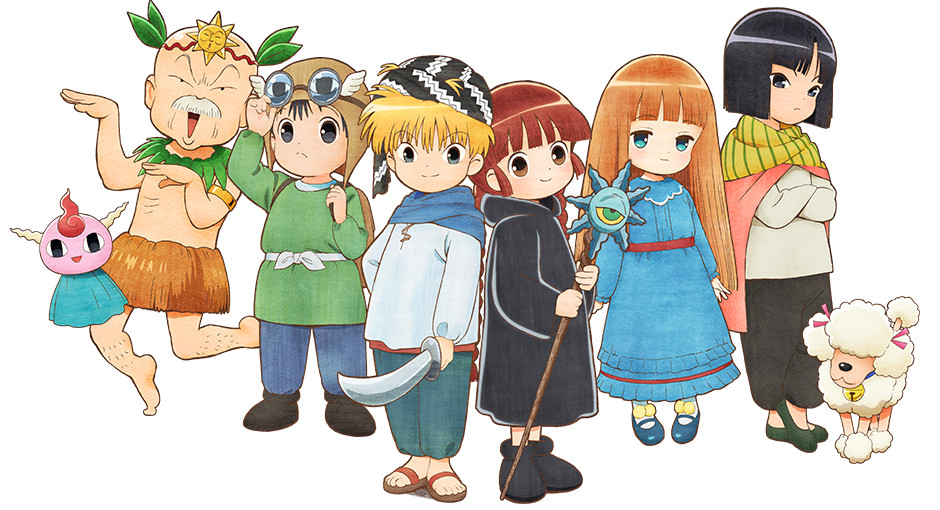
A boy is forced by his parents to save the world. A girl draws circles on the ground and something happens. A middle-aged man in a grass skirt follows them around performing a dance nobody asked for. Everyone involved treats this as perfectly normal. The manga ran in Monthly Shonen Gangan from 1992 to 2003, sold fourteen million copies, and was animated three separate times.
Magical Circle Guru-Guru is a JRPG parody. That's what everyone calls it, and it's technically correct. Nike doesn't want to be a hero. Kukuri's magic keeps misfiring. The monsters are absurd. RPG-style narration boxes appear on screen to comment on the action. It parodies Dragon Quest the way a love letter parodies correspondence — formally identical, emotionally sincere.
That last part is the thing most descriptions leave out.
Enix published this manga. The same Enix that made Dragon Quest. They ran a parody of their own flagship game, in their own magazine, for eleven years. Hiromu Arakawa — who would create Fullmetal Alchemist, one of the best-selling manga in history — worked as Hiroyuki Eto's assistant during Guru-Guru's serialization. She went on to build a magic system around transmutation circles. Her mentor had already built one around magic circles drawn on the ground.
The Guru-Guru magic system is not a punchline. Kukuri draws geometric patterns and the caster's consciousness becomes the spell. No fixed formulas. No spell books. The circle is a vessel for the mind. Failure isn't system error — it's the caster's own anxiety made visible. The climactic spell is literally powered by love.
In 2017, Production I.G adapted the entire manga in twenty-four episodes. The animation switches between traditional work and pixel art without warning, as if the show can't decide whether it's an anime or a Super Famicom cutscene. It chose both. It always had.
What follows are the objects, the games, the magazine, and the apprenticeship that make a thirty-three-year joke look a lot like devotion.







Loading...