A shokugan toy that turns Japanese kanji characters into the animals they represent. It's in MoMA's permanent collection.
MoMA Acquisition
In 2010, MoMA's Department of Architecture and Design acquired Mojibakeru for its permanent collection. The acquisition note describes them as 'super transformation characters' — toys that encode linguistic meaning in physical form. Designed by Shigeru Ishitsuka and Misako Kirigaya at Megahouse. Sold on candy shelves for a few hundred yen.
The kanji for "dog" is 犬. Pick up the Mojibakeru version — a three-dimensional block formed into the shape of the character — and twist. Panels rotate. Limbs unfold. The abstract symbol reorganises into a recognisable dog figure. The kanji for "bird" (鳥) becomes a bird. "Fish" (魚) becomes a fish. Each transformation is mechanically specific to the character it represents.
Mojibakeru — from "moji" (文字, character) and "bakeru" (化ける, to transform) — was designed by Shigeru Ishitsuka and Misako Kirigaya at Megahouse, a Bandai subsidiary. The transformation mechanism encodes a pedagogical idea: the kanji IS the animal. The symbol and the referent are physically the same object, connected by a transformation that the child performs with their hands. The learning is haptic.
In 2010, MoMA's Department of Architecture and Design acquired Mojibakeru for its permanent collection. The acquisition recognised what the product achieved: a transformation toy that used mechanical design to make linguistic meaning tangible. The design is elegant in the engineering sense — each transformation uses the minimum number of moving parts to produce the maximum conceptual clarity. The dog kanji doesn't just happen to look like a dog after rearranging. The rearrangement makes visible the pictographic origin of the character itself.
The object that MoMA acquired was a shokugan toy. It was sold on supermarket candy shelves alongside gum and chocolate. It cost a few hundred yen. It was classified as confectionery.
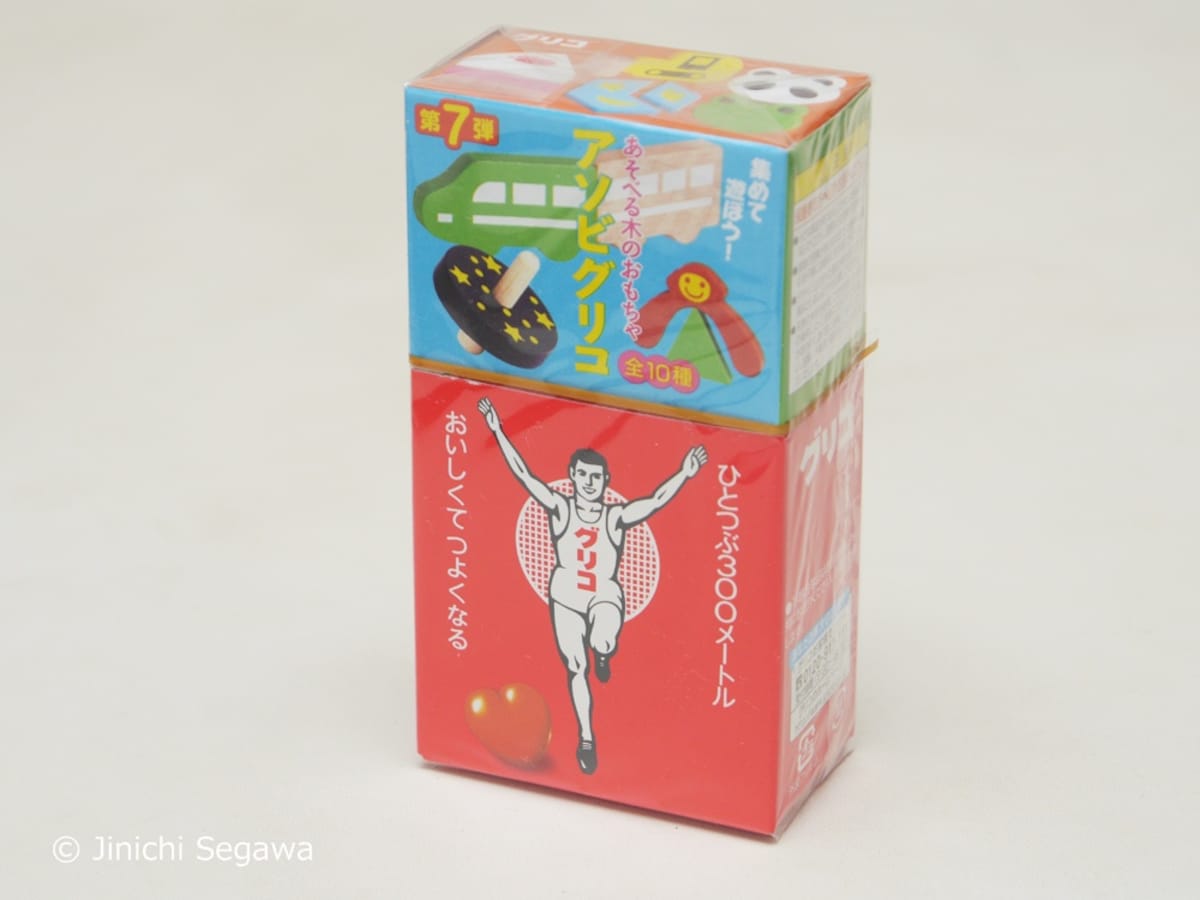
This is the endpoint of the shokugan quality trajectory: a product category that began with Glico putting wooden toys in caramel boxes in 1927 produced, 83 years later, an object that a New York museum considered worthy of permanent preservation. The medium — candy-classified toy, food-channel distribution, impulse-buy pricing — didn't limit the design. It enabled the reach.
- Japanese kanji education
- Transformers / transformation toys lineage
- MoMA permanent collection (design category)
- Shokugan as design platform
Loading...