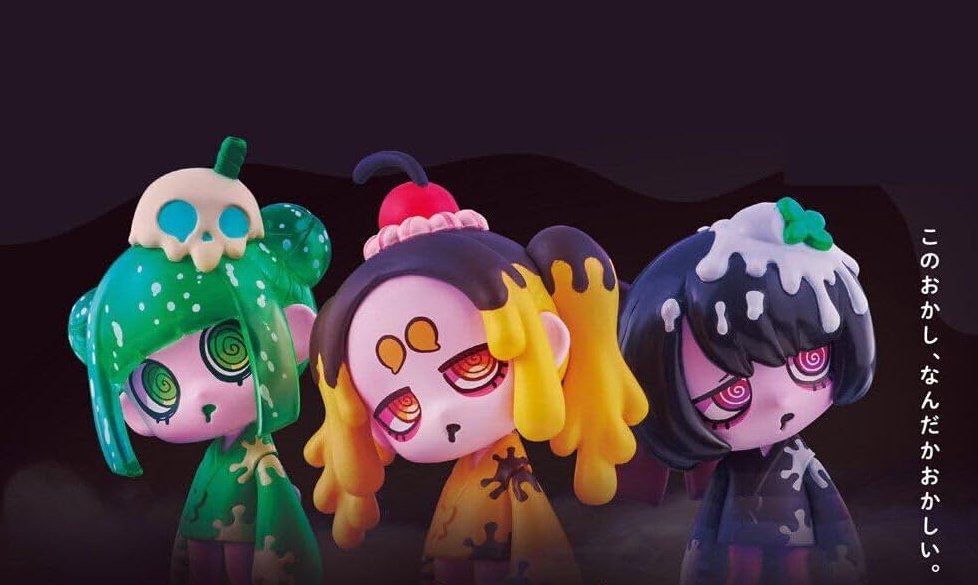
Desserts that gained consciousness. Four series deep, 24 characters, and a collector base that customises them with blush.
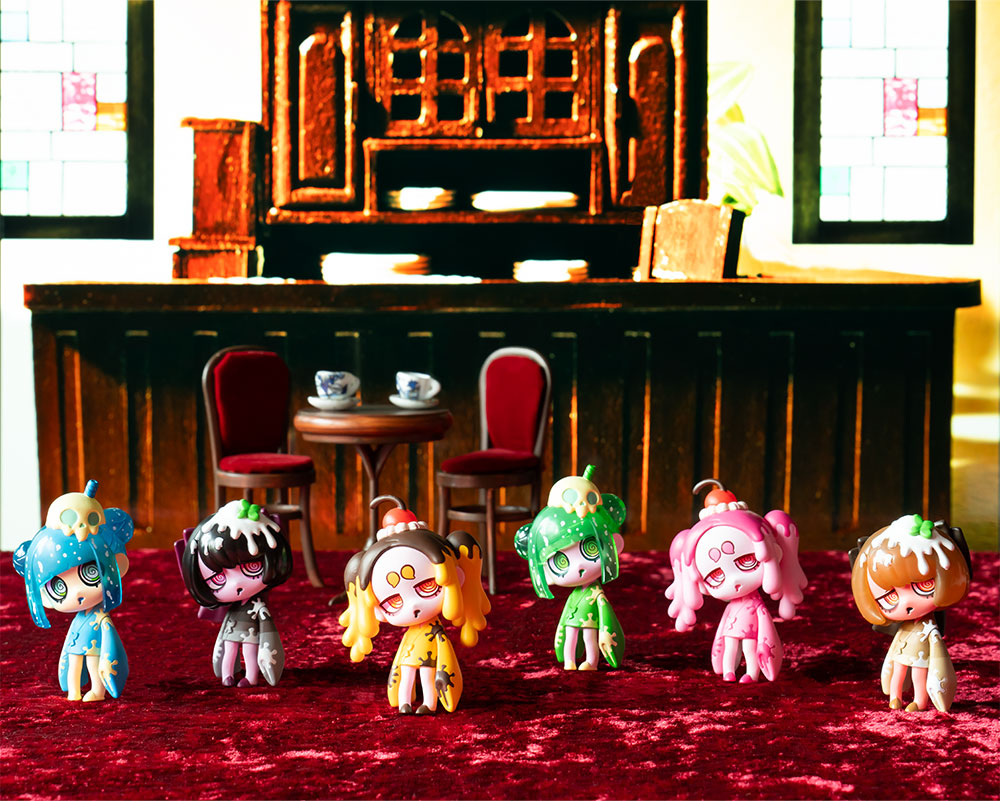 The full first-wave cast at a miniature cafe. Collectors build dioramas like this — the figures gathered at night, regarding each other with spiral eyes.
The Premise
In a certain world, sweets inexplicably began gaining consciousness. It spread from dessert to dessert like a contagion. They wander now, emitting sweet aromas, regarding the world with spiral eyes that weren’t there before.
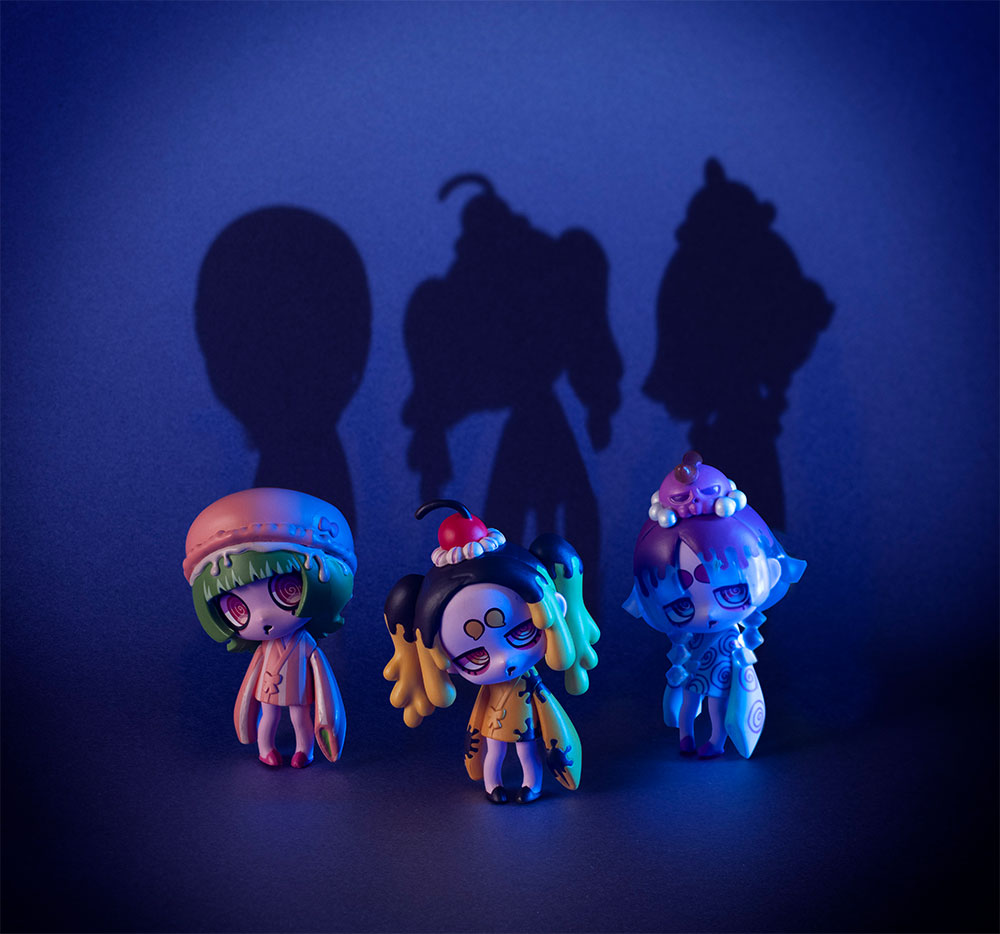 Three figures under dramatic lighting. The sweetness recedes. The wrongness stays.
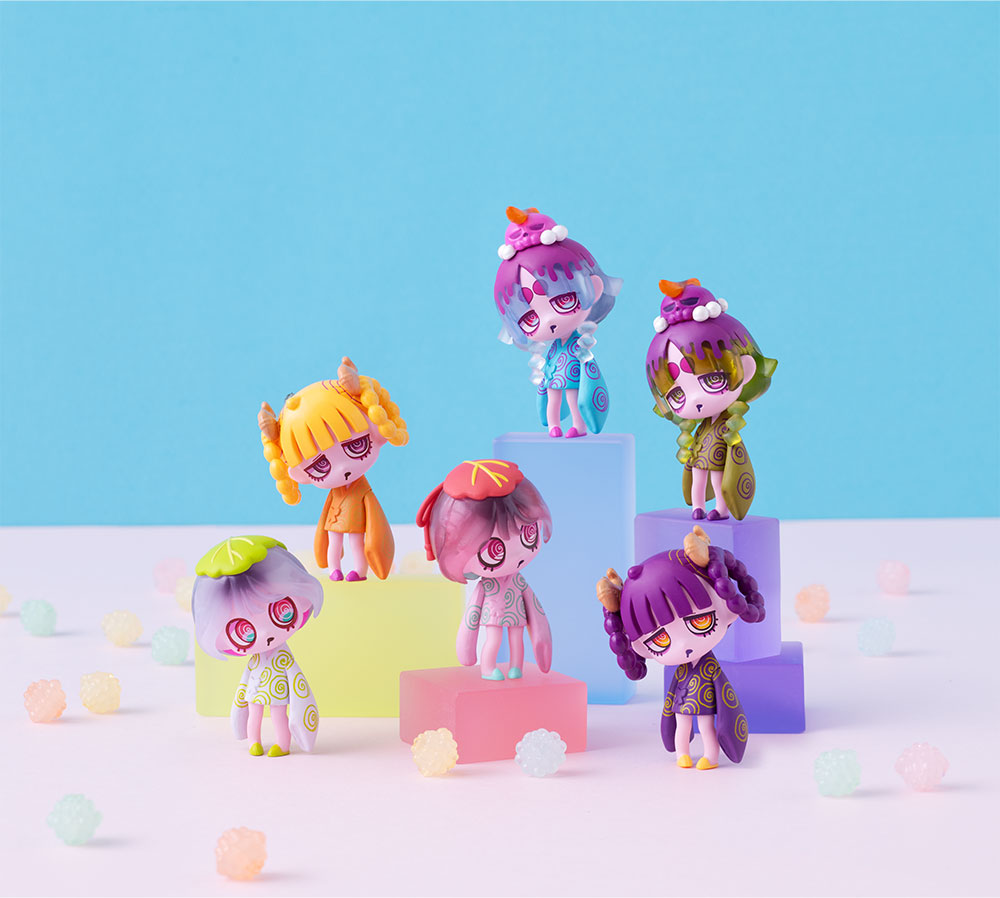 Sweet Shop series on pastel blocks — Taiyaki, Kashiwa-Mochi, Sakura-Mochi. Traditional wagashi, same deadpan eyes.
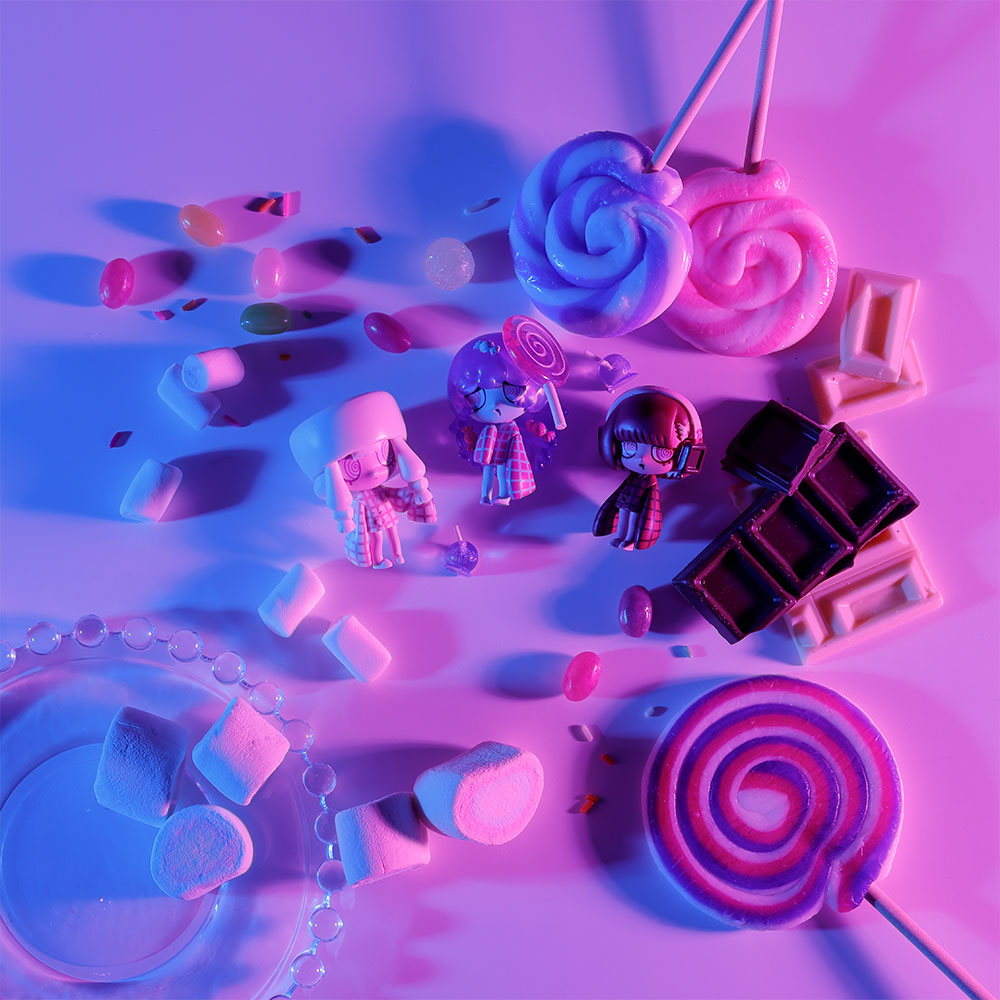 Sugar Pop Party under neon-candy lighting. Marshmallow, Chocolate, Grape Candy. Each wave shifts the dessert world but keeps the grammar.
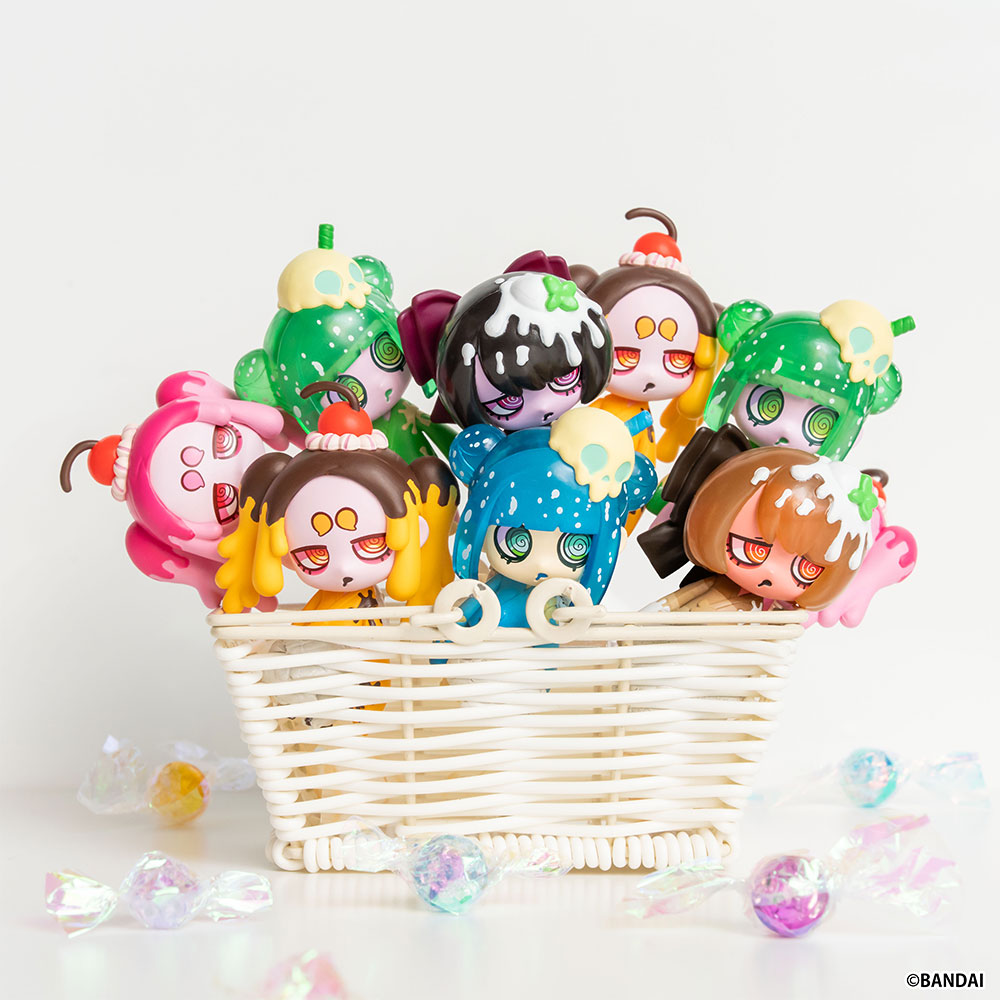 Wicker basket arrangement. At this scale the material work is visible — clear resin fizz, gradient bean-paste paint, pearl ornaments.
The Collection
Collectors add blush to their cheeks. Glitter to their hair. Sauce patterns to the dessert-dish bases. They photograph cafe dioramas — the figures gathered at a table, chatting together at night. 10,000 followers in months, no anime, no manga. Just the figures.
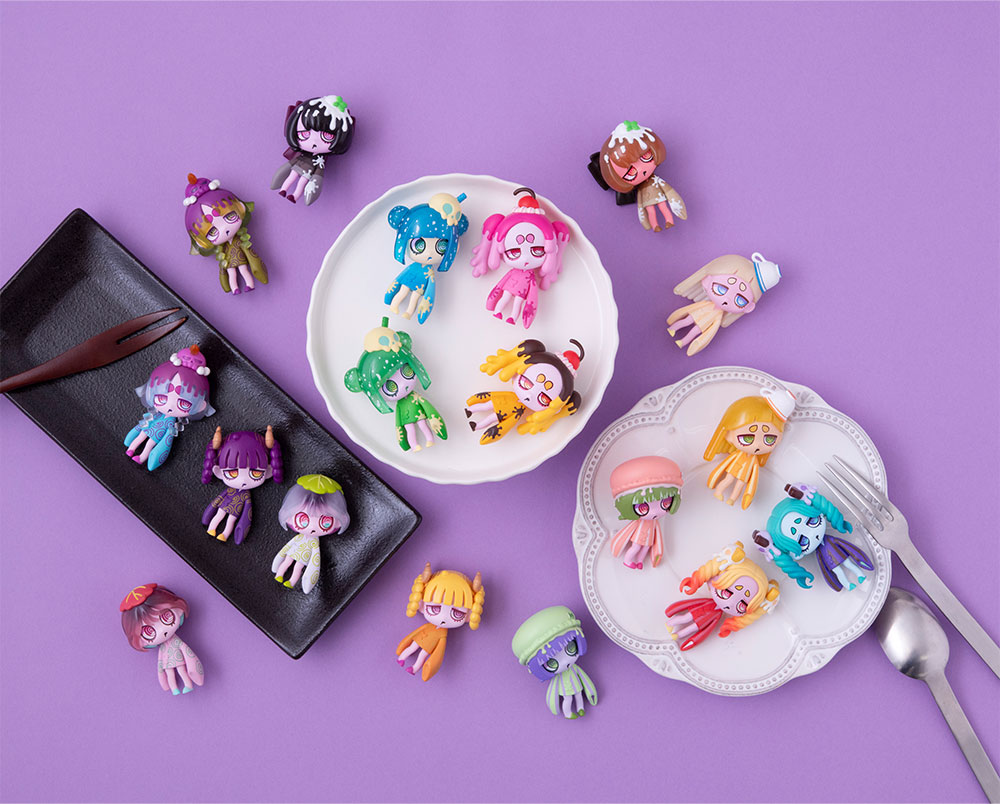 All three series on decorative plates. Cafe, Sweet Shop, Tea Break — 24 characters, each one a dessert that caught something contagious.
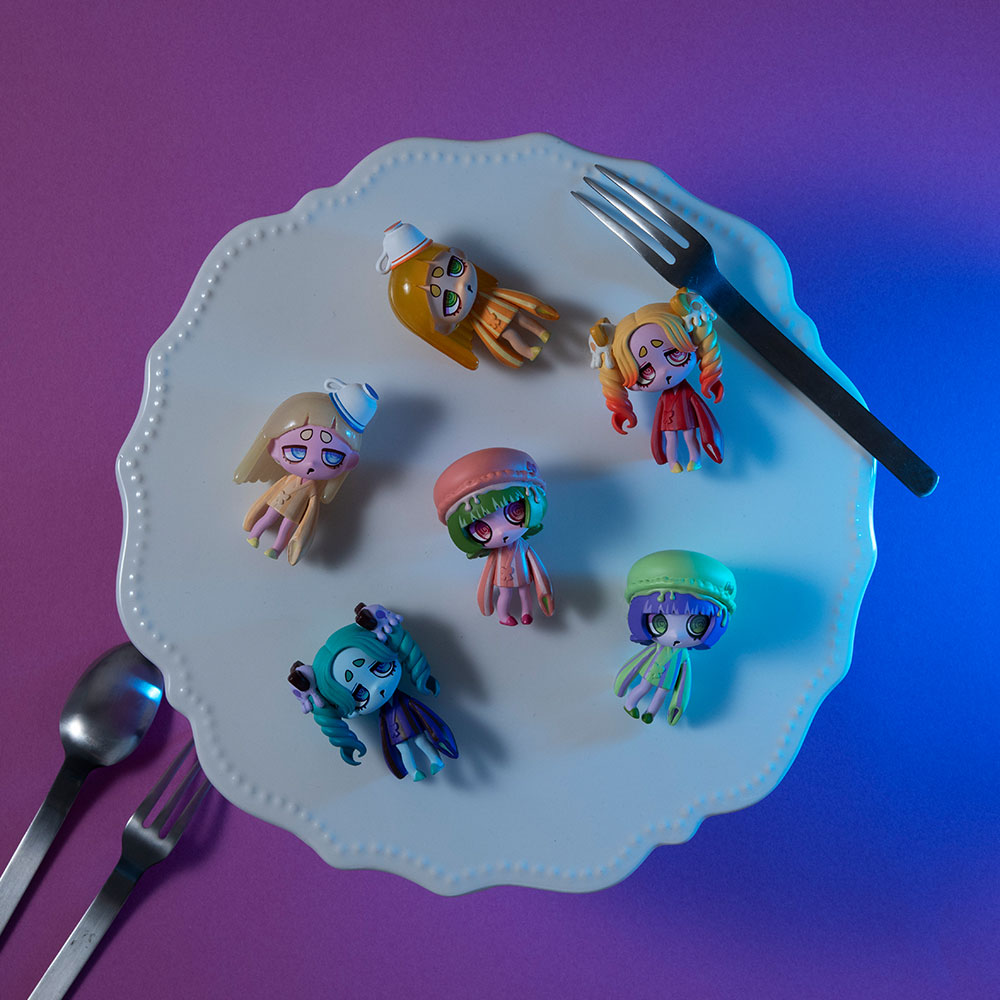 Tea Break series with tiny fork and spoon. The staging suggests a meal interrupted by consciousness.
The project started with a brief: "pudding with toxicity." Bandai asked multiple illustrators to interpret it. Abotoma won. The first character — Pudding — set the design language: caramel-drip hair, a cherry on top, spiral irises, and an expression that reads as awareness rather than emotion. From there, Abotoma expanded to a full café roster. Then Japanese sweets. Then afternoon tea. Then candy. Four series, 24 characters, each one a dessert that has caught something contagious.
The tagline is "このおかし、なんだかおかしい" — "This candy is somehow strange." The pun works in Japanese (okashi means both candy and strange). The lore is delivered straight: a virus gave the sweets consciousness, and it's spreading. Each capsule includes a mini-booklet with the character's setting — not backstory exactly, but personality. Pudding loves fruit and becomes furious if you touch hers. Cream Soda is the genki one — the most energetic, the one who dislikes having her straw touched. Coffee Jelly prefers bitter sweets but loads her own coffee with milk and sugar. Sakura-Mochi is cunning. Anmitsu's face was designed to convey total absence of expression.
These aren't just design notes. They're the reason people collect all 24. Each character has a contradiction baked into the concept — sweet thing with a specific personality flaw, rendered with Abotoma's signature jito-me (half-closed, deadpan eyes) and meticulous material work. The Cream Soda figure uses clear resin to capture fizz. The mochi variants have gradient painting that mimics translucent red-bean paste. The backs are as detailed as the fronts. Skull motifs appear as hair ornaments, ice cream toppers, subtle pattern elements. Sweetness with toxicity, in every detail.
The series moved fast. The first wave (Café theme, December 2024) sold out and reprinted. ~甘味処~ (Sweet Shop) brought wagashi — Taiyaki, Kashiwa-Mochi, Anmitsu. ~tea break~ added Macarons, Scones, Lemon Tea. Sugar Pop Party in early 2026 pushed into Marshmallow, Chocolate, Grape Candy. Each wave shifts the dessert world but keeps the grammar: deadpan expressions, pearl-finish ornaments, inner-colour hair highlights. The 4-panel manga on the official site — 20 episodes and counting — gives the characters small moments of interaction. Fans have asked Bandai for a relationship diagram.
The collector culture around VIRUSWEETS is what confirms it as more than a product line. Hobby Japan published a customisation guide — blush on cheeks, glitter on hair, sauce patterns on the dessert-dish bases. Ten minutes of careful painting, and they feel alive. Others build dioramas: the figures gathered at a café table, "chatting together at night." One collector blogged about hitting a straight complete (every character, no blind-capsule duplicates) and called it the happiest moment of their collecting year. VIRUSWEETS gained 10,000 followers in months — no anime, no manga, no prior franchise. Just 24 desserts with spiral eyes and the faintest suggestion that they know exactly what they are.
- Abotoma character design
- Bandai Gashapon Department art line
- Designer toy crossover (Kigurumi, Medicom VAG)
- Kimo-kawaii — the tradition of cute things that are slightly wrong
Loading...