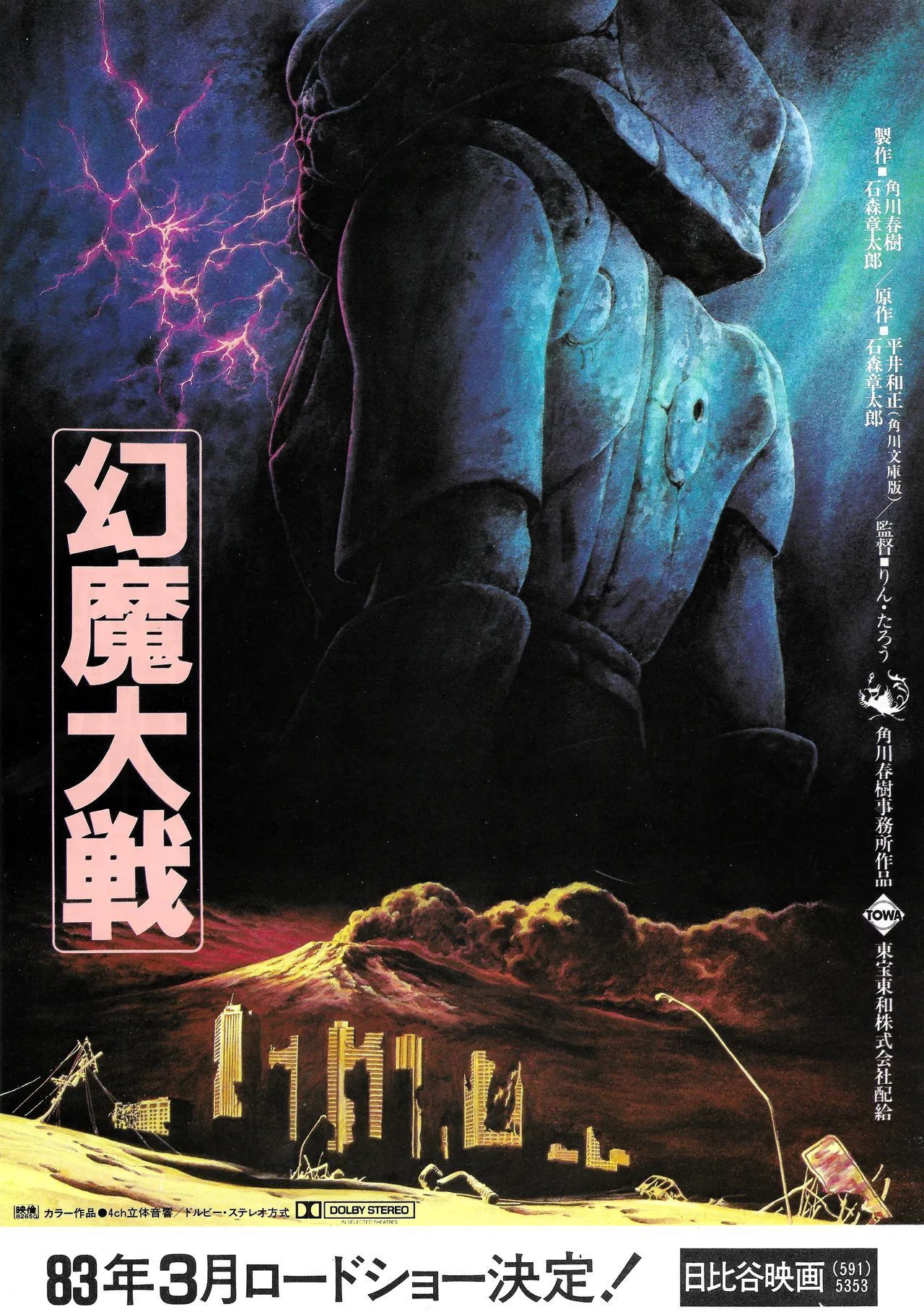
Pre-release press materials distributed to journalists and exhibitors reveal what Haruki Kadokawa believed he was making — and the production imagery Katsuhiro Otomo created before a single frame was animated.
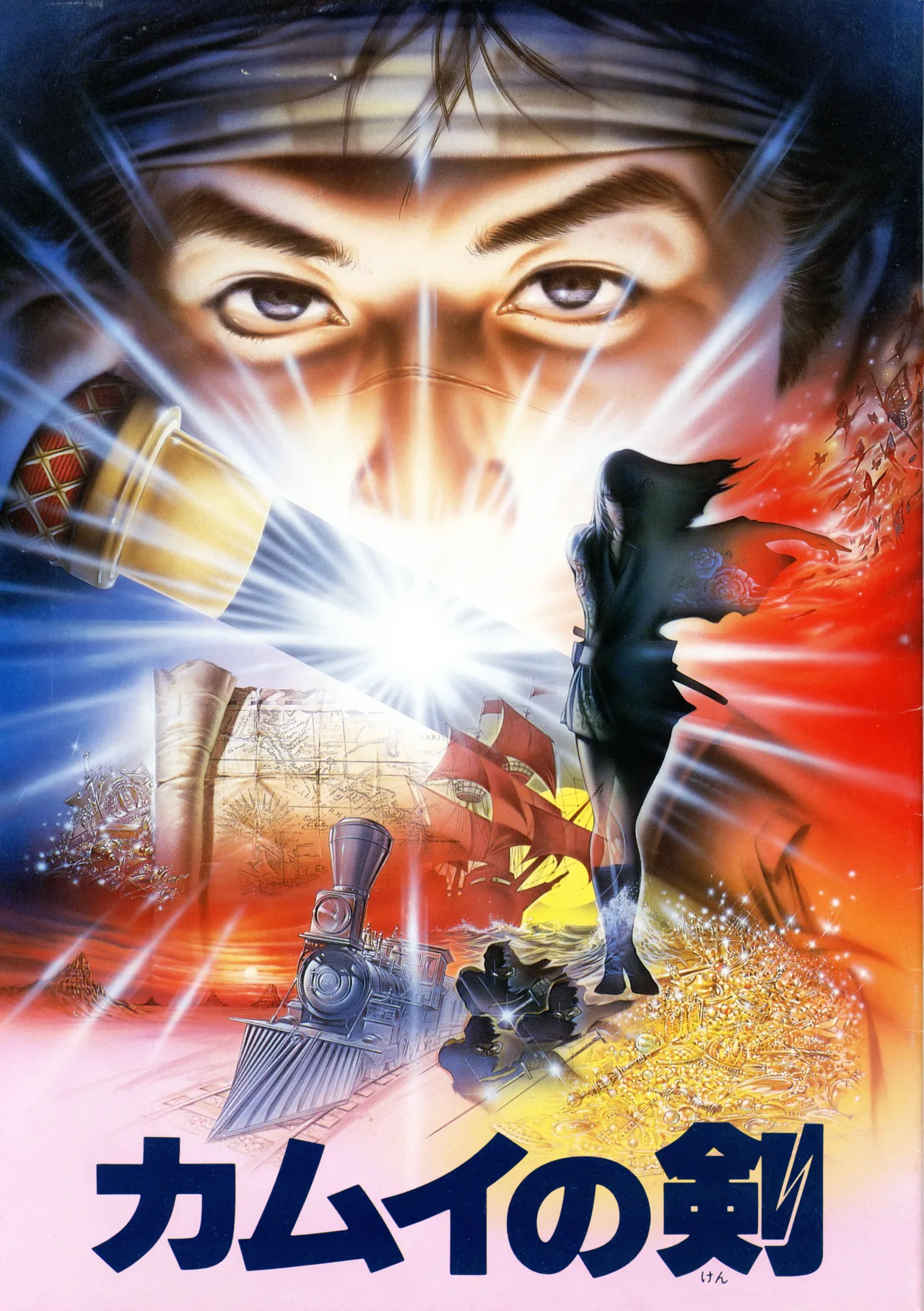
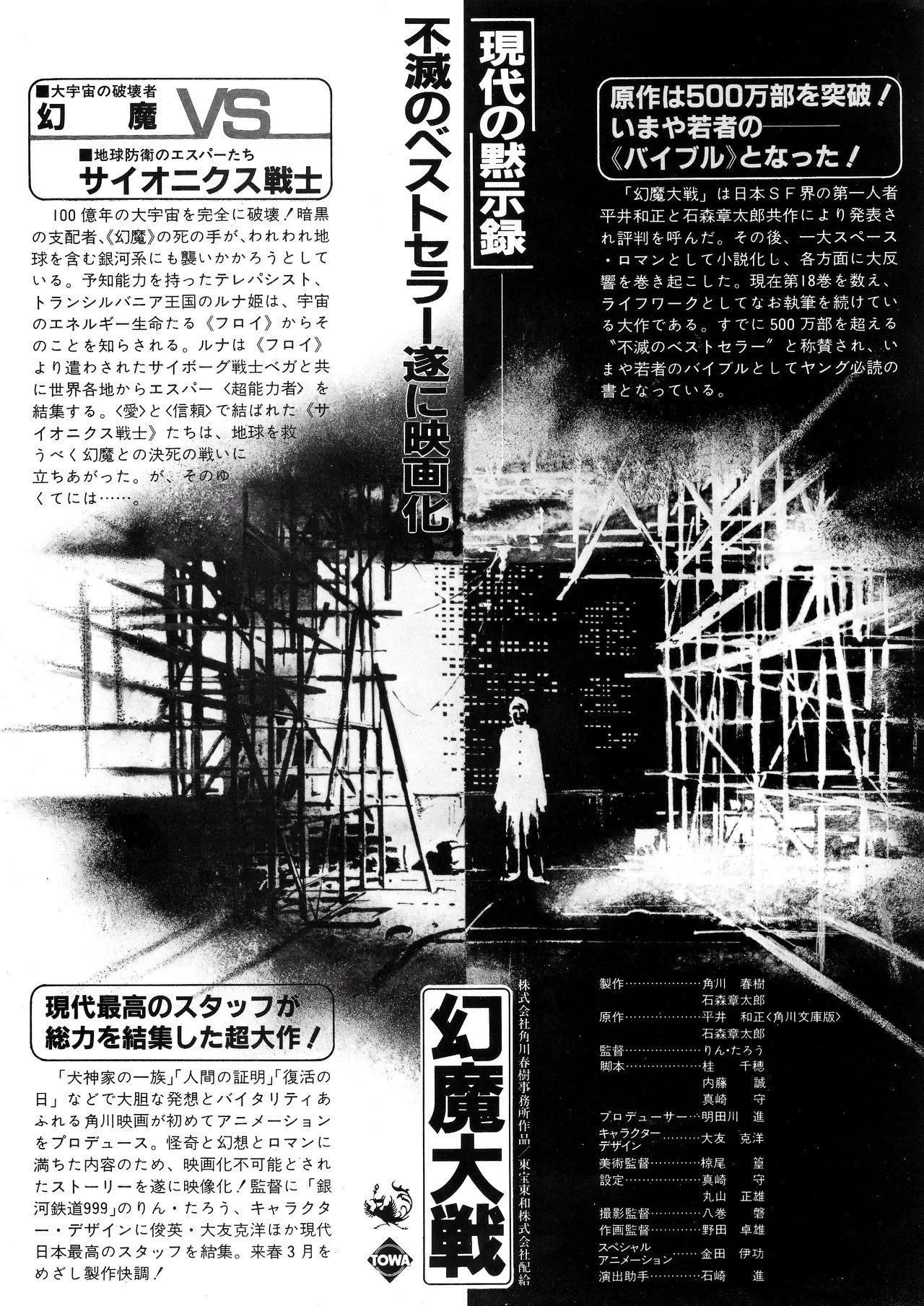 Press sheet — headline: 不滅のベストセラー遂に映画化!(The immortal bestseller finally becomes a film!) and 現代の黙示録 (A modern apocalypse). Full production credits listed. The text positions the Hirai/Ishinomori source material as having sold 500万部 (5 million copies) — the cultural authority Kadokawa was borrowing.
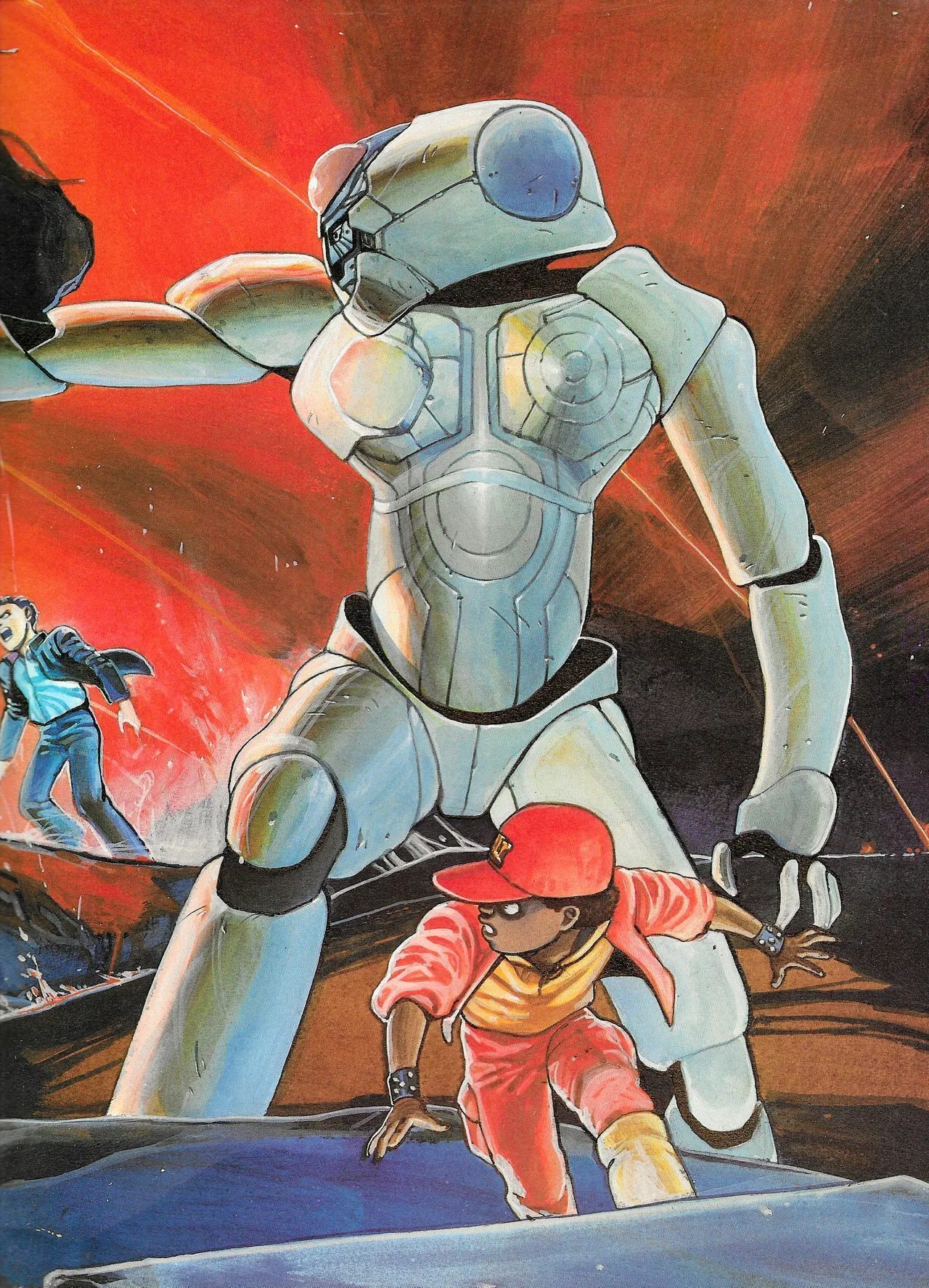
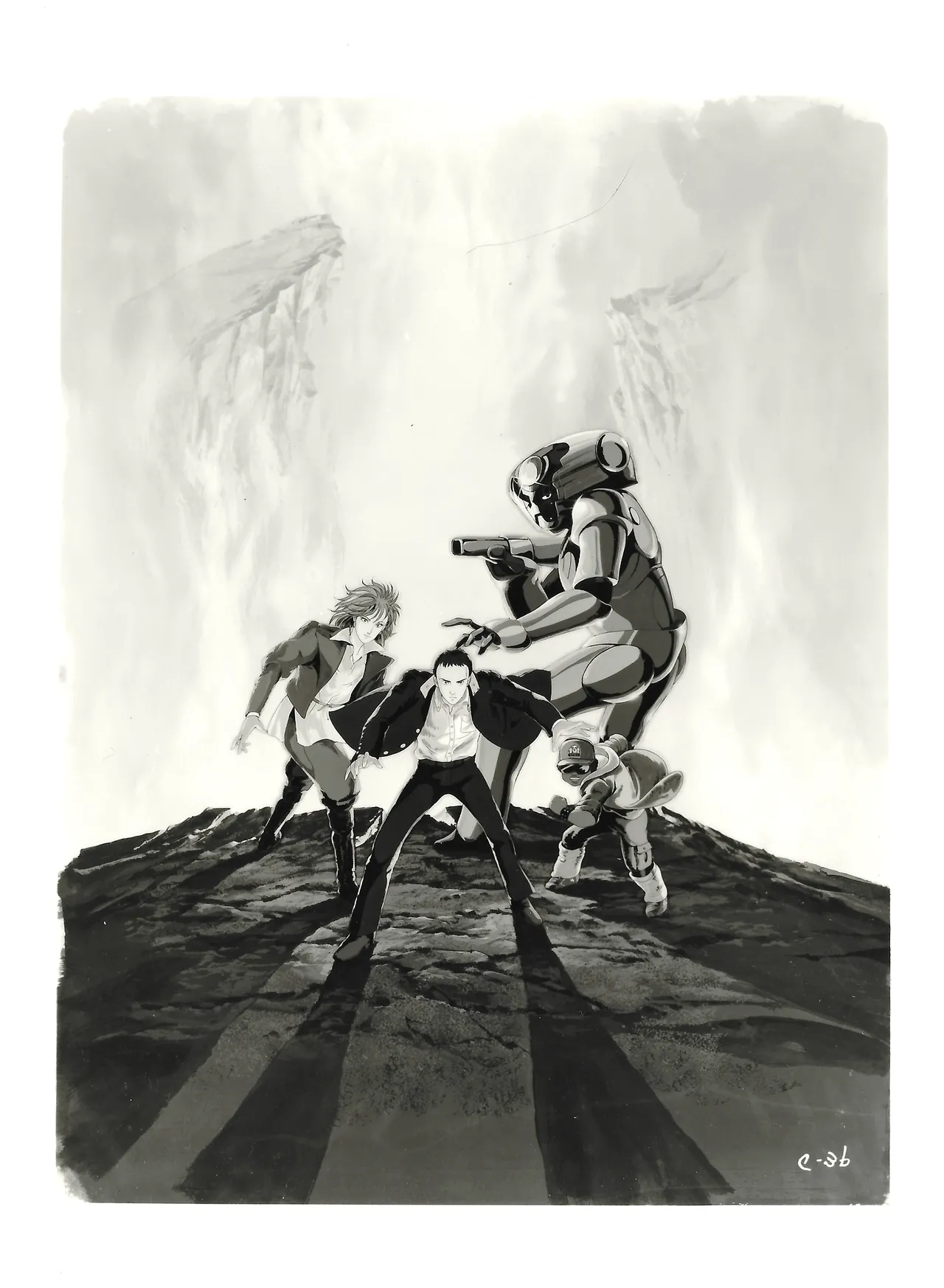 Image board C-36 — original Otomo concept art in ink wash, rendered before animation began. Three figures on a stone terrain: the male protagonist (center), Luna the psychic (left), Bega the robot (upper right, armed). The composition and figure proportions are unmistakably Otomo. Number C-36 in the lower right corner.
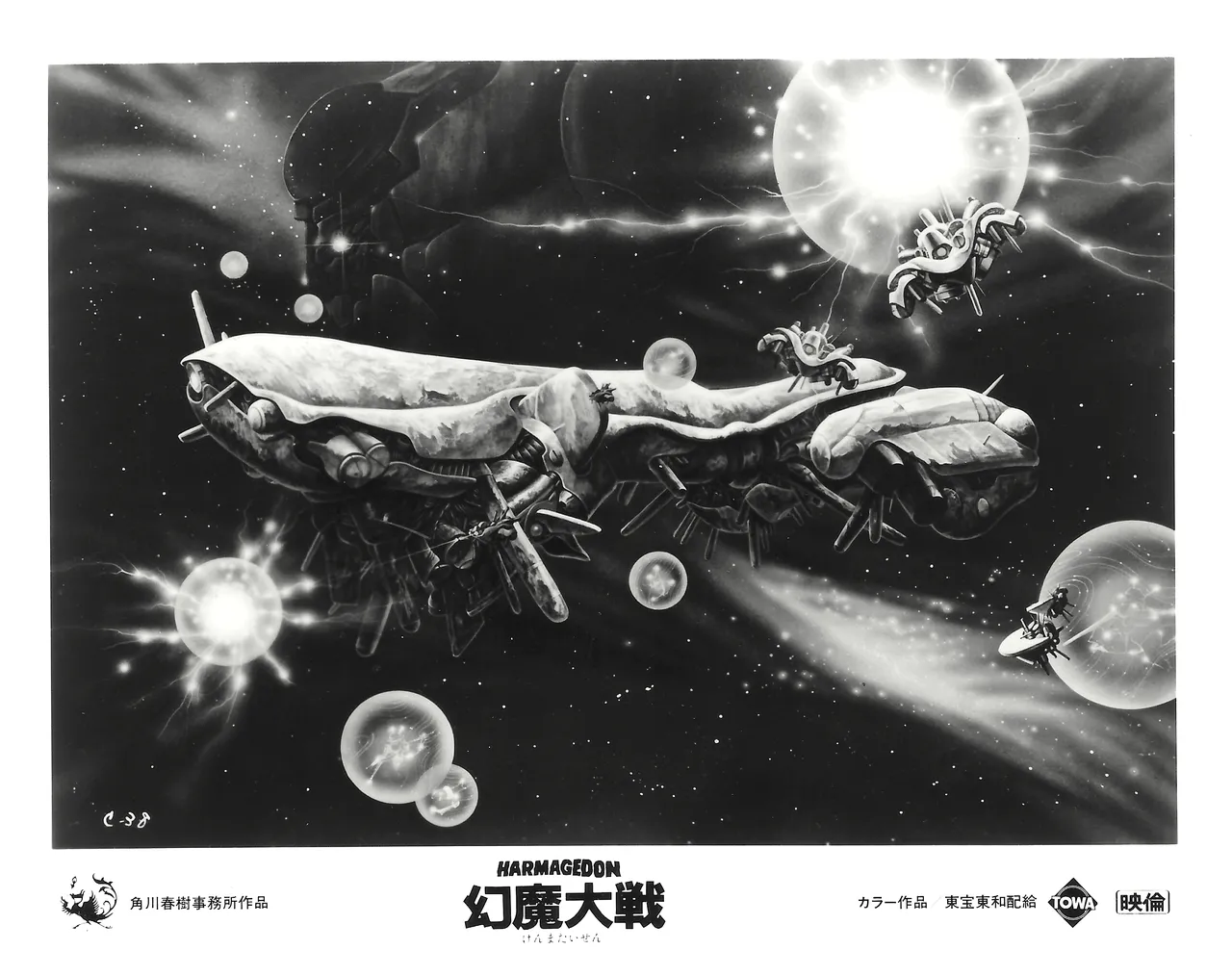 Image board C-38 — the Genma entity's spacecraft/organism in space, rendered in B&W airbrush. The organic-mechanical hybrid design anticipates the biological machinery that would appear throughout Otomo's later work. Credited: 角川春樹事務所作品, distributed Toho-Towa. 映倫 (Film Ethics Council) stamp.
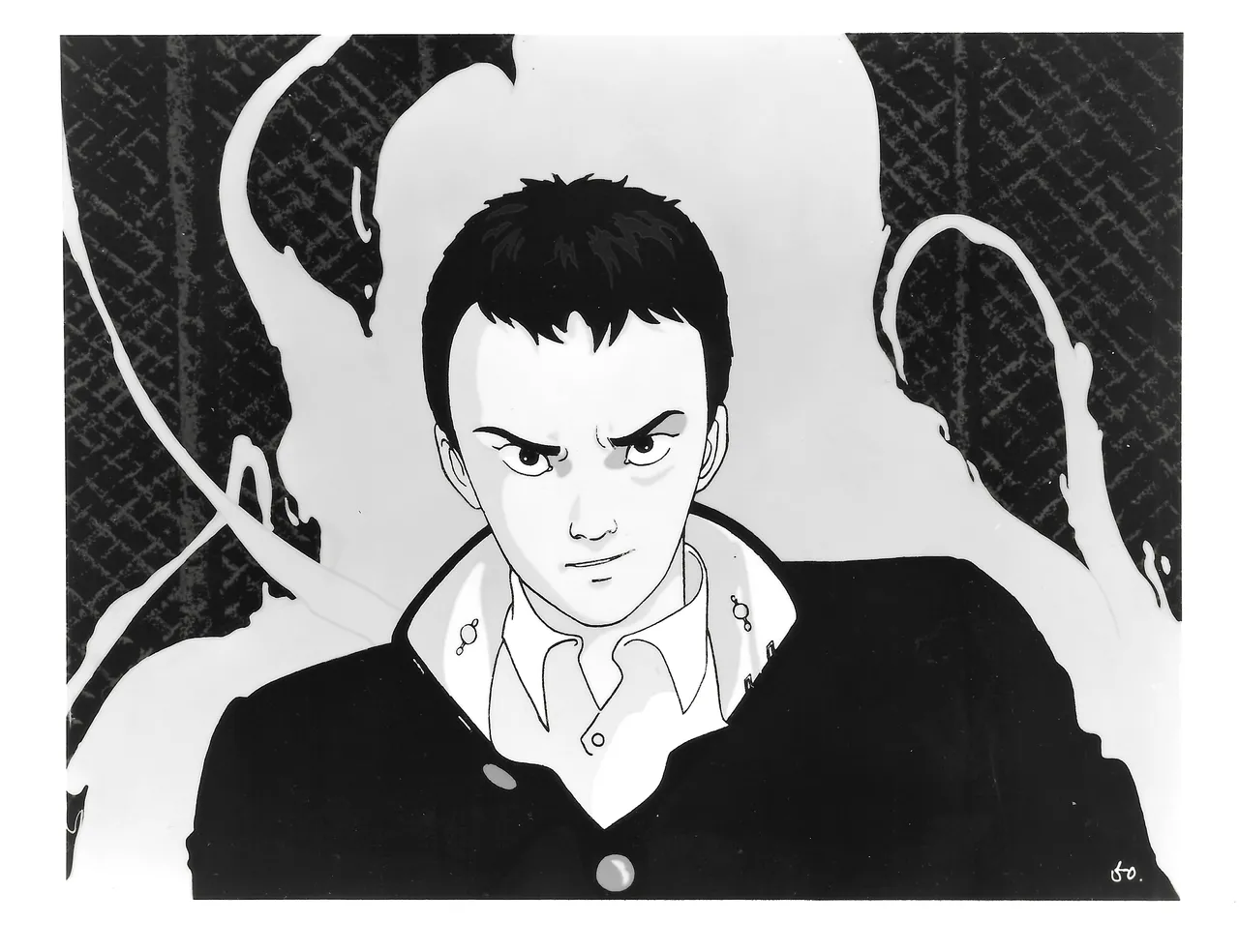 Production still no. 60 — East Jo (東丈), the male protagonist, in close-up. Otomo's character design: cropped hair, school uniform, no stylization. The psychic energy effect is visible behind him — Rintaro's solution to depicting invisible power, using translucent photography layered over the cel animation.
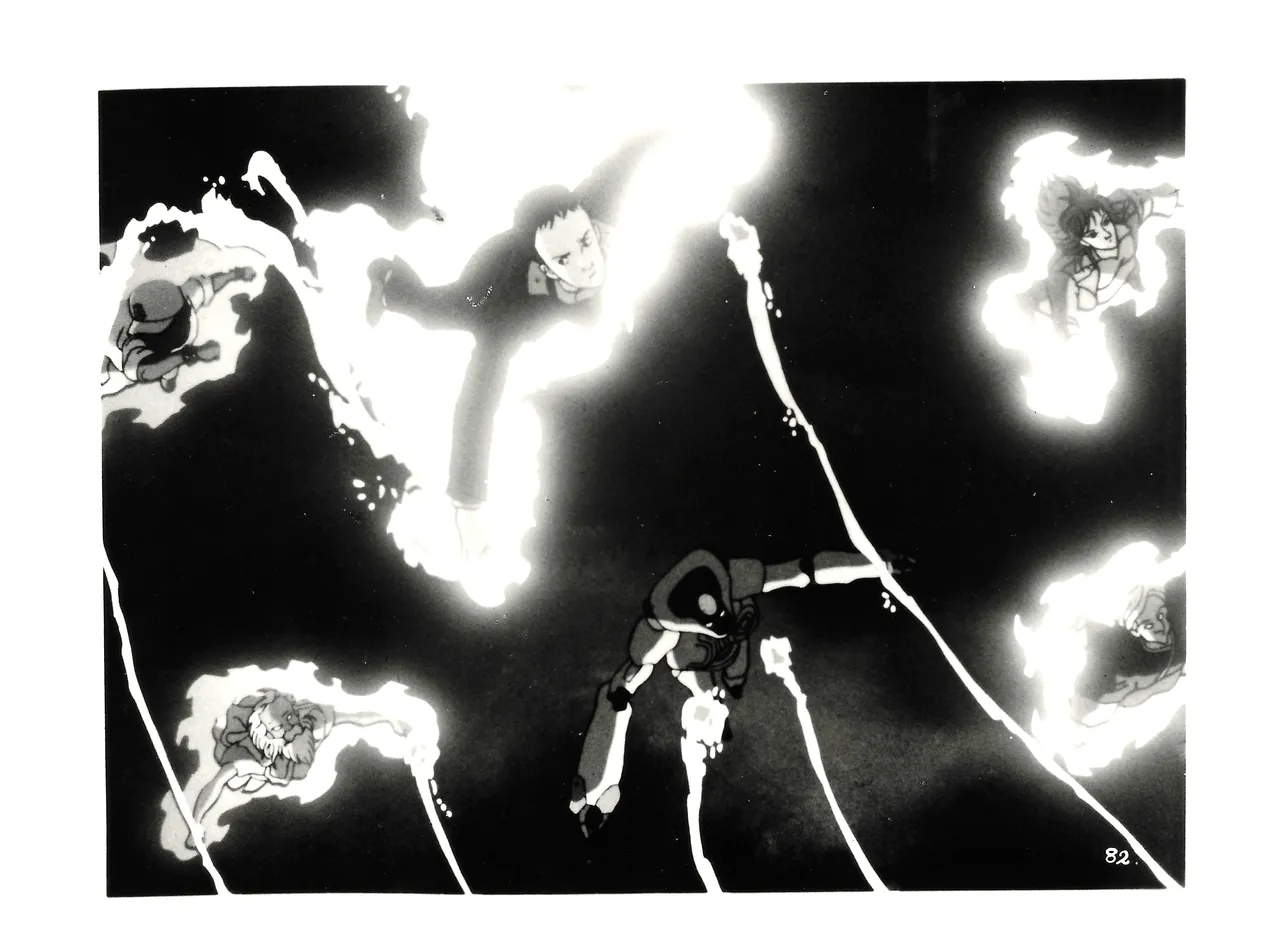 Production still no. 82 — action sequence. East Jo surrounded by psychic allies, the robot Bega at center. The energy web connecting them was Rintaro's visual invention: making the invisible legible without making it mundane.
The image boards in this press package are numbered with production codes — C-36, C-38 — the same system used in the studio's internal reference materials. Haruki Kadokawa's press office didn't commission promotional illustrations for journalists. It distributed actual production documentation: the concept art from Otomo's desk, reproduced as 8×10 press stills, sent to newspaper reviewers and theater bookers before the animation was finished.
This was not unusual for 1983 Japanese film publicity. What was unusual was the source material. The image boards attributed to the production show Otomo working in ink wash — a technique closer to his manga than to animation settei — developing the visual logic of the film's world before any cel had been painted. The press package captured him mid-process. Journalists received pre-production art as evidence that a film was already, in some sense, real.
- Haruki Kadokawa's founding of what would become Kadokawa Corporation's film and media empire
- The role of theatrical press packages as pre-production legitimization documents
- Katsuhiro Otomo's image board work as early evidence of his visual approach
Loading...