Why would the same director and producer make the same film twice, two years apart?
The apparatus ran twice.
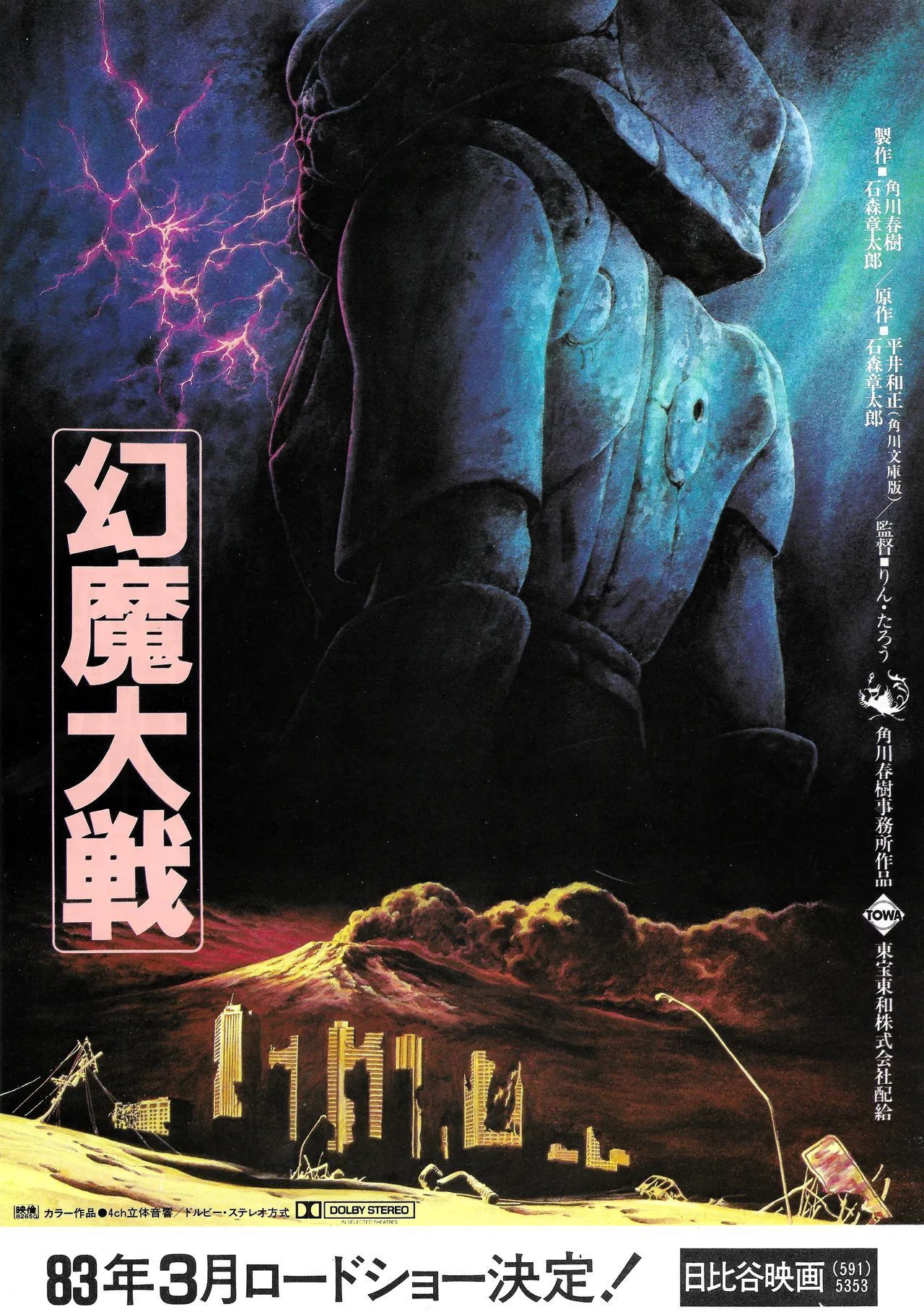
Rintaro directed Harmagedon in 1983 for Haruki Kadokawa. Madhouse animated it. Pioneer pressed it onto LaserDisc at catalog number PILA-1236. The character designs were by Katsuhiro Otomo, five years before Akira. Keith Emerson did the music. It cost ¥250 million and opened as a cultural event.
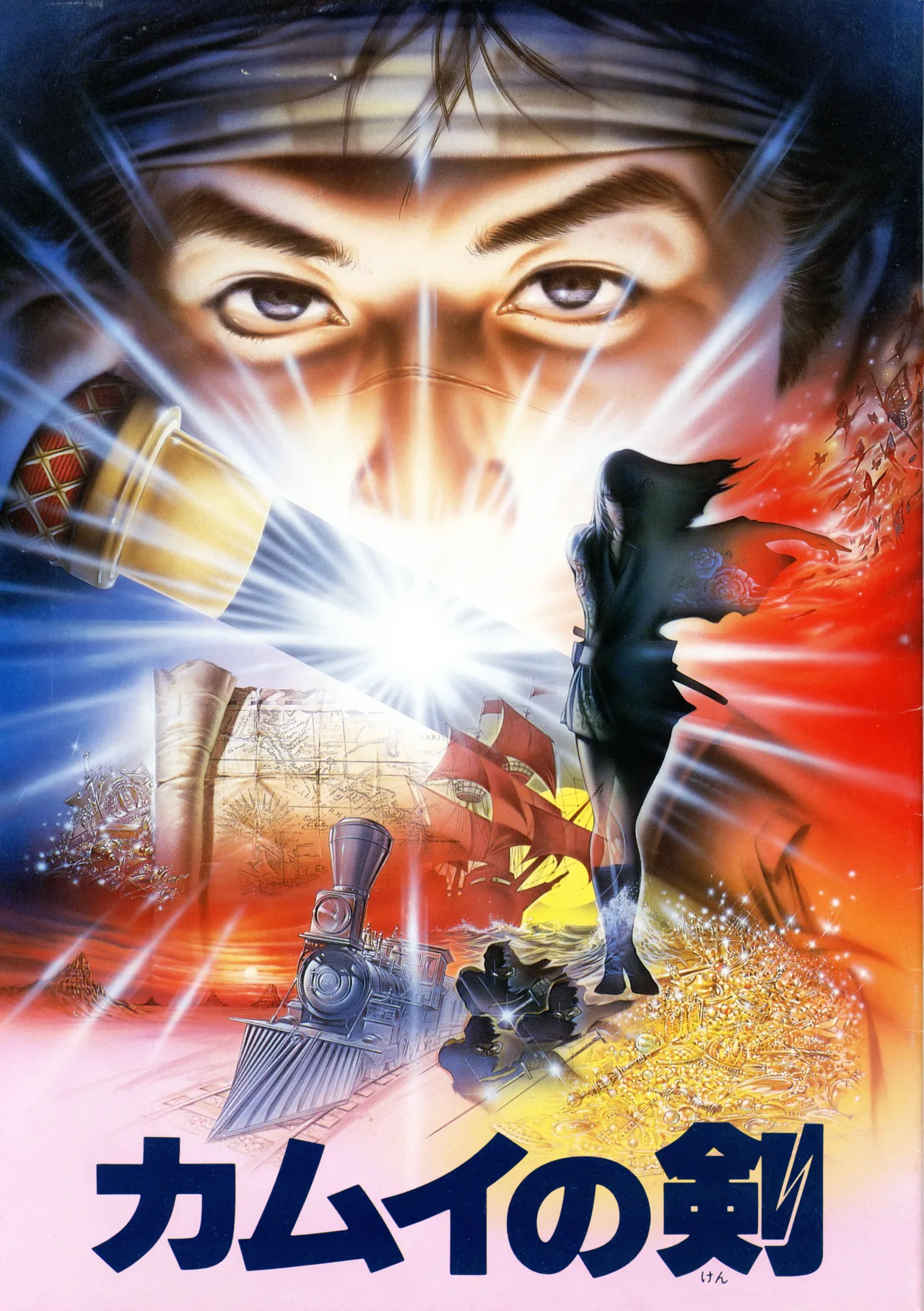
Two years later: Rintaro, Kadokawa, Madhouse. The Dagger of Kamui. PILA-1237. This time the big name was not a character designer but a voice actor — 真田広之 (Sanada Hiroyuki), the live-action star of 里見八犬伝, doing animation for the first time. The source material was Tōru Yano's historical adventure novel. The story traveled from late Edo-period Hokkaido across the Pacific Ocean to Gold Rush-era San Francisco, with Mark Twain as a supporting character and a dagger that unlocked Captain Kidd's treasure. 132 minutes. A bigger film by almost every measure.
What's smaller is its reputation. Harmagedon became famous as the film that previewed Otomo's visual language. Dagger of Kamui became a cult object — recognized by collectors, barely discussed by critics. The Pioneer catalog numbered them PILA-1236 and PILA-1237 and moved on.
The pamphlet sold at Japanese cinemas in March 1985 — the same month Newtype magazine launched, with its debut issue advertised on the back page — documents the film as it was received at release: a major production, a Kadokawa event, a story ambitious enough to cross an ocean. The LaserDisc catalog recorded the production relationship. The pamphlet recorded the moment.
Loading...