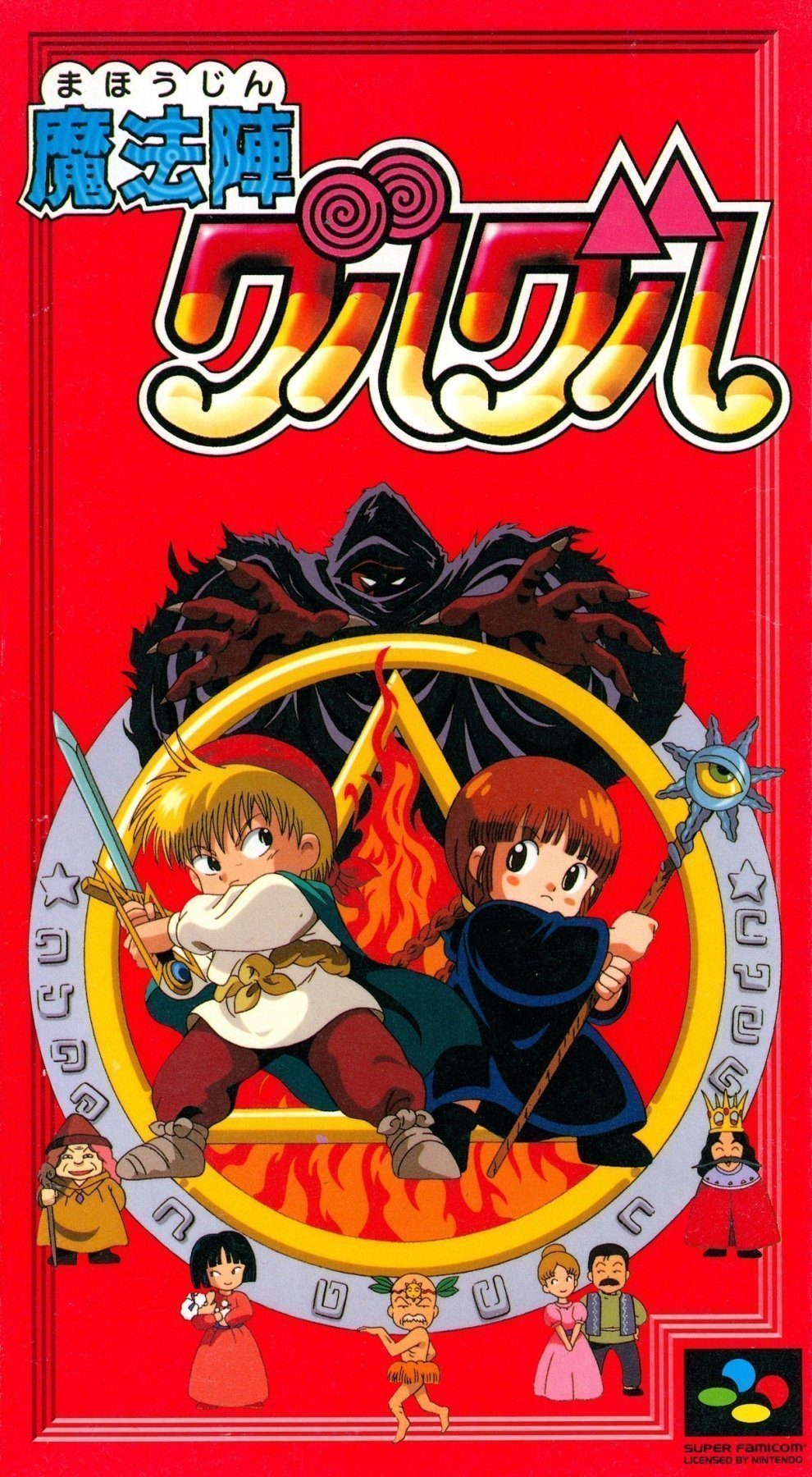
In 1995, Enix released a turn-based RPG based on a manga that parodies turn-based RPGs. The snake eats its tail.
The Ouroboros
Publisher: Enix (Dragon Quest's publisher). Developer: TamTam. Platform: Super Famicom. Release: April 21, 1995. Genre: Turn-based RPG — the format the manga satirises. Sequel: Mahoujin Guru Guru 2 (SFC). GBC: Doki Doki Densetsu (2000).
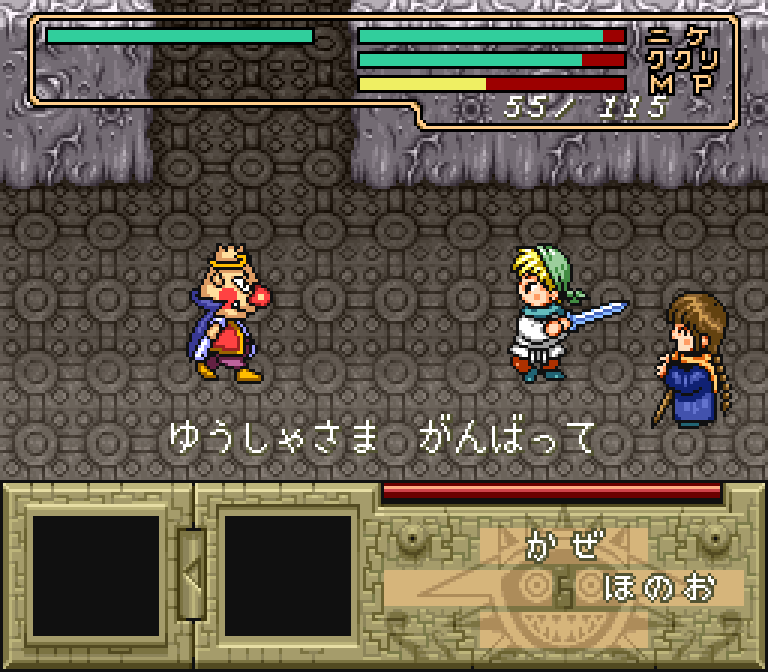 Battle system — Nike and Kukuri face enemies in menu-driven combat with HP and MP bars
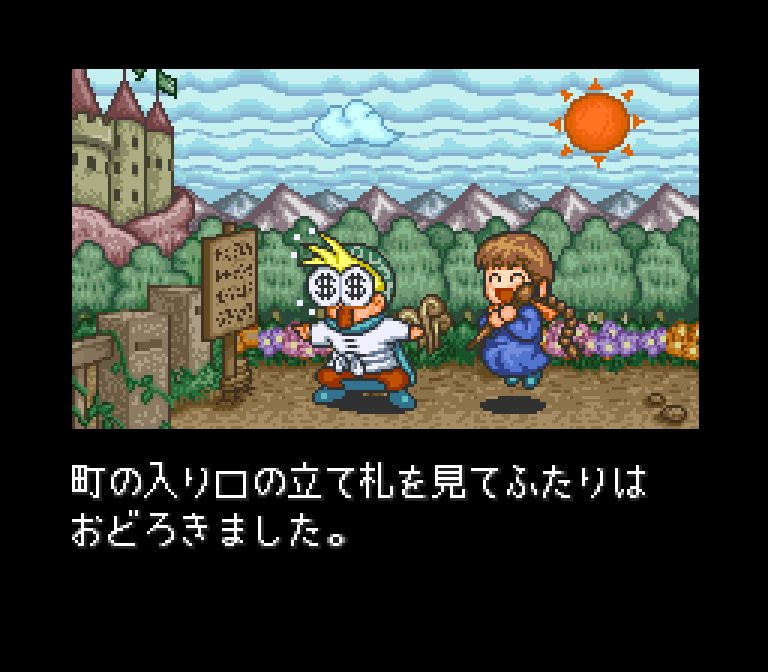 Town exploration — the hero's starting village rendered in TamTam's detailed SFC sprites
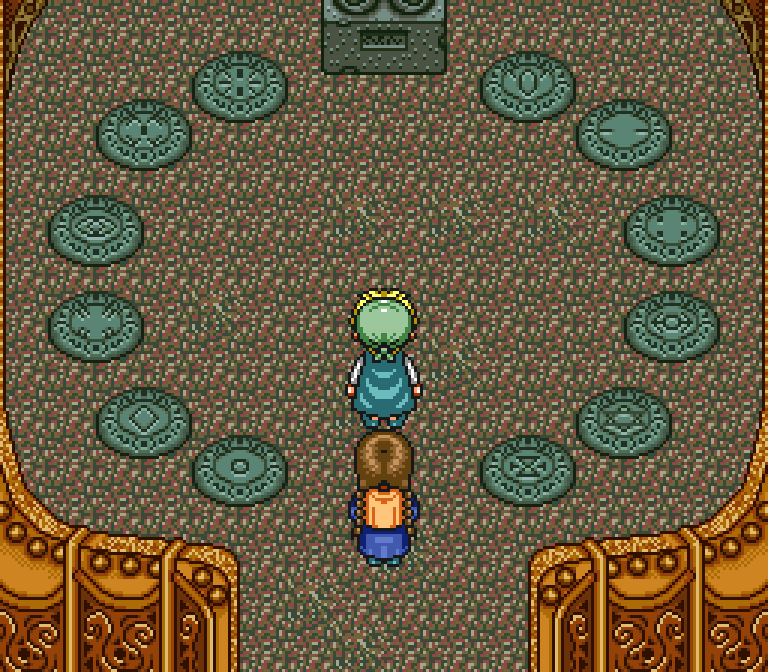 Tower selection map — twelve sealed towers, each containing a magical circle to collect
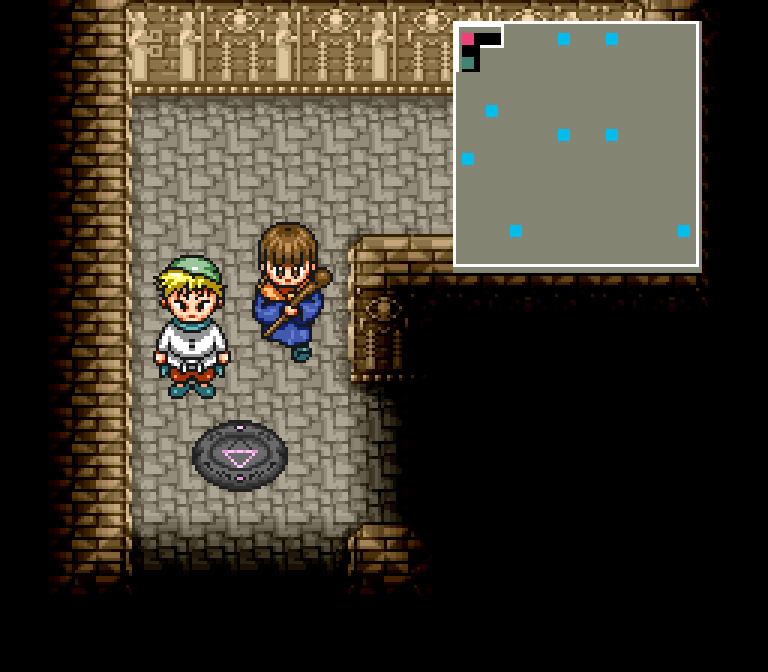 Dungeon floors — treasure chests and monster encounters inside the towers
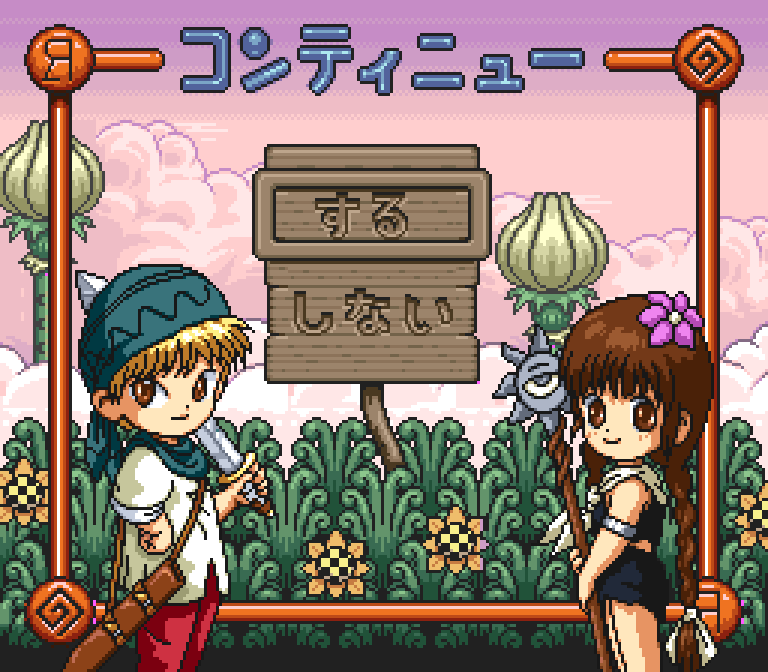 Continue screen — Nike and Kukuri rendered in TamTam's detailed pixel art
The box is standard Super Famicom format. Inside: a cartridge containing a turn-based RPG where you navigate dungeons, fight monsters in menu-based combat, collect items, and level up your party. The publisher's logo on the spine reads Enix. The same Enix that created Dragon Quest — the franchise whose conventions the source manga systematically takes apart for eleven years.
The game plays it straight. TamTam developed a competent mid-tier SFC RPG: twelve towers, each containing a sealed magical circle. You recruit party members following the fighter-mage-healer template. You grind. You explore. You reach the final boss and hatch the Egg of Light. The mechanical language is sincere Dragon Quest. The characters inhabiting that language are from a manga that finds Dragon Quest's sincerity hilarious.
The structural irony was not accidental. Enix ran Guru-Guru in their magazine, Monthly Shonen Gangan, which they'd created specifically to diversify beyond Dragon Quest revenue. The manga parodied their flagship game. The game adapted the parody back into the format being parodied. At no point did anyone at Enix seem to consider this a problem.
A sequel followed on the Super Famicom. A Game Boy Color adaptation, Doki Doki Densetsu: Mahoujin Guru Guru, arrived in 2000 — an action RPG where Nike attacks with his sword and Kukuri draws circles on the ground to cast spells. The GBC version let you physically perform the core mechanic: you trace patterns on the screen and the game responds. The comedy manga's magic system became a real game input.
The SFC cartridge is available through Japanese retro game dealers and international import channels. Standard pricing for a mid-tier Enix SFC title. The cartridge does not know it is a joke.
- Dragon Quest (the series Guru-Guru parodies, published by the same company)
- Game Boy Color adaptation (Doki Doki Densetsu, 2000)
- Monthly Shonen Gangan (Enix's manga magazine, where the source manga ran)
- SFC-era Enix RPG catalogue
Loading...