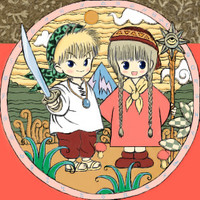
Hiromu Arakawa apprenticed under Hiroyuki Eto during Guru-Guru's serialization (1999-2000), then published Fullmetal Alchemist — a manga built around geometric circles drawn on the ground — in the same magazine one year later.
The Japanese manga industry runs on apprenticeship. Aspiring manga artists work as assistants to established creators — drawing backgrounds, inking panels, learning pacing and production discipline in someone else's studio before launching their own serialisation. The assistant system is how the industry reproduces itself. Who you apprentice under shapes what you make next.
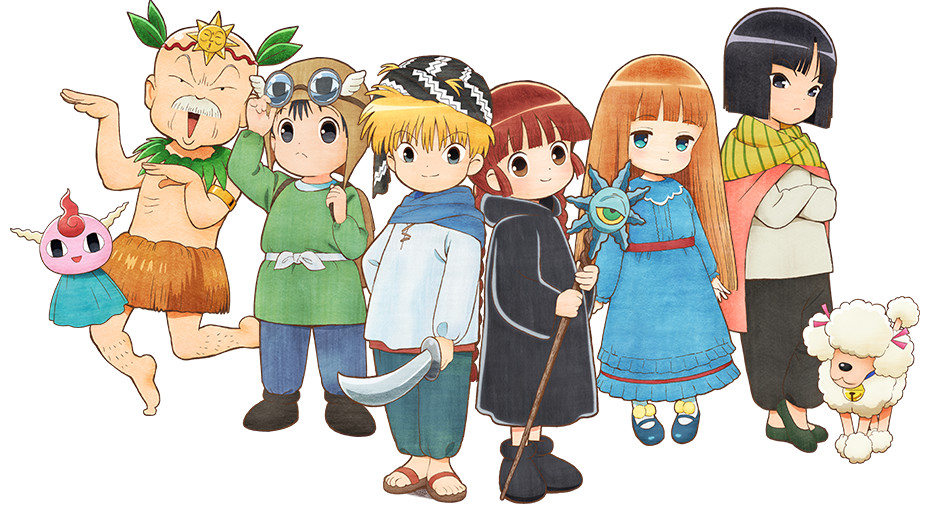
Hiromu Arakawa moved from Hokkaido to Tokyo to pursue manga. Between 1999 and 2000, she worked as an assistant in Hiroyuki Eto's studio. Eto was mid-serialisation on Magical Circle Guru-Guru — volumes twelve through fourteen of a sixteen-volume run. The series was approaching its emotional climax: the arc where Kukuri's magic circle system, which had spent years producing comedic misfires, reaches its resolution through a spell powered by love.
Arakawa left the studio and, in July 2001, began serialising Fullmetal Alchemist in the same magazine — Monthly Shonen Gangan. FMA's central mechanic is transmutation: alchemists draw geometric circles on surfaces, and the circles channel energy to reshape matter. The system is governed by the Law of Equivalent Exchange. Arakawa researched Western Hermetic alchemy extensively — the symbolism of sun, moon, and stone, the squared circle of the philosopher's stone. The intellectual framework is entirely different from Guru-Guru's consciousness-as-magic approach.
But the visual grammar is unmistakable. Both systems depend on geometric patterns drawn by hand. Both treat the act of drawing as the mechanism of power. Both locate magic in the relationship between the caster's knowledge and the circle's geometry. In Guru-Guru, the circle reads the mind. In FMA, the circle obeys the law. The philosophy diverges. The image rhymes.
FMA went on to sell eighty million copies. Its transmutation circles became the default visual language for anime alchemy — influencing Fate/Stay Night's summoning circles, countless isekai magic systems, and the general anime convention that serious magic looks like geometry. The lineage runs through a Gangan comedy studio where a young assistant from Hokkaido watched her mentor draw circles on the ground and make something happen.
- Arakawa worked as Eto's assistant 1999-2000, during volumes 12-14 of Guru-Guru's 16-volume run — the series' emotional peak.
- FMA's transmutation circles require precise geometric drawing. Guru-Guru's magic circles require geometric drawing channelled through the caster's consciousness. Different philosophies. Same visual grammar.
- Both series ran in Monthly Shonen Gangan. FMA began in July 2001 — one year after Arakawa left Eto's studio.
- FMA sold 80 million copies worldwide. Its magic system — circles drawn on surfaces — became the template for anime alchemy. The visual lineage traces through a comedy manga's studio.
- Monthly Shonen Gangan as creative ecosystem
- Manga assistant system (how the industry trains new creators)
- FMA's Hermetic/Western alchemy research vs Guru-Guru's JRPG-inspired magic


Loading...